
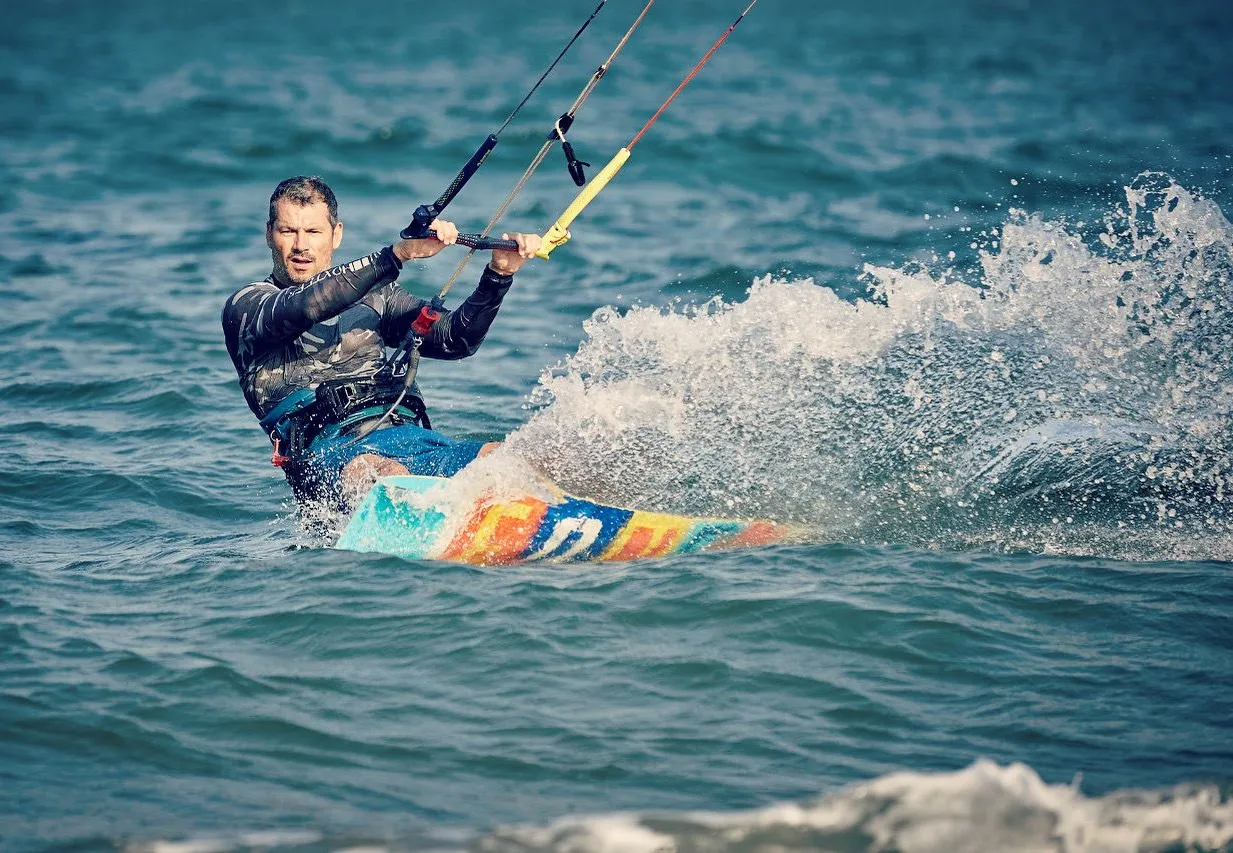
In Mozambique, a wave of surfers is growing. The epicentre of the emergence of a generation of surfers in Mozambique is Tofo, a piece of what is called the Land of Good People, Inhambane province, in the far south of the country. The Kymani Surf School is responsible for preparing the sport's future champions. Interestingly, Tofo is home to the first professional surfer of Mozambican nationality, Mini Cho.
Despite the more than three thousand kilometres of coastline that Mozambique has, ocean sport, surfing in particular, is still not very popular in the country. However, this picture may change in the coming years, thanks to projects promoting the sport that are under way in the country. The Kymani school is an example of this transformation, which aims to be revolutionary and historic. Kymani is a Mozambican surf school, founded in 2019 by a dynamic crew of four lovers of the ocean and adventure: Ebony Neil, an Australian who works in the humanitarian sector after many years in education; kebba Jobarteh, a doctor; Luís Antunes, a Portuguese businessman and environmentalist, all of them kitesurfers and surfers; and Mini Cho, the first professional surfer in Mozambique.
"Kymani aims to grow water sports in the country and put Mozambique on the map as an international kite and surf destination, offering ocean adventure experiences to local and international markets," said the school's co-founder, Ebony Neil. The school offers kite and surf programmes for children, school programmes, school holiday programmes, excursions, and one-day or multi-day trips for children to learn to kite, surf or SUP. "We provide kite and surf trips to world-class kite and surf spots, to Pemba, Ilha de Moçambique, Inhassoro, Vilanculos, Pomene, Massinga, Tofo, Barra, Quissico, Chidenguele, Bilene, Maragra, Inhaca, Ilha dos Portugueses, Machangulo, the Maputo Elephant Reserve, Ponta do Ouro, Mamoli and Malongane," Neil said, highlighting the main destinations.
More than a school, Kymani is a project that also aims to promote tourism and raise people's social and environmental awareness, showing the world Mozambique's natural wealth, sharing "unforgettable experiences in isolated, paradise-like places" in the country.
“All of Kymani's kite and surf experiences can be enjoyed by adults, children, school groups, local or international communities, beginners, intermediates and experts," explained Ebony Neil, stressing that they aspire to organise international kite and surf events and festivals in Mozambique to show what the country has to offer, build partnerships, increase participation, grow the kite and surf community and promote tourism. "Kymani also plans to focus on promoting gender balance and increasing diversity in sport, by promoting women's kite and surf lessons and offering women-only adventure trips, but also by offering services with guaranteed access for Mozambican men, women and children," she concluded. The school can be contacted through the following websites: www.kymani.kite.surf and www.kymanisurf.com.
Mini Cho, 23: the face of surfing in Mozambique
He was only 14 when he caught his first wave, in his home province of Inhambane. It could be said that the young surfer's relationship with the ocean began late, but it has now lasted almost a decade. Mini Cho is the main face of Mozambican surfing. He is the number 38 surfer in Africa's rankings and is currently the only Mozambican in the World Surf League's Qualifying Series (WQS).
Born in Tofo, on the coast of Inhambane, Mini Cho is the son of a South Korean father and a Mozambican mother. He is the first ever Mozambican professional surfer, and the present and future of surfing in Mozambique. Although he was born in Mozambique, Mini spent his childhood abroad. His parents moved to South Africa very early on, but he never cut himself off from his homeland.
Mini is the only Mozambican on the World Surf League Qualifying Series (WQS) and inspires new generations to catch the waves that changed his life for ever: "The ocean has taught me many life lessons. As surfers, we learn to wait for the perfect wave. We learn to be patient. When the wave comes, we take it and do the best we can. We learn to seize life's opportunities and make the most of them. When we fall off our wave, we get up and try again. The same can be said of life," the young surfer said of the greatest lesson the wave could teach him. Indeed, it was in the sea that Mini grew up and matured. The water is where he spends most of his time, and the waves are where he wants to keep making his way and his destiny, begun in the 1990s. "I started surfing when I was 14, which is relatively very late by most professional standards. I loved it so much that I found myself surfing all day, which helped me progress at a very fast pace," explained the surfer, who caught his first wave in 1999, influenced by his greatest idols, now friends, Kelly Slater and Jordy Smith.
"When I caught my first wave, it never crossed my mind that I could become a professional surfer and make a living from surfing. It was more of a hobby or a pastime for me. Only when I realised that I was improving at an unusually fast rate for a surfer who had started late did I think about becoming a professional surfer and set out to do so," said Mini, who has never lacked support at home and beyond. For the love of surfing, he has done some crazy things, such as travelling to Scotland in search of the coldest wave. Mini says that over his career he has tried and conquered many waves, from the most stunning to the most dangerous, in various countries, but his home wave will always be the best and most special of all for him. "Tofinho is one of the best waves in the world on a good day. We have managed to get top professional surfers to travel to Tofo to surf Tofinho. It is a beautiful beach with amazing waves and fantastic people. Outside Mozambique, my favourite place is the south-west coast of Portugal," said Mini, who, even though he has suffered some serious injuries in the water, has never thought of giving up surfing.
Although it is still a very new sport in Mozambique, there is a rising tide of surfers on the way up. The largest presence of local surfers is found in Tofo Bay, followed by Ponta D'Ouro, in Maputo province, where several projects are being implemented to promote and popularise this Olympic sport.
Preparing the next generations through surfing
Since his appearance on the World Surf League Qualifying Series, Mini has seen an increase in the number of young people, teenagers and children who are interested in this ocean sport, which is not very popular in Mozambique. Mini runs the Mozambican arm of Surfers not Street Children, a non-profit charity known locally as the Tofo Surf Club. The Tofo Surf Club uses surfing as a fun tool to keep children off the streets and involve them in sport, to help them find direction in life. "Thanks to the project (Tofo Surf Club), we see fewer children on the streets slipping into alcoholism and more children surfing and understanding how important the ocean is," he said proudly, describing how surfing has impacted his life and helped him overcome challenges. "What continually impresses me is how surfing can change people's lives, and I can speak from my own experience. I myself used surfing as an escape from the real world. In the ocean, my problems or challenges in life never followed me. When my feet touched the ocean, everything disappeared. I was focused only on having fun and enjoying the present moment," he said.
The Tofo Surf Club was founded in 2018 and works with around 100 children in the community. It also indirectly benefits the children's families through social self-employment programmes. "Tofo is a village based on marine tourism. It is important to educate the next generation about how the ocean provides food, jobs and tourism, so that young people also realise their own worth and in future embrace all the job opportunities in Tofo, in the hope that they will all become managers, business owners and owners of their own future. I hope to be an inspiration to all the children in Mozambique who want to push the boundaries of sport," the surfer wished.
The World Championship dream
Mini Cho is blunt. Competing professionally is a "very expensive investment". His main challenge is to secure local support to bring to a successful conclusion the project of transforming the future of children in his home region through sport. "My sponsors are from the UK and Europe. Surfing is so new in Mozambique that Mozambican brands and companies are not yet big sponsors of surfers. I hope to change this for the next generation of surfers, as support from home is always more meaningful."
Mini dreams of one day representing Mozambique at a world championship in the sport. "My plans are to keep surfing in the qualifying series, in the hope of becoming the highest-ranked African surfer, and I hope, in the near future, to take on the rest of the world. I dream of representing Mozambique at the world surfing games and one day qualifying for the Olympics.”
This 23-year-old Mozambican surfer was recently involved in setting up the Tofo Boardriders Association. The initiative aims to attract more and more practitioners of the sport. In addition, "we hope one day to have a surfing federation with the aim of forming a future Mozambican Olympic surfing team, since surfing was introduced as an Olympic sport in 2020," he concluded.
Mini Cho became a professional surfer in 2019 and has been affiliated with the World Surf League ever since. Over the course of his career, Mini has competed in several international events, and has already won the prize in the men's division at the Croyde surfers' competition in England. He is the 38th-ranked surfer in Africa and the only Mozambican surfer on the World Qualifying Series (WQS).


