
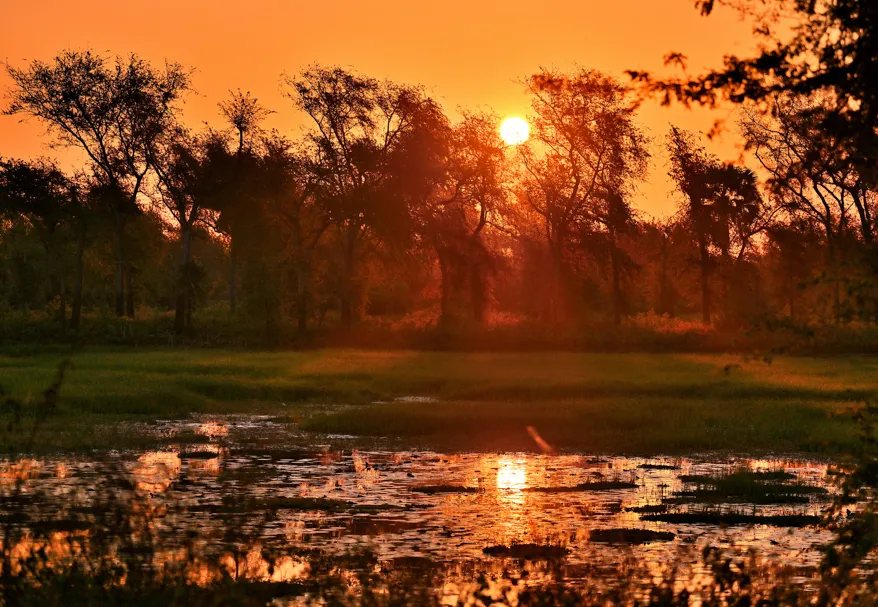
Among the plains and lagoons of Gorongosa National Park, a place has opened its doors that celebrates rebirth and a commitment to nature. Chicari Camp, inaugurated in June 2025, marks a decisive stage for the Mozambican reserve, an inspiring example of conservation in Africa.
Chicari was born of Gorongosa's long journey of restoration and succeeds the former Wild Camp. Conceived as a seasonal, intimate camp, it invites visitors to immerse themselves in the restored wildlife and directly supports the conservation mission. Located beside Chicari Pan, a name inspired by the traditional clay pot, it combines local culture with ecological richness. Sustainability is the foundation of the project: container-based structures, dismantled at the end of each season, leave only the memory of the experience. Thanks to its small size and exclusive character, Chicari guarantees genuine encounters with nature, away from the crowds and without the pressure of too many vehicles, creating an atmosphere that is rare on African safaris today.
Staying at Chicari is experiencing the bush in full, in comfort. The tents let in the sounds of the night, while comfortable beds and warm hospitality ensure well-being. The stay combines adventure and serenity: waking to birdsong, exploring trails, returning for stories around the campfire beneath the starry sky. The communal spaces — lounge, bar and outdoor fireplace — provide an atmosphere for both socialising and contemplation.
The service stands out for its genuine, attentive contact. Many staff come from neighbouring communities, creating authenticity and closeness. The philosophy is simple: every guest takes away the feeling of having taken part in something bigger. Visitor feedback is an active part of this: every suggestion is discussed by the team and translated into quick adjustments, from the menu to the activities, reinforcing the idea of a living service in constant evolution. At the table, Chef Eddy gives the stay a face and a flavour. His cooking blends fresh ingredients from the region with international influences, resulting in simple yet sophisticated dishes. Hot soup on returning from the bush, home-made bread in the afternoon and outdoor dinners make every meal a special moment.
The activities programme deepens the connection with the park. Safaris, guided walks, birdwatching — with more than 500 species already recorded —, visits to nearby villages and to the E.O. Wilson Biodiversity Laboratory enrich the experience.
For longer stays there are unique opportunities, such as following pangolins in rehabilitation.
Day expeditions to Mount Gorongosa complete the adventure. Classic safari moments, such as sundowners in places with breathtaking scenery or dinners in the middle of the bush, add a dimension of celebration and complicity to the experience.
Every visit to Chicari contributes directly to wildlife protection and to education, health and sustainable development projects in local communities. Solar energy, efficient water management and low-impact architecture reinforce the environmental commitment. The link with technology is discreet: the camp runs on state-of-the-art solar and water systems, but for those who need to stay connected there is satellite Wi-Fi in the communal areas — even so, many guests prefer to disconnect completely.
The aim is to consolidate Chicari as a benchmark for sustainable tourism in Africa, integrating more and more scientific and community initiatives into the activities programme. Visitors can enjoy themselves and, at the same time, take part.
At a time when the world is seeking balance between society and nature, Chicari Camp stands out as an example: a place where hospitality, culture and biodiversity go hand in hand, offering travellers the chance to become part of a bigger story.


