
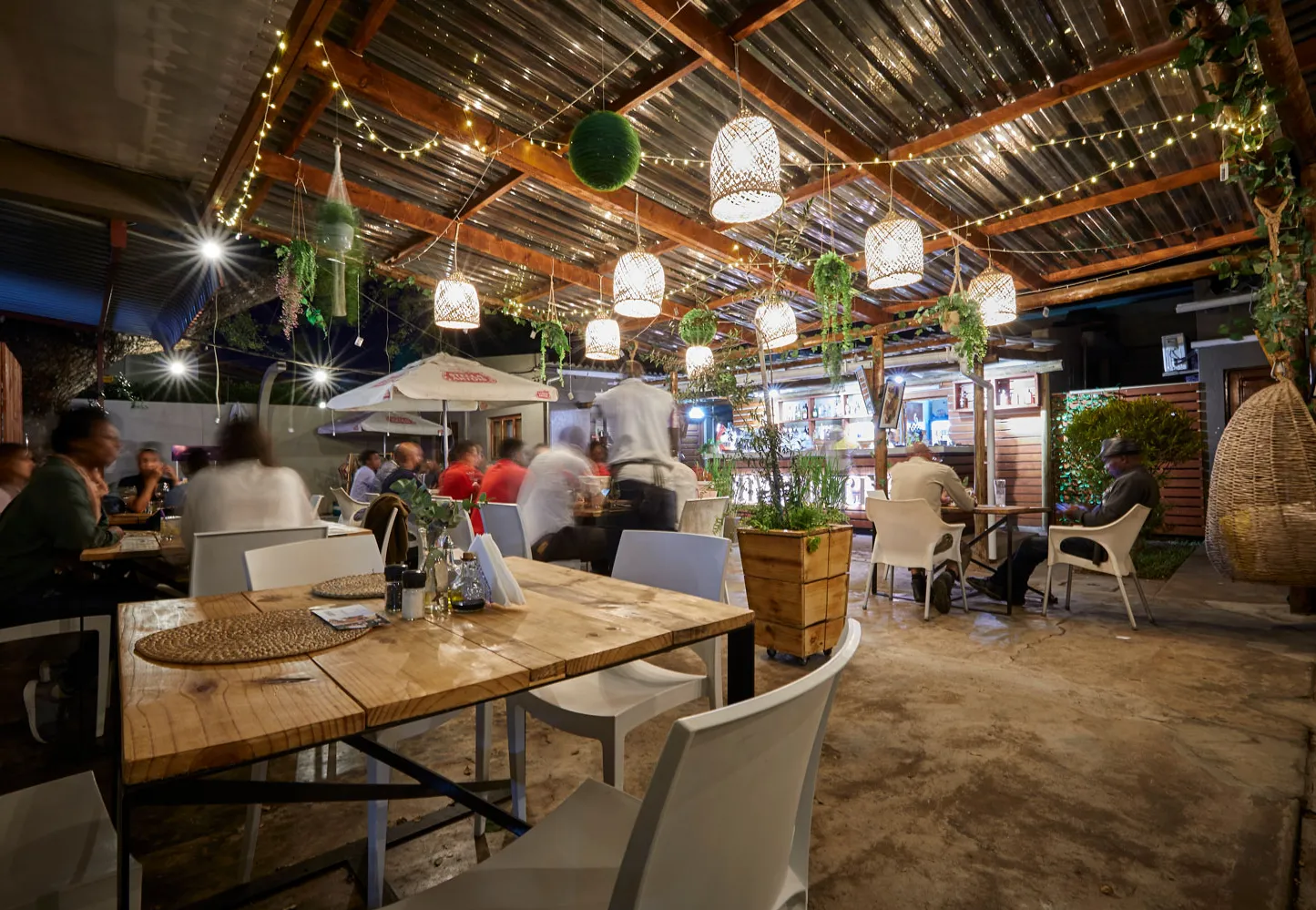
Sukrí was born in the kitchen at home, in moments with family and friends. Before going to Brazil, I almost never cooked. When I got there, I could not live on frozen food, and I began to think about food from the point of view of the person who makes it and not just the person who eats it. In 2014 I made my first red velvet cake, for my father, and I never stopped. I moved on to cakes for friends, then for customers and, suddenly, wedding cakes. I loved cooking for others, in social settings, on trips, on family occasions. And I always said I would like to have a little café, to have the freedom to explore that side, a small, green place. In 2016 my friends gave me my first professional mixer as a gift. I think that was when I knew I would never leave this path, and I decided to let myself go wherever it took me. In 2018 the opportunity arose to open Sukrí and, although I hesitated at times, instinct won out and I decided to take the risk, on nerve and courage alone. And it was precisely thanks to the encouragement of the people who most directly joined me in this adventure, David Pereira and Eddy Comiche, and of my family, who are also part of Sukrí. And because many people ask, allow me to tell you that Sukrí means sugar in Cape Verdean Creole, a name explained precisely by its beginnings in cakes and sweets.
The soul of Sukrí lies in being a place of joy, positivity and good vibes, where people feel happy and light and, above all, feel at home! What fulfils us most is seeing our customers fill the house with laughter and toasts. Our weekly happy hours are proof of this, especially the themed ones. In addition, we are fully committed, within our means, to making Sukrí an environmentally friendly place, from the start, using metal straws, wooden cutlery for takeaway and, now, working on packaging along the same lines.
“What fulfils us most is seeing our customers fill the house with laughter and toasts. Our weekly happy hours are proof of this, especially the themed ones” – Lígia Pereira, manager of Sukrí
Our establishment has changed a great deal since it began, both in its menu and in its appearance. At the start, we did not have half of the equipment and infrastructure we have today, but we had our essence: food out of the ordinary, comforting, and a relaxed but welcoming atmosphere. I am sure that is what made people come back every time they visited.
Our menu is very contemporary, with little of the traditional about it. With anything of typical origin, we always find a way to make it different from the usual, to give it a touch of our own. Our eggs Benedict are a good example, a classic that we transform by presenting a version with crab and another with prawn, two of our own very characteristic protein foods. We travel through dishes that lead us to produce others that people eat with all their senses: with the eyes, with the sense of smell and, of course, with the palate. We draw inspiration from bistro-style food for light meals, brunches and burgers; our selection of main courses is relatively small, not least because it is not really our focus. We also provide catering for small private events. We are careful to use local produce, and whenever possible we form partnerships with local suppliers and producers. Today, fortunately, there are many local producers offering ingredients that previously had to be imported, whether because of quality or availability throughout the year, especially in terms of vegetables and fruit.
We do not consider food, on its own, to be the most important factor in a restaurant. In fact, no one thing is more important than another; there are a number of components that complement one another in an almost balanced way. Having wonderful food does not guarantee success for any restaurant if, for example, the service is dreadful; just as five-star service is worth little if the atmosphere is unpleasant; or we may have the most luxurious and “Instagrammable” restaurant, which will lose its hype after a while if the food is bland. And so on. Food is a key element, certainly, but only as much as some of the factors I have mentioned.
The last two years have been very difficult for the restaurant trade, but we managed to stay alive with a few measures: reducing waste – both in purchasing and in making the most of the ingredients, so that dishes use as many common ingredients as possible; and going towards the customer – given all the covid-19 restrictions that understandably had to be respected. We had to be prepared to bring Sukrí to them and become part of their daily lives. We created, for example, brunch boxes for special occasions, and increased the possibilities for delivery to the door. In addition, we adapted the space, implementing every possible health and public safety measure, so that customers felt safe and comfortable and kept coming to the café. One of our greatest allies since the start of our operation has been digital media, both for promotion and for communicating with customers. And it is a network that will continue to deserve our dedication so that it evolves and becomes an even more functional and useful tool for us and for our customers.
We are very happy and proud of how much we have already achieved, how we have grown and evolved. But we are also aware that there is still much to improve, both in operations and in infrastructure. We want to expand the leisure and entertainment possibilities we offer, and who knows, perhaps we will meet in some other corner of the world in the near future?


