
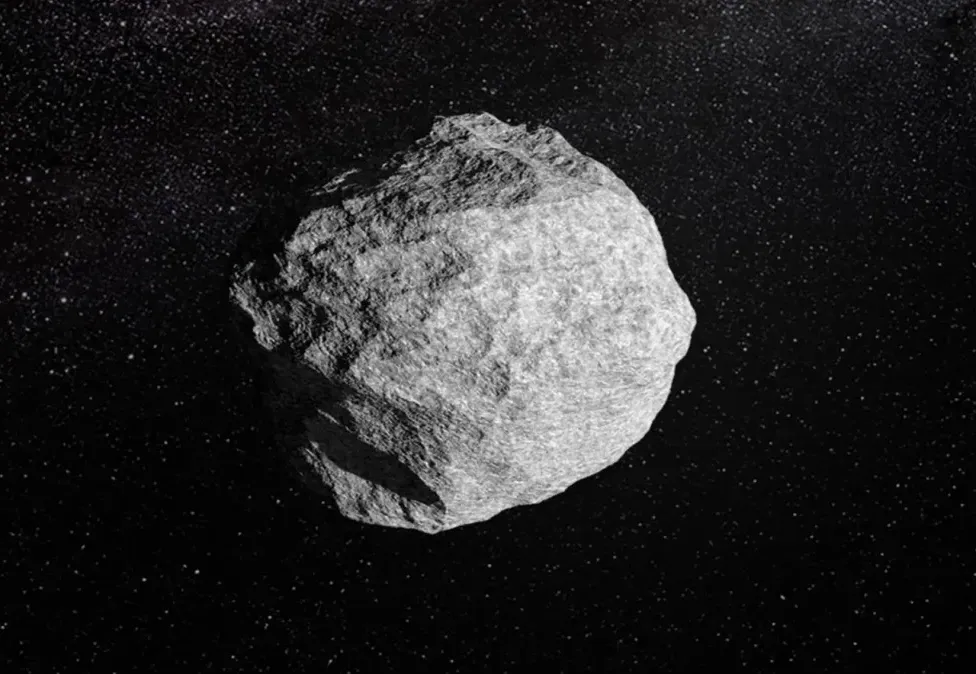
The possibility of an asteroid colliding with Earth within seven years has practically doubled, according to calculations revised by the European Space Agency (ESA) and NASA, updated on Friday. In response, the United Nations (UN) has activated the Planetary Defence Protocol, an international coordination mechanism for possible mitigation measures.
The asteroid in question, designated 2024 YR4, was identified in December by a telescope in Chile and is estimated to be between 40 and 90 metres in diameter, similar in size to the meteorite that devastated a vast area of Siberia in 1908, in the so-called Tunguska Event. Its speed is 17 kilometres per second, and the initial probability of impact, which was below 1%, has now risen to 2.3%.
In view of this update, two international groups have been mobilised under UN auspices, tasked with monitoring the object and intensifying astronomical observations until April, when the asteroid will cease to be visible to ground-based telescopes. The expectation is that by then the calculations will make it possible to rule out any significant risk of impact. Otherwise, 2024 YR4 will approach Earth again in three years, which could require concrete measures to be adopted.
At present, the possibility of collision falls on a strip running from northern South America through Africa to Southeast Asia, although the probability is still considered low. However, should the scenario worsen, NASA has the DART technology, successfully tested in 2022, which could be used to deflect the asteroid's trajectory and avoid a catastrophic impact.


