
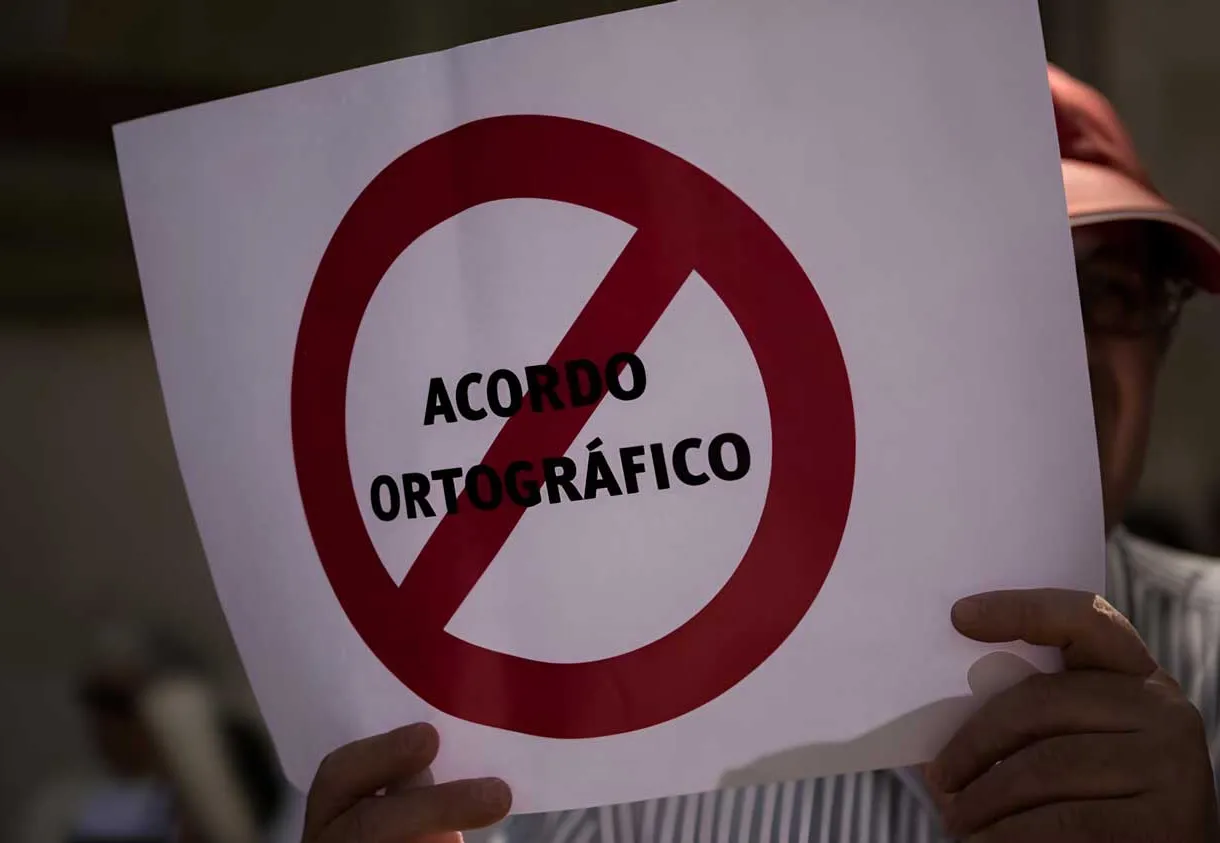
The issue of the 1990 Spelling Agreement is back in the spotlight in Portugal, through an opinion piece by Maria José Abranches G. dos Santos, published in the newspaper PÚBLICO. In a year marking the fiftieth anniversary of 25 April, the author calls on political leaders and the media not to ignore the controversy surrounding the agreement, showing a division that still persists in Portuguese society. The topic gains relevance at a time when many Portuguese people express a wish to return to the earlier spelling rules.
Abranches G. dos Santos criticises the political imposition of the agreement, considering it an attack on the democracy achieved after the revolution of 25 April 1974. In her article, she stresses the need to preserve the Portuguese language, a fundamental pillar of national identity and culture, weakened by the adoption of the agreement.
The discussion around the Spelling Agreement is not limited to Portugal. Mozambique and Angola, despite being signatories, remain faithful to the earlier spelling rules and have not implemented the proposed changes. This resistance underlines the complexity and sensitivity surrounding the Portuguese language, shared by several countries but experienced in different ways.
The article points to the discontent of part of the Portuguese population with the changes imposed by the agreement, including the elimination of silent consonants and the change to accentuation rules, which distance the Portuguese language from its etymological roots and its history. It also highlights the lack of consensus and the problematic implementation of the agreement, which changed the way the language is taught, without considering the profound impact on future generations.
This debate, reignited by Abranches G. dos Santos, reflects the continuing passion and care that the Portuguese have for their language, in an appeal to political leaders to reassess their adherence to the 1990 Spelling Agreement. At a time of reflection on democracy and national identity, the discussion on the future of the Portuguese language remains an open and significant question.


