
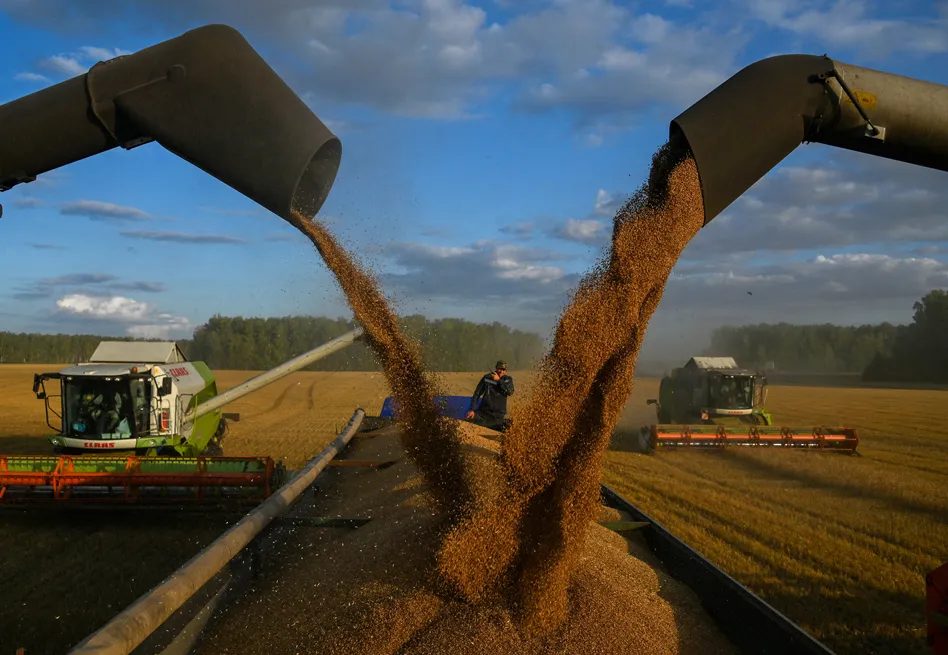
In a gesture that marks a new phase in relations between Russia and the African continent, the Russian government has begun the free distribution of grain to six African countries, fulfilling the promise made by President Vladimir Putin in July this year. According to information released by the news portal 360° Mozambique, this initiative covers up to 200 thousand tonnes of grain, intended for nations facing significant challenges in terms of food security.
Russia's Minister of Agriculture, Dmitry Patrushev, in a statement sent via Telegram, said that the first shipments are already on their way to Somalia and Burkina Faso. In addition, deliveries are planned for Eritrea, Zimbabwe, Mali and the Central African Republic (CAR), in a clear demonstration of Russian support for these nations.
This humanitarian action comes in a particularly tense context, after Russia withdrew from the Black Sea Grain Initiative, an agreement that had facilitated the transport of Ukrainian grain through the Black Sea ports. This agreement had helped to reduce grain prices on the world market. However, Putin criticised the initiative, claiming that it did not benefit the countries most in need, even though Russia exported about 60 million tonnes of grain in the last year.
Russia's withdrawal from this agreement was followed by attacks on Ukrainian ports and grain storage facilities, actions that, according to Kyiv, resulted in the destruction of hundreds of thousands of tonnes of grain. These events have exacerbated global concerns about food security, especially in regions that are already vulnerable, as is the case with several African nations.
Meanwhile, Ukraine recently announced that it has managed to ship 4.4 million tonnes of goods, including 3.2 million tonnes of grain, through a maritime corridor established in August, in an attempt to mitigate the impacts of the crisis.
This development represents a significant moment in international relations and highlights the crucial role that Russia and Ukraine play in the global supply of grain. For the African countries that benefit, this aid arrives at a critical time, offering much-needed relief in the face of the food challenges they face.


