
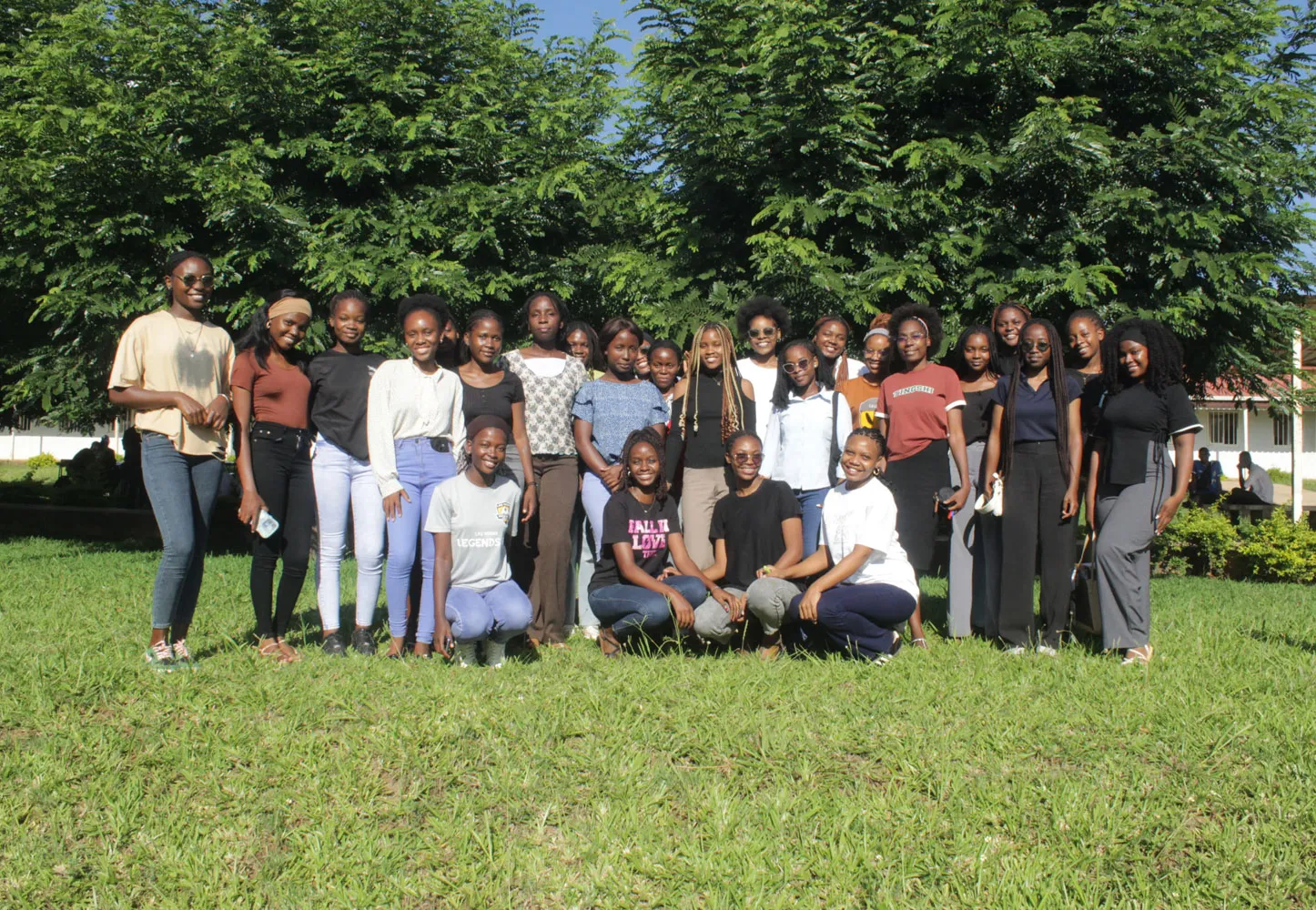
For decades, engineering was regarded as a predominantly male profession. However, this picture is beginning to change, albeit slowly. In Mozambique and across much of Africa, a growing number of women are entering technical fields, making a significant contribution to economic and social development.
Despite this progress, the presence of women in engineering remains low. On the African continent, women make up less than 20% of the workforce in science, technology and engineering. In Mozambique, studies indicate that women's participation in science and innovation remains low, reflecting structural inequalities in access to education and professional opportunities.
Education as a starting point
Access to scientific education, particularly subjects such as mathematics, physics and chemistry, is fundamental to any engineering career. In Mozambique, this access exists, but it is not uniform. Many schools face serious limitations in infrastructure, laboratories and technological resources, which hampers practical learning, a reality that is even more critical in rural areas.
Another limiting factor is the lack of support. Many girls do not receive adequate guidance, whether in the form of tutoring, direction or simply time and space to study. Without such support, interest in the sciences can fade in the earliest stages of schooling.
Information and role models: a gap that shapes choices
Access to information is also unequal. Encouragement initiatives, such as talks, careers guidance programmes and campaigns promoting the sciences, are concentrated mainly in urban centres. On the outskirts of cities and in rural areas, the absence of concrete role models leads many girls to base their dreams on the most visible and socially recognised options: short technical courses, teaching, nursing, the police, management or law.
This is not a lack of ambition, but a matter of how close and how well recognised these professions are. As a consequence, many young women do not enrol in science subjects, which is reflected in the gender imbalance in classes. A male predominance can be observed, reinforced by inequalities in access to information and opportunities from an early age.
Culture and family responsibilities
Cultural issues aggravate the problem. Many girls take on domestic chores or help on the family farm (machamba) and in the family business. These responsibilities, although vital to the household, reduce the time available for study and make it harder to devote the necessary effort to demanding subjects such as mathematics and physics. Without encouragement from their families, many end up giving up the sciences early.
Representation and perseverance
Even when they manage to enter engineering courses, women face new challenges. At some Mozambican institutions, fewer than 25% of engineering lecturers are women. Among students, the disparity is even greater: in fields such as civil, electrical and mechanical engineering, mining and computing, the percentage of women can fall below 15%.
The absence of female role models reinforces stereotypes and makes the environment less inclusive. When a girl does not see other women engineers, it is harder for her to imagine herself in that position. Representation matters: it feeds ambition, strengthens self-confidence and shows that it is possible.
Retention is another critical point. Many women abandon their studies because of financial difficulties or the demands of scientific subjects. Even so, when there is support — from family, school or community — the situation can change. Consistent encouragement and guidance allow interest to flourish and more girls to move on to scientific careers.
Perseverance is, therefore, essential. The journey demands resilience, discipline and a continuing belief that dreams are possible. Support networks, especially of women who have already walked this path, become powerful tools for overcoming barriers and staying focused.
Conclusion
There are Mozambican women who, despite the challenges, have had support and have managed to build solid careers in engineering. However, most do not have this support structure — and that is where one of the greatest challenges of equity lies.
To talk about women in engineering is to talk about obstacles, but also about overcoming them. It is to recognise the urgent need to create more opportunities, role models and spaces where girls can believe that this path belongs to them too. Promoting equitable access to information and bringing awareness-raising initiatives to secondary schools is not merely a question of inclusion — it is a fundamental strategy for broadening horizons, breaking down stereotypes and enabling more women to build the future of engineering in Mozambique and in Africa.


