
A new educational character has been born in Mozambique and wants to help the new generations prepare for the future. KIBO did not come from Silicon Valley. Nor was he born in a secret laboratory. According to his own story, he came from much further away. On a distant planet, where technology exists to help and to solve problems, lived the robot Model 258. One day he received a different mission: to travel to Mozambique to share knowledge with children. He crossed stars, galaxies and comets until he landed in Marracuene. It was there that he discovered thousands of curious, creative children, full of questions and eager to learn.
This short tale marked the official launch of KIBO at the latest edition of Oficina do Futuro, but it is far from being just a children's story. It is the starting point of an ambitious supplementary education project conceived in Mozambique, by Mozambicans, to prepare children and young people for the challenges of the twenty-first century.
The idea came from a simple question: what if there were a character capable of explaining, in a fun way, everything that hardly fits into our classrooms? Today, a child needs much more than Portuguese, mathematics or science to face the future. They need to understand how the internet works, learn to tell true information from fake news, know how to manage money, protect the environment and develop critical thinking, among many other skills. These are lessons that affect the daily life of every citizen, but which still take up little space in traditional teaching.
This is precisely where KIBO comes in. Instead of presenting complex concepts through long explanations, the robot turns them into adventures, challenges, games and stories. The aim was not to create yet another children's character, but a guide capable of awakening curiosity and making learning a fun experience that is close to the reality of Mozambican children.
The project was conceived as a true educational universe. The initial stage consists of illustrated almanacs, created to explain current topics in accessible language and accompanied by activities, curiosities and challenges. In parallel, KIBO visits schools through in-person sessions, led by specialists, where learning takes place through demonstrations, games and plenty of participation from the pupils.
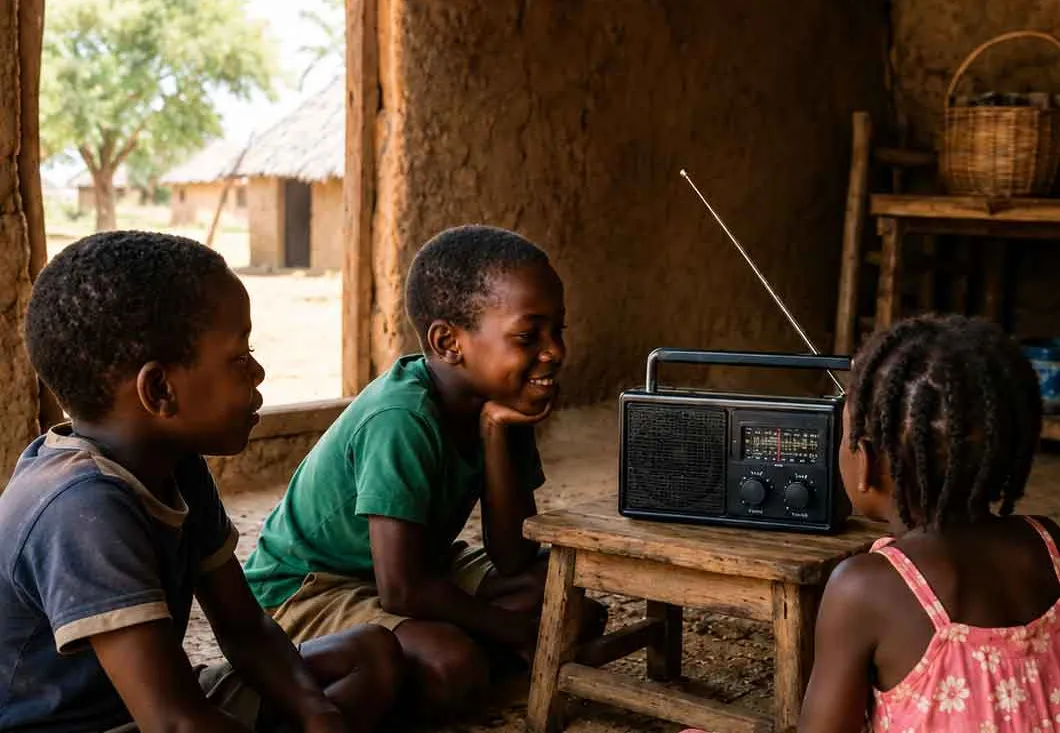
But the adventure does not end in the classroom. A digital platform is also planned, where children will be able to learn through interactive games, creative activities and challenges, and even chat with a chatbot developed to answer their questions. At the same time, television, radio and social media will bring the character to life through short educational content adapted to each platform. The idea is simple: to be present where children already are.
The KIBO universe will also continue to grow through interviews, science experiments, workshops, challenges, shows, educational events and the great KIBO Exploratory, a space where learning and playing become part of the same adventure.
Given the scale of the initiative, its promoters have decided to follow a prudent strategy. During the first year, the project will be rolled out in pilot schools to measure results, listen to teachers and pupils, refine methodologies and validate content. From there, the ambition is to extend the initiative gradually to more schools and communities, consolidating an educational model capable of growing sustainably.
More than teaching content, KIBO wants to develop skills. He wants to help a generation to think better, to ask questions, to make informed decisions and to see technology as a tool for creating, solving problems and transforming the world.
In the end, perhaps the story of that little robot from a distant planet was never about science fiction. It was always about believing that knowledge remains the most powerful instrument we can offer children.


