
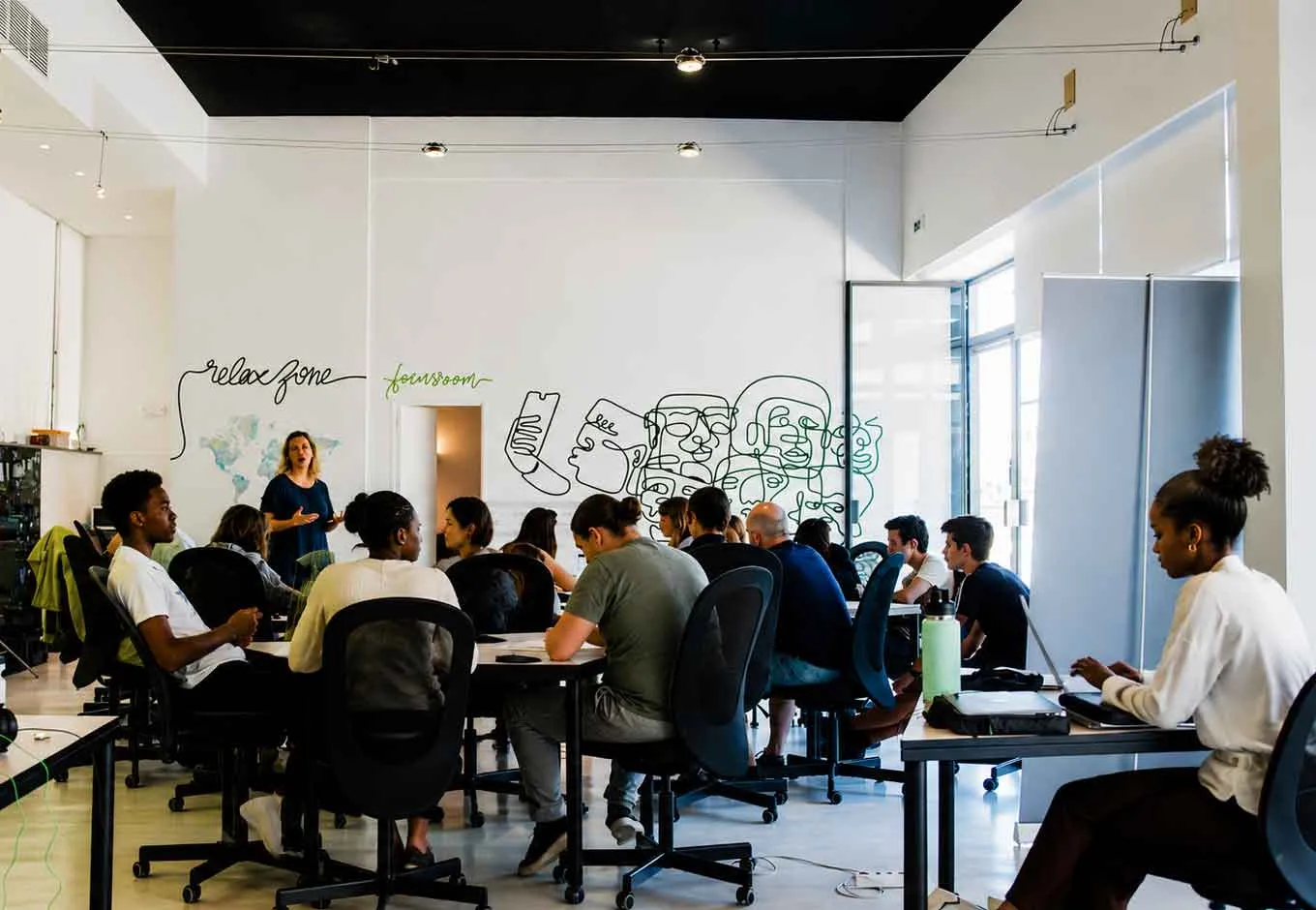
For generations, school was built around a relatively simple formula: pupils grouped by age, rigid timetables, identical syllabuses for everyone and a path mapped out almost to the minute. But in a constantly changing world, where careers shift quickly and access to knowledge is increasingly democratised, there is a growing conviction that education also needs to evolve.
It was precisely from this reflection that Brave Generation Academy (BGA) was born, an international learning network that seeks to offer an alternative to the conventional model. The academy came about when Tim Vieira and his wife, Lídia, were looking for a different solution for the education of their own children. The intention was to create a more flexible and personalised system that would allow young people to keep developing their interests without school becoming an obstacle. As the founder explains, the idea was to find “a more personalised, more flexible way” that would let pupils keep pursuing their passions while continuing their studies.
At the heart of the model is a change of paradigm: instead of students adapting to the system, it is the system that seeks to adapt to the students. For Tim Vieira, this is one of the main differences from traditional education, which he considers poorly suited to current demands. In his view, the conventional model “is not adapted to the reality of today” and, above all, “is not working for the pupils”.
Flexibility is one of the most visible characteristics of this approach. Each student can organise their path differently, combining learning with sporting activities, personal projects, travel or work experience. Some attend the academy all day, while others split their time between study and other activities. The guiding principle is simple: every pupil learns differently and has different needs. That is why, explains Tim Vieira, BGA seeks to ensure that “the system adapts to the pupils”, rather than requiring everyone to follow exactly the same path.
Another central element of the model is the figure of the Learning Coach, or mentor. Unlike the traditional role of the teacher, these professionals follow the students' overall development, helping them to set goals, overcome difficulties and stay motivated. According to the academy's founder, the mentors are focused above all on “motivating and helping pupils to cope with day-to-day life”, as well as on creating opportunities that allow them to gain new experiences and develop skills relevant to the future.
The link to the real world is, indeed, one of the distinctive hallmarks of Brave Generation Academy. Pupils take part in community activities, interact with professionals from different fields and gain experience with companies and organisations. The aim is to reduce the distance between what is learned and what will later be demanded in working life. As Tim Vieira sums it up, the academy seeks to “bring the real world to the pupils as early as possible”.
The results achieved over recent years have strengthened confidence in the model. BGA has seen students rank among the best in the world in different academic fields and win places at prestigious international universities such as Stanford, Berkeley and Bocconi. Even so, for the organisation, the most important impact goes beyond rankings or university admissions. The founder highlights above all the personal transformation seen in many young people who arrive unmotivated or without a clear direction and who end up gaining confidence, autonomy and a clearer vision of their future. It is precisely this progress that he finds most rewarding: seeing pupils who were “very lost and unmotivated” begin to feel happier and more able to make decisions about their own path.
In Mozambique, Brave Generation Academy is currently present in Maputo and Praia do Tofo, with ambitions to expand to other regions. The interest, however, is not limited to opening new sites. The organisation also intends to collaborate with public and private schools, sharing methodologies, platforms and tools that can help modernise teaching. Tim Vieira believes that the country has unique conditions to benefit from this kind of approach, highlighting the weight of young people in the population and the potential of the new generations to connect with global opportunities.
At a time when education systems around the world are looking for answers to ever more complex challenges, the experience of Brave Generation Academy raises a pertinent question: what if the future of education lies less in teaching everyone in the same way and more in allowing each pupil to find their own path?


