
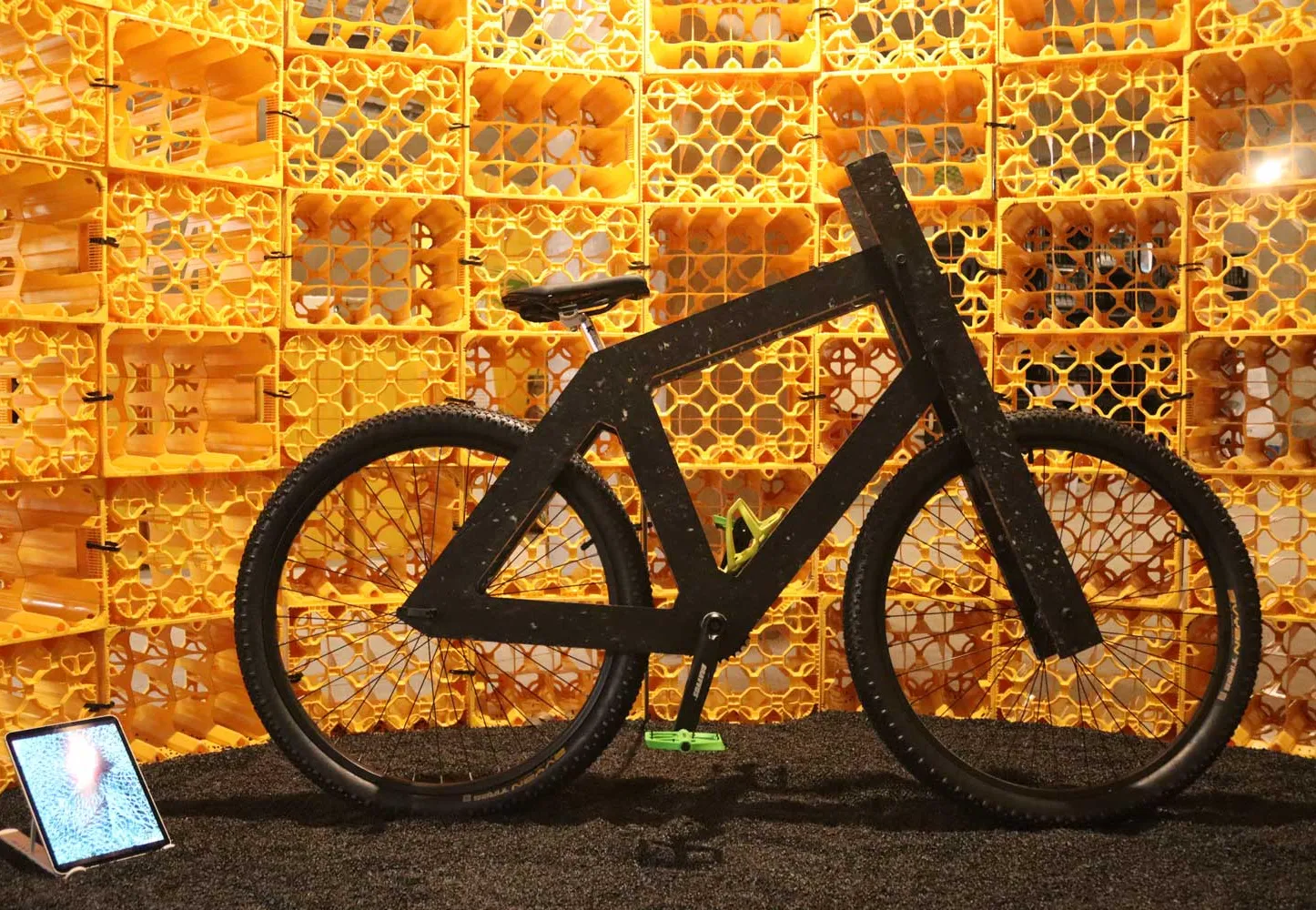
As part of the CFAO Entrepreneurship Challenge, in partnership with Xonguila magazine, in this issue we highlight the eighth selected project, showcasing initiatives focused on mobility or road safety. We bring you the innovative Baaike project, an initiative that combines mobility with the solution to one of today's greatest environmental problems: plastic pollution.
Founded by Marta Uetela, Baaike emerged as a creative response to the growing accumulation of plastic waste in the coastal areas of Mozambique, particularly in the outskirts of Maputo. The inspiration for the project came from an experience Marta had in Pemba, where she witnessed the enormous quantity of plastic rubbish that invades the beaches. This experience awakened in her the desire to help solve the problem through a practical and sustainable solution: the production of bicycles made from recycled plastic.
Each Baaike bicycle incorporates around 12 kilos of plastic, collected in peripheral areas and coastal zones. These bicycles will provide an affordable mobility alternative for local communities, which often have limited access to adequate public transport, while mitigating environmental pollution, a business model that contributes both to the circular economy and to environmental awareness among the Mozambican population.
The project, launched in August 2023, is already beginning to have a significant impact, both on mobility in rural and urban areas and on awareness of the issue of plastic waste. Mozambique, with one of the longest coastlines in Africa and a fragile waste management network, faces enormous environmental challenges, and Baaike's work shows how entrepreneurship can be part of the solution. According to a recent study by the United Nations Industrial Development Organization (UNIDO), Mozambique faces significant challenges in waste management, with only 11% of plastic waste being recycled each year. The rest ends up in landfill or, worse still, in the oceans and coastal zones, contributing to marine pollution. However, initiatives such as Baaike are making a difference. This local impact becomes even more relevant when one considers that, globally, the production of sustainable bicycles can reduce CO2 emissions by up to 21%, compared with conventional manufacturing methods.
The combination of innovation and sustainability makes this project a notable example of how it is possible to rethink our habits and resources, creating solutions that benefit both people and the environment. It is a striking initiative in the Mozambican context, where limited transport and marine pollution are persistent problems.
Xonguila magazine and CFAO invite all entrepreneurs to submit their projects in the field of mobility or road safety. To take part, send your project to the email address: geral@xonguila.co.mz. This is the moment to turn ideas into concrete solutions, just as Baaike has done, inspiring communities and protecting our environment.


