
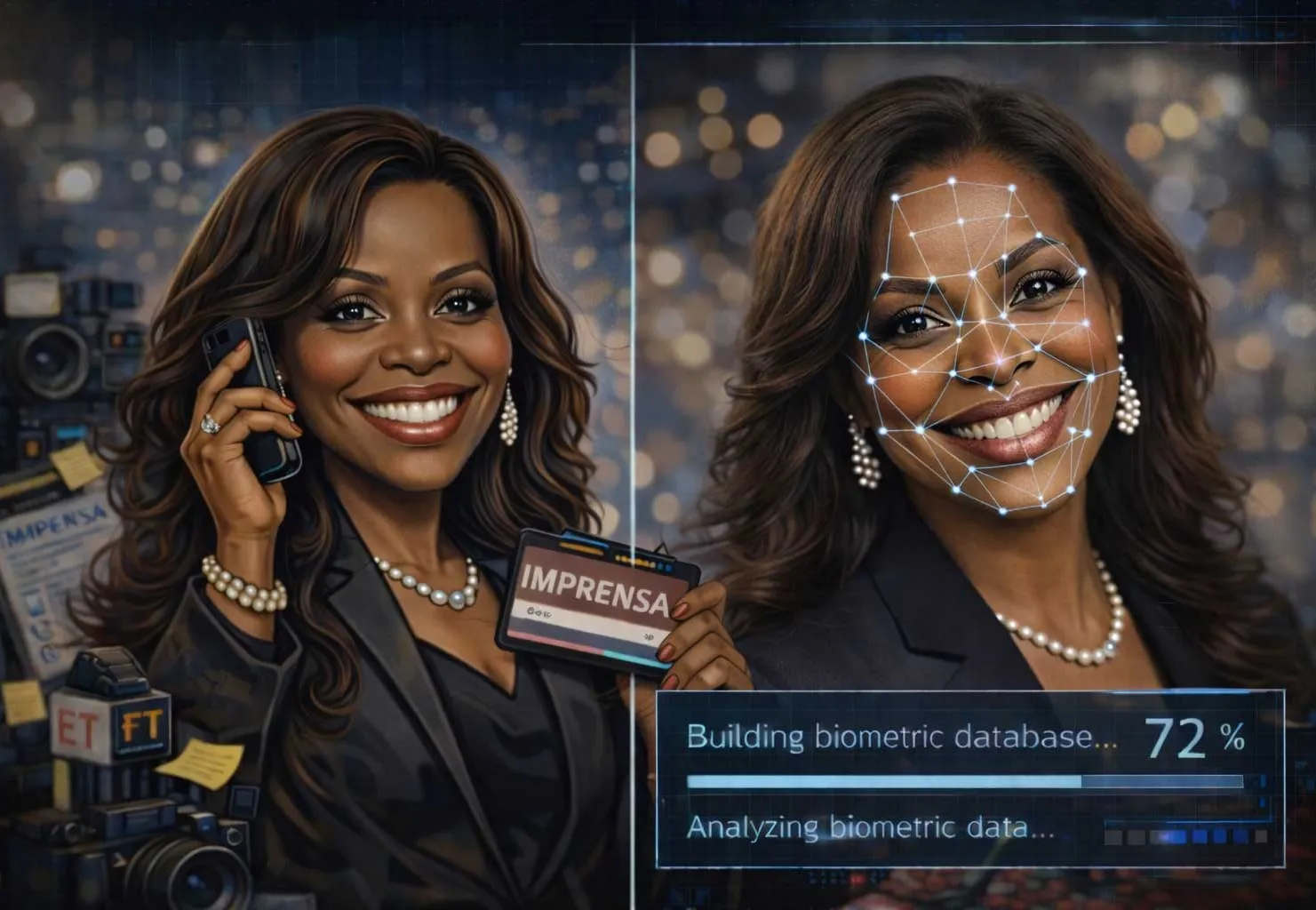
A new social media craze, which involves asking artificial intelligence tools such as ChatGPT to generate personalised caricatures, has drawn warnings from major media outlets about the privacy risks associated with the collection of facial and personal data. The Sun and the New York Post point out that this trend may involve the creation of databases of biometric characteristics and detailed personal information, even without users fully realising what they are sharing.
According to The Sun, cybersecurity experts have warned that, by uploading photographs to generate caricatures, users allow AI models to process and potentially store facial features, such as the shape of the eyes, nose and bone structure, which may be considered sensitive biometric data.
Similarly, the New York Post reported that the viral phenomenon has led users to discover how well these tools “know” personal details thanks to the information accumulated in their interactions with the AI, and that this knowledge can become a privacy problem if platforms store and reuse that data.
The experts interviewed in these articles warn that the continuous collection of photographs and other personal details can be used to build detailed profiles of users or to feed databases with sensitive information, opening the door to risks such as deepfakes, identity theft or misuse of data by third parties.
This issue goes beyond the simple fun of turning a selfie into a caricature. It is a matter of understanding how and where this facial data is stored, who can access it and for what purposes future AI systems might use this accumulated information — a scenario already underlined by experts in global debates on technology and privacy.


