
We love Africanity
Brought to you by Absa Bank Mozambique
How did the Premier Branch project focused on the arts come about?
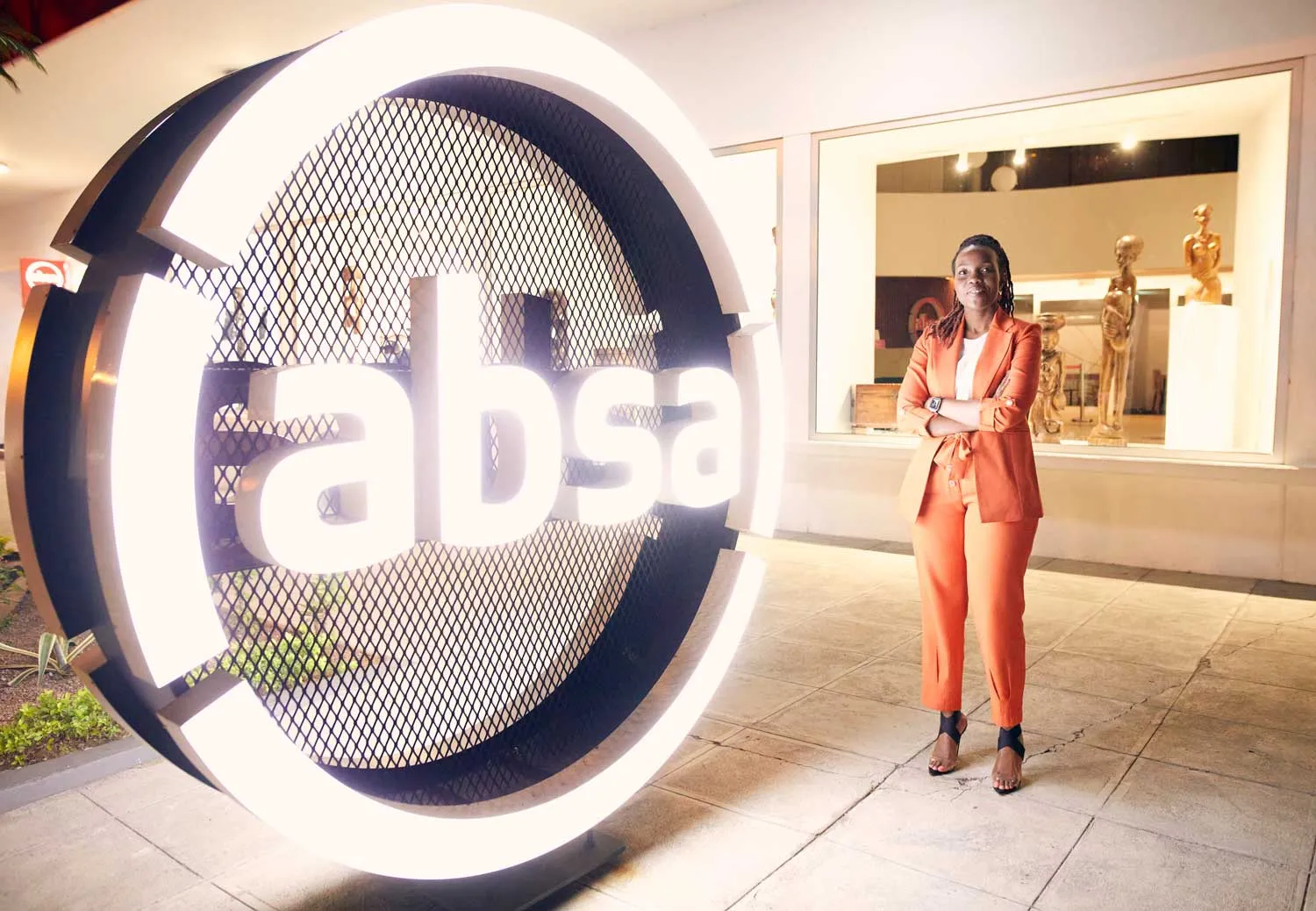
The window displays began at the same time as the concept of Africanity, as part of the rebrand. Africanity is not just a new word coined by Absa; above all it is a concept that represents the distinctly African ability to always find a way to make things happen. And in this case, in a highly creative approach, we can say that Absa came up with a creative solution to showcase local content in a considerably adverse context. With the outbreak of the coronavirus pandemic, we felt obliged to steer the idea towards an initiative to support artists whose activities had been limited by the measures adopted by the government to contain the spread of the disease. This direction immediately created a ‘two-in-one’ effect: on the one hand, it allowed artistic and cultural exhibitions to continue during the pandemic, in a fully democratised way, and, on the other, it lifted artists out of the disorientation they found themselves in, preparing them to deal with different types of audience.
This space allows artists to present their work safely. Was creating a safe stage to promote the cultural sector a concern for Absa?
Obviously. And as we say in our best-known concept, “Africanity is a way of making things happen”. The pandemic will not stop us from living or from doing what we were already doing, but it obliges us to do it safely and in a way that preserves our lives and our health. That is what matters most to us and, for that reason, at this branch we have put in place every condition so that the pandemic does not prevent living art from spreading beyond our borders. We have already hosted several exhibitions and will continue to do so, strictly following the recommendations of the health authorities.
Why is culture an important pillar for Absa?
Those who know best say that without culture there is no life, or simply that without it we have no identity. It is what defines us, and only from a clear and simple definition do we begin to be known. Culture is what we do every day and, therefore, we value it in the same way that we value our achievements and our identity. In the environment in which we operate, we interact with many different entities, and it is important that each one shows itself as it is and how it operates, so that we can understand diversity and, from there, direct our contributions to the development of society in general. Culture is an element of the utmost importance for our citizenship strategy, because we believe in its fundamental role in shaping society, but also in the enormous talent and creativity that Mozambicans have. That is why we support various projects and initiatives, such as Xiquitsi and Mozambique Fashion Week. Indeed, Absa was the first bank to use a visual artist (Gonçalo Mabunda) as the central face of an advertising campaign, namely the rebrand campaign, which shows the importance the bank attaches to art and culture, not to mention the work we have been doing to preserve the bank’s art collection, which includes works by national artists and artists of international renown, such as the great Malangatana.
We are very proud to be the first bank to turn one of its spaces into a cultural attraction, and that in itself demonstrates our Africanity.
From the Bank’s perspective, how does the Premier Branch initiative promote the growth of national artists?
First of all, it is worth mentioning that visual artists, photographers, poets and fashion designers have passed through here, from the most acclaimed to those who aspire to establish themselves on the arts circuit. We promote not only the growth of national artists, but of the arts and culture as a whole. In this space we have had not only established artists and young artists, but also an exhibition that gave the Bank’s employees room to show their creativity. Obviously, each person gains, to the extent of their abilities, the benefit that suits them, but in general we have helped to create great links between those who make and those who appreciate. I should also say that the exhibition is not limited to this physical space; we have also shared the creations presented here on our digital platforms and in the local press, which provides national and international visibility that is of great benefit to our artists. Some are pleased by the rise in sales, but there are also those who take pride in the exchange and sharing of experiences that add value to their work.
How many artists have been able to present their work in this project?
From the end of 2019 to date, we have had more than 30 artists at our Premier Branch. We believe this is a national record, as there is no record of any cultural centre that has exhibited the same number of artists in such a short time. We can say with pride that in a single exhibition we have had 18 artists, when we held the MFW (Maputo Fashion Week) display, in which a group of fashion designers, mostly women, showed their creations. It should be noted that this exhibition lasted about three months, and that the artists exhibited at different times so as to avoid crowds. We had as many other artists in more than five exhibitions last year alone, which already makes us a standout and a point of reference in the stronghold of artistic and cultural exhibitions in Mozambique.
And what are the next steps for the project?
Taking this project to the main provincial capitals across the country. What we really want is to showcase local content, and there is nothing better than also bringing in the cultural diversity that identifies each part of the country. We also want to keep investing in an interdisciplinary concept, so that we promote not only art and culture but also pass on the legacy, our history, to generations to come. We also intend to strengthen the digital component and, through the Bank’s social media, invite artists to promote the work they produce during this critical period, which needs art and culture, far more than ever, as a unifying factor and one that helps humanity to overcome and transform its history.


