
Sustainability in business is intrinsic to our activity. We advocate minimising human impact on the environment, which is why we have a programme to monitor our own energy and paper consumption that includes preventive and corrective measures, as well as staff training and awareness-raising. We have a philosophy of work and of operating in the market, which naturally extends to all levels, that is part of our culture. We are a family with guiding principles, and before taking a stance with actions in favour of sustainability, we seek to be, categorically, a bank that is aligned in this respect. We have developed a programme, at employee level, that involves a series of aspects linked to the principles of sustainability and that is supported by an internal communication plan. We already have major milestones on this theme, such as our new headquarters, whose operation takes into account a series of environmental considerations, for example, minimising electricity consumption, which includes a programme to monitor our own consumption, with preventive and corrective measures, and another of staff training and awareness. In addition, we have implemented digital signatures and archives and, generally, we have created and made available digital channels.
We favour financing businesses that observe ecological principles and are founded on the philosophy of green finance, where we observe the principle of risk management, assessing the environmental impact of each business in the financing agenda. For us it is crucial to have a transition plan, so that, as we convert businesses and the way they operate into something increasingly sustainable, we ensure the preservation and stability needed for socioeconomic growth. In 2021 we made a public commitment by becoming signatories of the United Nations Global Compact; that is, we oriented our management model on the basis of the United Nations’ 17 Sustainable Development Goals, so as to become, in the coming years, the “greenest bank” operating in Mozambique.
“In 2019, we adopted measures at the level of our infrastructure with a view to reducing electricity costs and paper consumption”
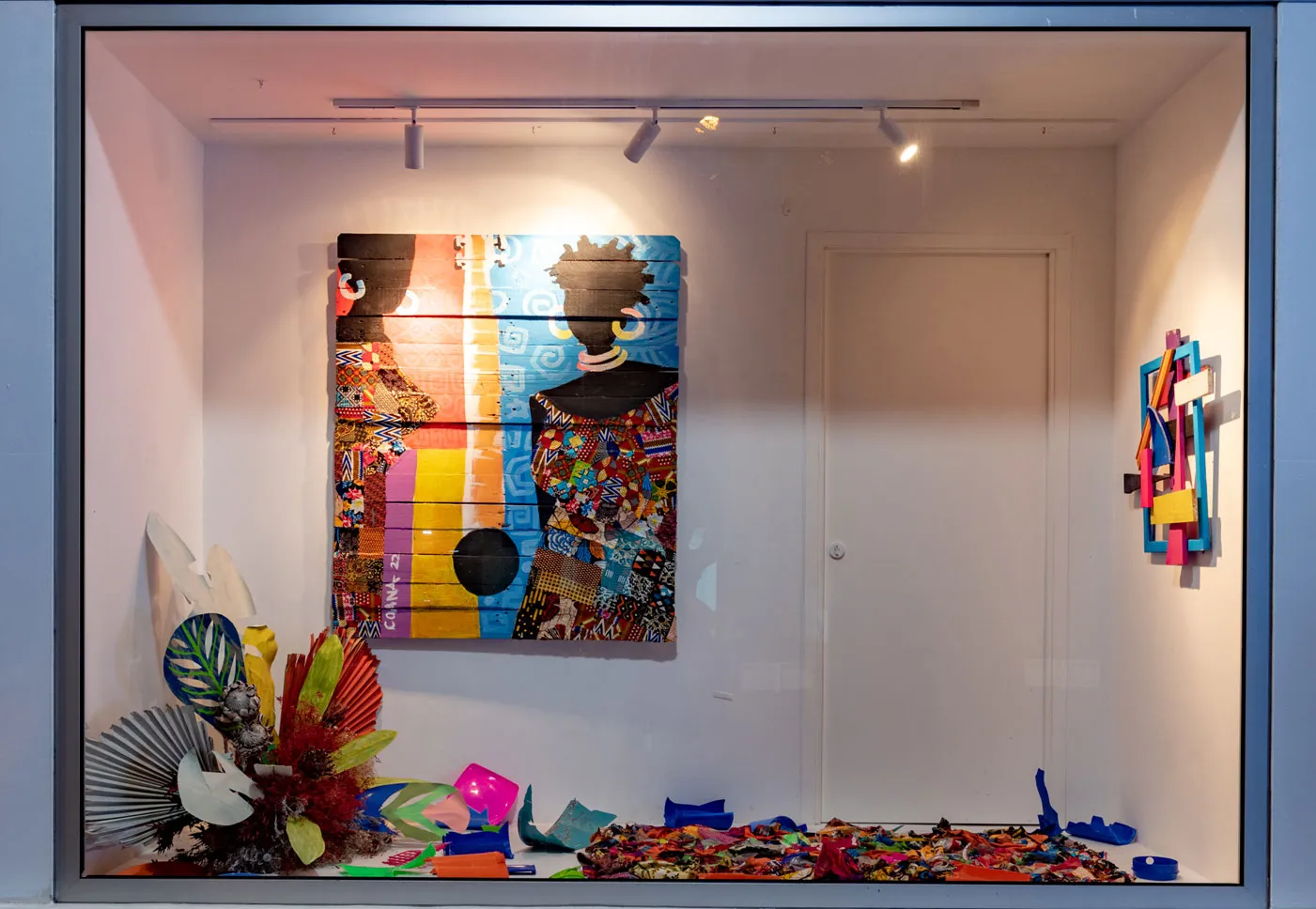
The Bank’s strategies and operations are aligned with universal principles in favour of environmental conservation. This dictates our engagement with and support for ecological movements, with a strong streak of awareness-raising on the rational use of solid waste through its reuse. By supporting Sebastião Coana, we have elevated Mozambican culture and art, combined with a solid sustainability component that aligns with the bank’s vision of promoting cultural art, developing skills and civic education. Absa Bank Moçambique has shown itself to be committed to contributing to Mozambique’s development, particularly in relation to figures who deserve recognition for their contribution to socioeconomic growth, and Sebastião Coana is a young man who is currently standing out for the relationship he has created between the arts and the environment.
There are other projects focused on this theme that are at the centre of our agenda. We have renewed our partnership with Gorongosa National Park for the preservation of fauna and flora; we took part in the launch of SPROWT, which is closely linked to this theme, and we will continue to implement the actions set out in our strategic plan and, where there is room and capacity to do more, obviously we will do so.
Xonguila spoke to the artist Sebastião Coana, a painter who, in partnership with Absa Bank Moçambique, recently held the Reciclarte exhibition, seeking to understand his vision on this theme.
My aim in this exhibition was to challenge people’s perception of rubbish and to raise awareness of reuse and recycling through my works of art. Taking rubbish and turning it into art is, for me, a means of making society aware of the importance of fighting pollution. I chose to use rubbish to make art, which in turn will awaken the mindset of anyone else, allowing them to learn to reuse rubbish. In this exhibition I wanted to offer a different approach to education about pollution.
I see art as a practical instrument of change, a fundamental educational tool in the process of raising our society’s awareness. In concrete terms, my mural works are painted with the involvement of young people whom I train in painting techniques that they can use again in their neighbourhoods, to train other young people and to paint houses and artworks for their livelihood. The young people who took part in painting murals with me and the municipality during last year, 2021, managed to obtain financial support after taking part in the programme. This year I intend to reach around 5,000 girls and young people in Maputo and other districts across the country. As far as community education is concerned, mural painting carries themes such as “Educating women and girls is educating society”, which can be found in the city centre and promotes girls’ education and women’s emancipation. And I have painted, in several districts, themes against gender-based violence, and so on. Murals also encourage the promotion of urban tourism and the revitalisation of the public aesthetics of the streets, and attract more tourism.
Artists need corporate support. When we have more companies supporting annual exhibitions and more curators and academics supporting talent management, we will have better results and make more of an impact.
In terms of pollution and climate change, we should raise people’s awareness so that they understand their impact. And individually, too, we should create mechanisms to multiply each person’s talent by teaching others. All of us have an important role to play in achieving the sustainable development goals. It is quicker to fight poverty when we ourselves become less selfish.


