
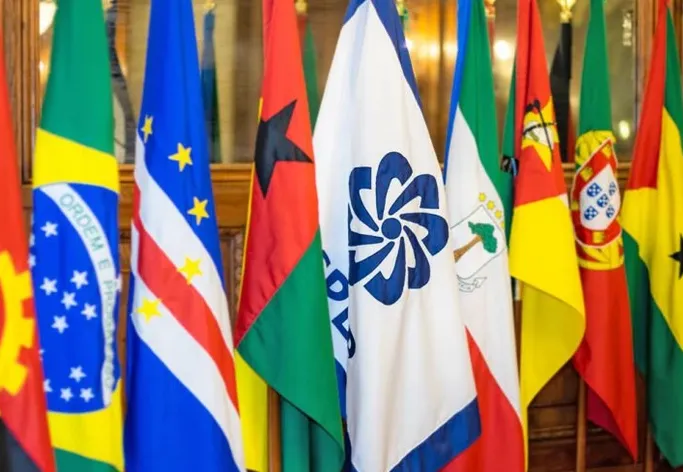
Thirty years have passed since nine countries decided to turn a shared linguistic heritage into a political project of cooperation. On 17 July 1996, in Lisbon, the Community of Portuguese Language Countries (CPLP) was born, with the ambition of strengthening friendship, diplomatic coordination and development among States united by the Portuguese language. Today, three decades on, the organisation celebrates its journey under the motto “Unity in Diversity, A Community for Peoples”, but the date also invites an inevitable exercise: assessing to what extent the promise of Lusophony has actually been fulfilled.
Initially created by Angola, Brazil, Cape Verde, Guinea-Bissau, Mozambique, Portugal and São Tomé and Príncipe, the organisation went on to admit Timor-Leste in 2002, after independence, and Equatorial Guinea in 2014, coming to bring together nine member States spread across four continents. Over these three decades, the CPLP has established itself as a space for political dialogue, multilateral cooperation and international promotion of the Portuguese language, now spoken by more than 265 million people.
However, for many analysts, businesspeople and citizens, the community remains far from realising the economic and social potential that a common language could provide.
Despite progress in political, cultural, educational and diplomatic cooperation, significant barriers persist to the mobility of citizens, to investment, to the recognition of professional qualifications and to the movement of companies among the Portuguese-speaking countries. Economic integration remains limited and intra-CPLP trade remains below expectations, in a space that brings together emerging markets, abundant natural resources and a predominantly young population.
In recent years some important steps have been taken, notably with the CPLP Mobility Agreement, which seeks to facilitate movement among member States through more flexible visa regimes. Even so, practical application remains uneven, depending on each country's legislation and choices.
Beyond the institutional dimension, the 30th anniversary celebration seeks to affirm the CPLP as a community of peoples. Exhibitions, conferences, cultural initiatives, academic programmes and cooperation projects mark the commemorative calendar throughout 2026, reinforcing the role of culture as a unifying element of a Lusophone identity built far beyond politics. Among the initiatives are the exhibition “CPLP: 30 years of Shared Art”, in Lisbon, as well as various international seminars devoted to education, archives, health, climate change and scientific cooperation.
Even so, many argue that the true strength of Lusophony lies in people and not just in institutions. Young entrepreneurs, universities, companies, artists, researchers and civil society organisations are today the protagonists of an informal network that often outpaces the rhythm of official diplomacy.
On completing three decades of existence, the CPLP faces a decisive challenge: turning the enormous cultural and linguistic capital it possesses into a real competitive advantage for its citizens. This means cutting red tape, stimulating investment, encouraging innovation, facilitating mobility and creating concrete opportunities for the new generations.
The history of the CPLP shows that the Portuguese language remains a powerful instrument for bringing continents together. But the next thirty years could be decisive in answering the question that has remained open since the organisation's founding: can Lusophony cease to be merely a historical heritage and finally become a true common space of development, prosperity and shared opportunities?


