
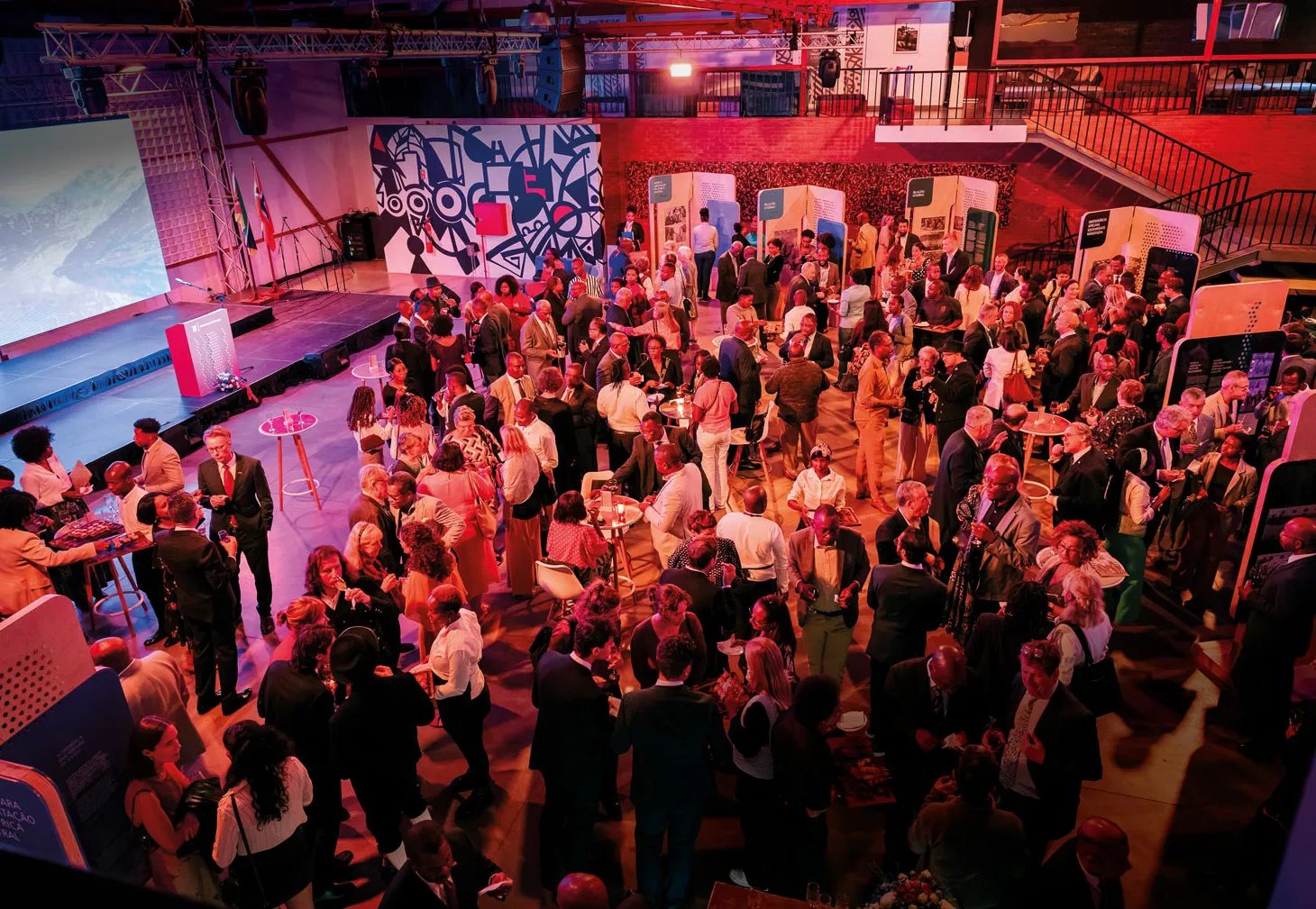
As part of the celebration of Norway Day, the Maputo Port Gallery opened its doors on 16 May to the exhibition "African Independence. Norwegian Solidarity.", which recalled Norway's relationship with the African liberation struggles and the intense years of decolonisation. Presided over by Haakon Gram-Johannessen, Norwegian Ambassador in Maputo, the opening ceremony was graced by the presence of Maria Helena Kida, Mozambique's Minister of Justice, as well as a number of politicians, academics, artists and other guests.
With a rich collection of photographs and documents, the exhibition illustrated the collaboration between Norway and the liberation movements of Southern African countries, with stories that showed the solidarity of the Norwegian people while also highlighting iconic figures such as Eduardo Mondlane, Samora Machel, Julius Nyerere, Kenneth Kaunda and Nelson Mandela, among others, and the active involvement of their movements and organisations, which symbolised the fight against colonialism, apartheid and social injustice.
Great as the moral support was from many people in Norway who were alive to the importance and urgency of that struggle, the contributions of Norwegian public funds were also significant. Following several visits by Eduardo Mondlane, the Mozambique Institute (a FRELIMO institution in Dar es Salaam dedicated to education) received 200,000 Norwegian kroner. That amount increased substantially in 1971, when the Norwegian Parliament's Foreign Affairs Committee recognised the importance of also supporting the liberated zones in northern Mozambique. And what had begun as support for an educational project gradually opened the door to more direct support for the liberation movements, and later for the liberated countries, in ever wider and more diverse fields.
Beyond the political and financial aspects mentioned above, the exhibition celebrated cultural richness and artistic expression as tools of mobilisation, resistance and unity. Striking photographs, such as that of the Mozambican painter and poet Malangatana Valente Ngwenya at the May Day parade in Oslo in 1987, and of the Marrabenta Star orchestra of Mozambique with the singer Mingas at concerts in Norway, showed how Mozambican culture was essential in raising awareness and mobilising international support.
The central message of the exhibition was made clear in spoken and written words that acknowledge the importance of international solidarity. Haakon Gram-Johannessen emphasised the need to remember and honour these historic alliances, stressing that cooperation between nations can achieve extraordinary things: “We must remind ourselves, and younger generations, of all that can be achieved when national and ethnic divisions are crossed and we take action – as brothers and sisters of humanity”. For his part, the Executive Director of the Liliesleaf Trust, an organisation committed to ensuring that the role of the international community in supporting the liberation struggle in Southern Africa is never forgotten, expressed the ultimate aim: “We hope that it will rekindle the flame of international solidarity as a way of facing the new threats to global peace and security”.
Indeed, besides paying tribute to the ties between Norway and the African countries, the travelling exhibition "African Independence. Norwegian Solidarity." sought to serve as an inspiration to new generations in the struggle for justice, equality and peace, recalling the power of unity and collaboration in building a better future for all.
This display of Norway's contribution to decolonisation and liberation in Southern Africa, already shown in several African cities, is part of a series of international solidarity exhibitions at Liliesleaf, in South Africa, and expresses Liliesleaf's commitment to ensuring that the role of international solidarity in the struggle for freedom and justice is not forgotten. Liliesleaf, where the defeat of the apartheid regime was discussed and where the leaders of the liberation movements took refuge in the struggle to make South Africa non-racial, just, united and democratic, is a place of memory that celebrates South Africa's long journey towards democracy, which continues to this day.


