
The eagerly awaited Osaka 2025 world exposition was inaugurated on 12 April with a ceremony full of emotion and cutting-edge technology. The event will run for 184 days and is expected to welcome some 28.2 million visitors from around the world.
Under the theme “Designing Future Society for Our Lives”, the exposition aims to be a global forum for ideas, solutions and initiatives around the United Nations Sustainable Development Goals. The opening ceremony took place in the iconic Shining Hat pavilion and was attended by distinguished figures from the international scene, including Emperor Naruhito, Empress Masako and Japanese Prime Minister Shigeru Ishiba, as well as delegations from 158 participating countries.
At a moment marked by growing tensions and divisions, Ishiba opened the event by stressing the urgent need to restore the bonds of global solidarity: “The world is facing crises of division. I hope this Expo will reconnect the world through interaction between countries and visitors”, he declared. And the link between past and future that is intended is symbolised in a space with 700 trees transplanted from the 1970 Expo, also held in Osaka. This space, called the “Forest of Tranquillity”, is one of the highlights of the event.
Mozambique's participation: a future shaped by intelligence and ingenuity
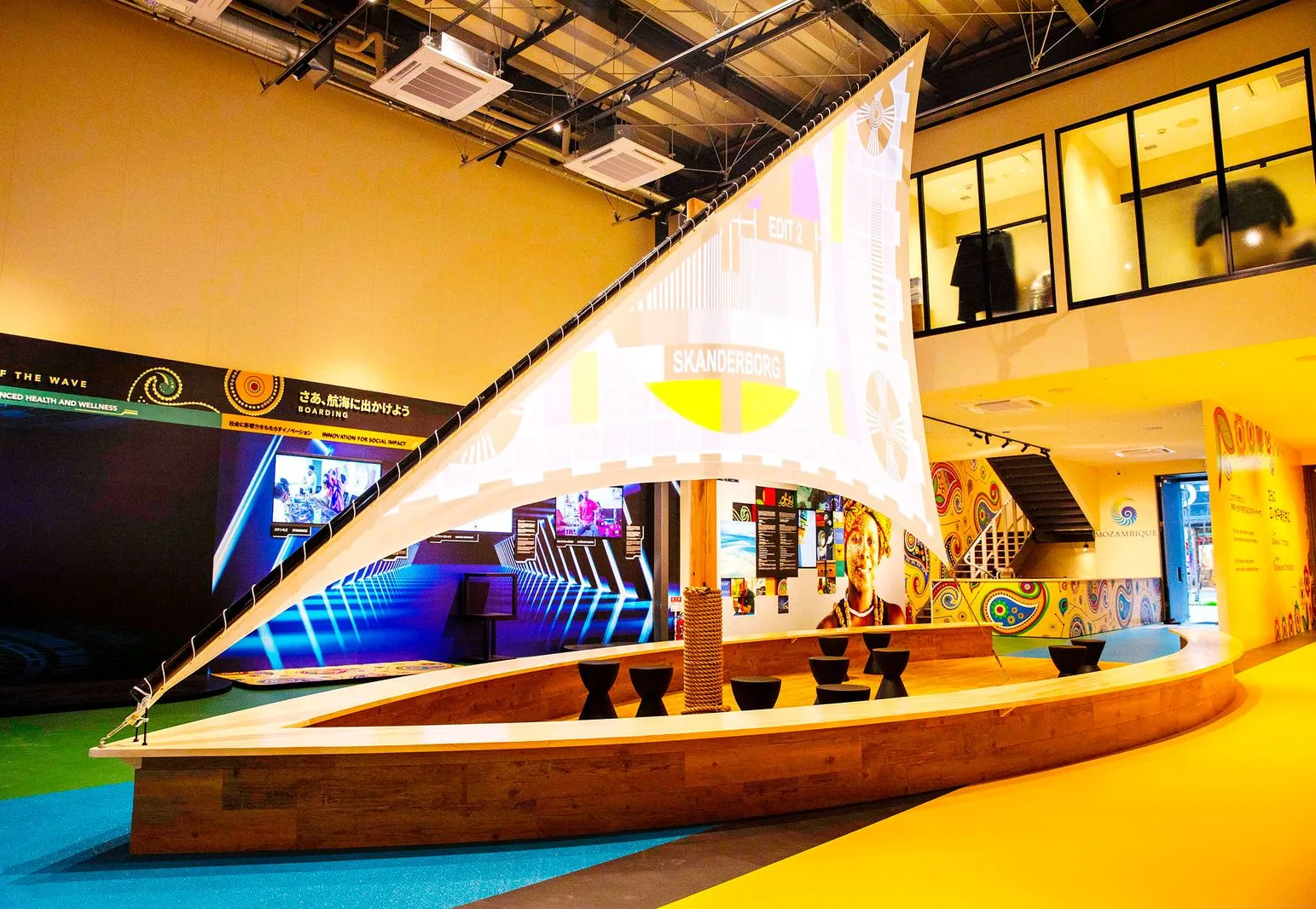
Among the countries present at this grand international platform is Mozambique, with a vibrant, purposeful pavilion. Focusing on the subtheme “Empowering Lives: Education and Work Using Artificial Intelligence and Robotics”, the country positions itself as an emerging protagonist in the global agenda of innovation, education and sustainable development.
Mozambique's participation, coordinated by the Mozambique General Commissariat for Expo 2025 (COGEMO), stems from an official invitation from the Government of Japan and represents a collective effort to project the image of a dynamic, creative and visionary nation. For six months, the national pavilion will showcase the diversity and richness of a country blessed with fertile land, abundant natural resources, vast agricultural potential, fishing reserves, energy capacity and a vibrant cultural heritage. There will also be room to promote national tourism, sustainable practices and the talent of its entrepreneurs. Xonguila Magazine is associated with this presence and is represented in the Mozambique pavilion, where visitors can browse some editions of the publication on strategically placed interactive tablets.
Mozambique is committed to involving civil society widely in the preparation for the event. Mobilisation campaigns are under way in the provinces with the aim of ensuring that universities, research centres, public and private institutions and other sectors take an active part in building a robust and representative national presence.
Expo Osaka 2025 thus emerges as a unique opportunity for Mozambique to establish itself as a tourist and cultural destination of excellence, as well as an emerging centre of innovation and human development.


