
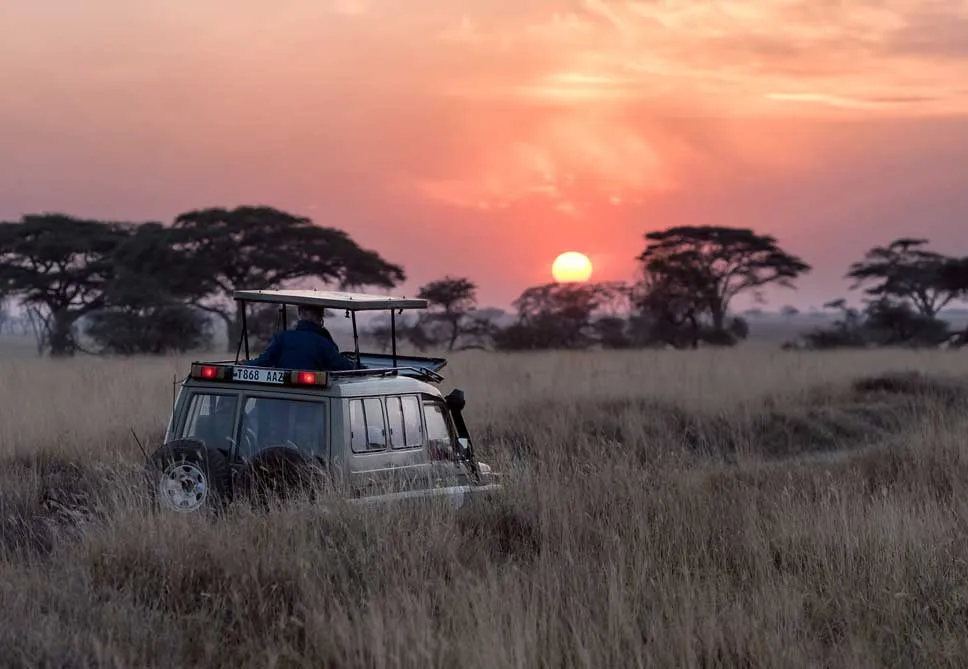
A growing number of developing nations have been practising ecotourism to protect their biodiversity and generate revenue, as they are not as financially stable as more developed countries. Ecotourism plays a key role not only in improving a country's economic conditions, but also in building sustainable communities with the chance of achieving a better, greener future.
I interviewed three Mozambican experts to better understand this whole concept and clarify its meaning in order to make Mozambique's tourism economy flourish.
Quoting Test Malunga, safari and activities manager at Gorongosa National Park, “ecotourism is an effective conservation strategy for a developing nation, as it helps to preserve natural areas, safeguard cultural traditions, generate revenue for national development and employ locals, while at the same time creating new-generation conservationists, who grow up with a conservation ethic that will be passed on to future generations. This means that it will not take that much effort to instil the mindset."
Right after the pandemic, the tourism industry, as in any other country, was severely affected in Mozambique. Like other developing countries, Mozambique still has to work on promoting and publicising tourism and on becoming a tourist-friendly country as a whole.
When asked about the demand for ecotourism in Mozambique, Malunga said: "Nature-based ecotourism is the best means of stimulating conservation initiatives, preserving natural areas for wildlife, as well as reducing waste and pollution, which helps the environment significantly. The benefits arising from tourist activities are tangible, such as job creation, which allows local community members to take ownership of natural resources (wildlife, for example), which, for them, are the instruments for generating income. The ways in which everyone contributes to conservation include not engaging in poaching or illegal hunting activities, since they have an income." Test believes that ecotourism is an excellent economic incentive to help preserve the ecosystems not only of Mozambique, but also of Africa.
A great deal of understanding and awareness-raising has to take place in the country to help recognise the true meaning of nature-based tourism. The ethic of responsible travel can be better implemented than it already is. To preserve Mozambique's ecological jewels, serious issues such as conflicts between humans and wildlife have to be tackled effectively, and many other social issues, such as poverty and adequate access to education, have to be addressed in order to make the tourism industry thrive.
Maputo Special Reserve, a well-known Mozambican national park, offers a rich experience to ecotourists. It is home to endangered animal species and stunning landscapes. Miguel Gonçalves, a Tusk Award-winning ranger at this special reserve, gives us his insightful opinion, saying: "In our country, we have to start by exposing future generations to nature, so that they can value and enjoy it, improve access, infrastructure, public services, etc. to or in these areas, among other things."
Sustainable Development Goal (SDG) 8, one of the many goals set by the United Nations to achieve better conditions for countries around the world, is decent work and economic growth. Through ecotourism, not only is this goal being pursued, but many others as well. Many community members manage to earn an income for their families through ecotourism, which leads to achieving SDG 1 – no poverty. Test rightly says: "In Mozambique and in African cultures in general, people live in extended families, which means that when one family member is employed, the income can easily end up benefiting ten or more people."
Ecotourism also helps to achieve SDGs 11 and 12, which emphasise sustainable cities and communities, as well as responsible consumption and production. This is because they deeply involve the consumption of locally sourced food, the use of energy more responsibly and the management of waste more efficiently.
Progress can be made step by step, slowly but steadily. Much more can grow in this industry. Summing up the whole concept of this article in a few lines, Carlos Serra, a prominent environmental activist specialising in environmental law, says: "It is a type of tourism that depends on the environment, that is, based on the richness and diversity of the environmental heritage. Tourists want, in this case, to come into contact with a healthy, protected natural environment and, with that, the operator sees their business being sustainable. Thus, everyone wins: the Government – through taxes and revenue; the tourists – they feel relaxed and experience pleasure in the midst of nature; the local community – through employment and the provision of services; and the environment – which is conserved and sustained."


