
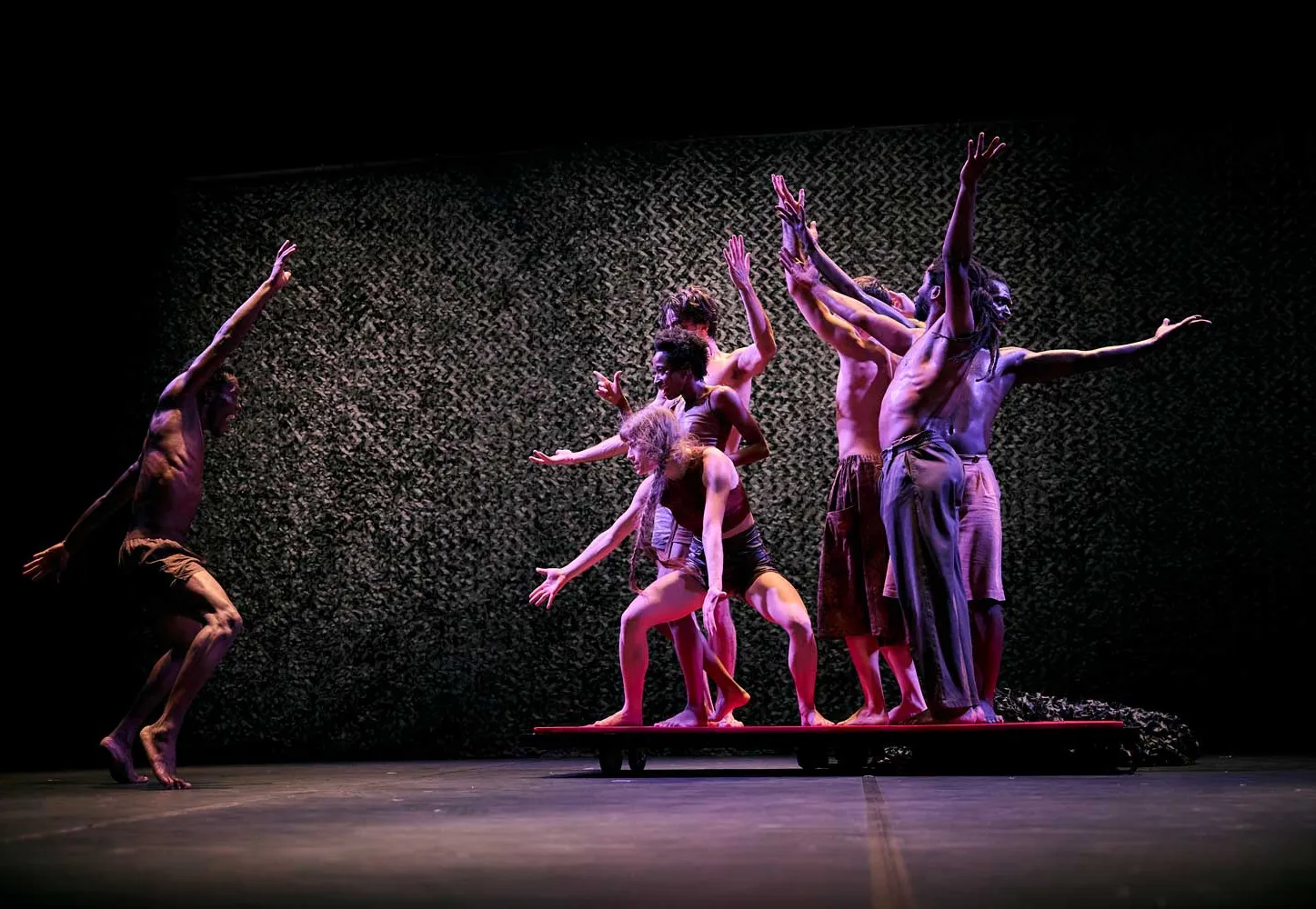
In the week of 20 to 26 November, the city of Maputo hosted an event that will go down in the history of African contemporary dance. The 10th edition of KINANI – International Biennial of Contemporary Dance, combined with the 17th edition of the Dance Biennale in Africa, brought a spectacle of colour, movement and cultural expression, turning the Mozambican capital into the host of an unprecedented artistic celebration. Indeed, since its creation in 2005, the KINANI festival has established itself as a beacon of contemporary dance on the African continent. This year, in synergy with the ‘Biennale de Danse en Afrique’, it raised the bar, bringing together styles, traditions and innovations from many corners of Africa and the world.
A mosaic of talents and cultures
Artists and companies from Mozambique, South Africa, Mali, Nigeria, Tanzania, Cape Verde, Angola, Morocco and Madagascar were the stars of this biennale. The performances reflected a cultural mosaic, in which each performance was a window onto the soul and traditions of its country of origin. This diversity showed itself not only in the dance styles, but also in the thematic approach, offering a rich opportunity for free and diverse artistic expression.
Spaces that breathed art
The city of Maputo became an immense open-air stage, with performances in emblematic venues such as Independence Square, the Tunduru Garden and the Maputo Cathedral. In addition to these, cultural venues such as the Franco-Mozambican Cultural Centre and the Avenida Theatre were essential in hosting shows that interwove the art of dance with local history and architecture.
A multifaceted experience
KINANI and the Dance Biennale in Africa were not limited to dance performances. Discussion panels, forums and walking tours with performances were organised, promoting deeper interaction between artists and the public. These events provided moments of reflection and exchange of experiences, broadening the understanding of dance as a form of communication and cultural expression. The event culminated in a festive celebration where music and dance merged in perfect harmony, reflecting the joy and unity of the cultures present. It was an epilogue that resonated not only in the streets of Maputo, but also in the hearts of all who took part in and witnessed this grand event.
The 10th edition of KINANI, together with the 17th Dance Biennale in Africa, left an unforgettable legacy. It showed that dance, more than an artistic movement, is a dialogue without borders, a celebration of diversity and a powerful means of connecting people, cultures and stories. For one week, Maputo was more than the capital of Mozambique; it was the beating heart of African contemporary art, a place where dance spoke every language.
Quito Tembe, curator of the Kinani Festival, comments:
“This edition was historic for the African continent. We had in Mozambique more than 300 delegates (directors of other festivals, arts organisations and theatre directors), which allowed the selected shows presented to be chosen to tour other festivals around the world. In terms of attendance, it is worth highlighting the directors of the Lyon Biennale in France (the largest dance festival in the world), the director of Tanzmesse (Germany), which is the world's largest dance fair, and a large number of African programmers.
Also during the biennale, we had the FORUM KINANI programme, which brought together the three main funding bodies for the arts (FUNARTE, from Brazil; ACCÈS CULTURE, from France; PROCULTURA, from Portugal/European Union), who, in a single space and over three days, addressed topics related to the forms and models of the projects they fund. This interaction opened the way for Mozambique to enter the map of international funding. It is worth noting that the sessions were honoured by the presence of two renowned figures, namely the President of the French Institute (France) and the president of FUNARTE (Brazil). Last but not least, there was the massive turnout of the public at all 32 shows, many of them sold out.”


