
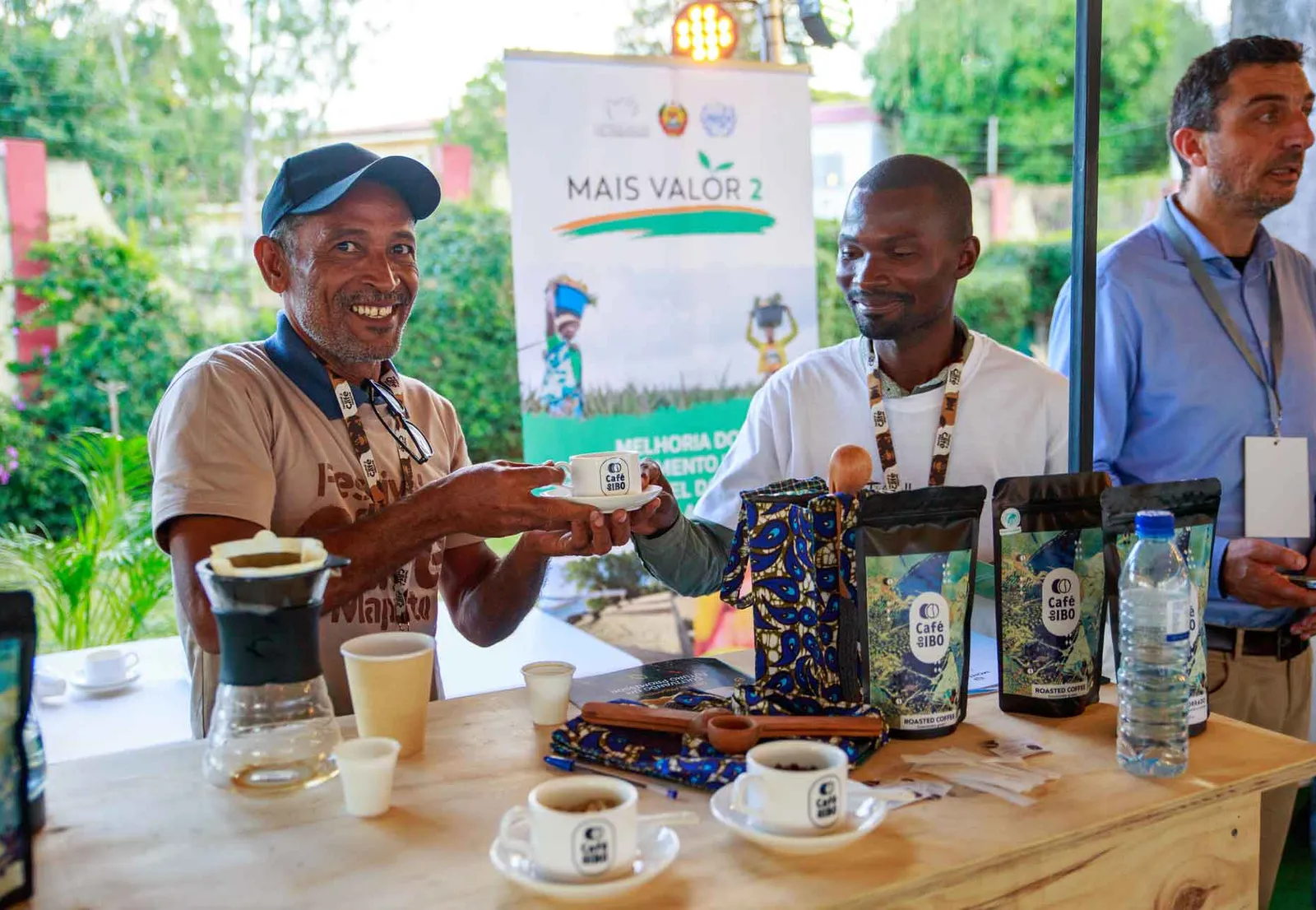
In Mozambique, a country of varied geographical conditions, coffee growing has found suitable ground for excellent varieties in some places, such as the highlands of Manica, the tropical forests of Gorongosa, the plains of Niassa and the idyllic island of Ibo, where such cultivation is known to be nothing new. Indeed, believed to have been introduced by the Arabs, production on Ibo of a coffee whose unique characteristics of colour, flavour and more were internationally recognised in 1906 with a Gold Medal awarded in the city of Lisbon is centuries old.
At present, driven by the commercial opportunities the coffee industry offers, the interest its cultivation has attracted is visible, with the aim of also benefiting the environment and local communities. Accordingly, the Ministry of Agriculture and Rural Development (MADER), in partnership with the Mozambican Coffee Growers Association (AMOCAFÉ), the United Nations Industrial Development Organization (UNIDO) and the Italian Agency for Development Cooperation, organised the First Maputo Coffee Festival, which took place at the Montebelo Indy Maputo Congress Hotel in the Mozambican capital. The event brought together prominent figures such as the Minister of Agriculture, Celso Correia, and the Executive Director of the International Coffee Organization (ICO), Vanusia Nogueira, as well as diplomats and representatives of companies and associations linked to coffee. Under the motto “From Bean to Cup”, its aim was to facilitate interaction and the exchange of experiences not only among producers but also between producers and coffee consumers.
At the opening ceremony, Celso Correia highlighted the Government’s commitment to revitalising and strengthening the coffee industry, and the ICO’s Executive Director set out the global picture for the sector, emphasising the opportunities and challenges Mozambique faces in entering this competitive market.
Throughout the event, AMOCAFÉ members were present with their brands, giving participants the chance to learn about the different methods of coffee extraction, processing and the equipment used in production, and also to taste Mozambican coffees through cupping sessions. The visit of Luca Turello, representative of the Italian brand Illy Café, known for its quality coffees and a major coffee player in Italy, underscored Mozambique’s potential in the sector. In addition to the many compliments he paid to the organisation of the festival, Turello encouraged AMOCAFÉ members to increase their production.
One of the festival’s standout moments was the discussion on creating a distinct identity for Mozambican coffee. Tiago Fonseca, of the advertising agency Golo (Think Local), emphasised the need for a well-defined strategic plan that would allow the country to compete with established international organisations. The proposal included creating a favourable environment at every operational level, from planting to marketing, thus ensuring the viability and sustainable growth of the sector.
Another highlight of the festival was the presentation by champion barista Sami Geda, who has professional coffee experience in Ethiopia and several other countries. Sami explained what it means to be a barista, as well as teaching participants how to make various coffee-based drinks, a quality espresso and latte art designs. The audience even had the chance to go up on stage to interact with Sami, see at first hand how important his work is in a café and also make delicious cappuccinos.
As well as talks and exhibitions, the festival saw the launch of the practical guide “Coffee Cultivation under an Agroforestry System in Mozambique”, a collaboration between Mozambique, Brazil and Portugal presented by Fábio Partelli of the Federal University of Espírito Santo. This publication is a milestone in the search for sustainable farming practices that preserve biodiversity and promote income diversification for smallholder farmers.
The Maputo Coffee Festival not only celebrated the history and quality of Mozambican coffee but also strengthened the links needed to establish a consistent, quality market. The signing in London, in 2023, of the agreement for Mozambique’s accession to the International Coffee Organization (ICO) was a crucial step on this journey, providing international visibility and partnerships that promise to make the sector more competitive.
Through joint efforts among the various players involved – the Government, cooperation partners, the private sector and rural producers – Mozambique has the conditions to develop its coffee industry and position itself ever better on the international market.


