
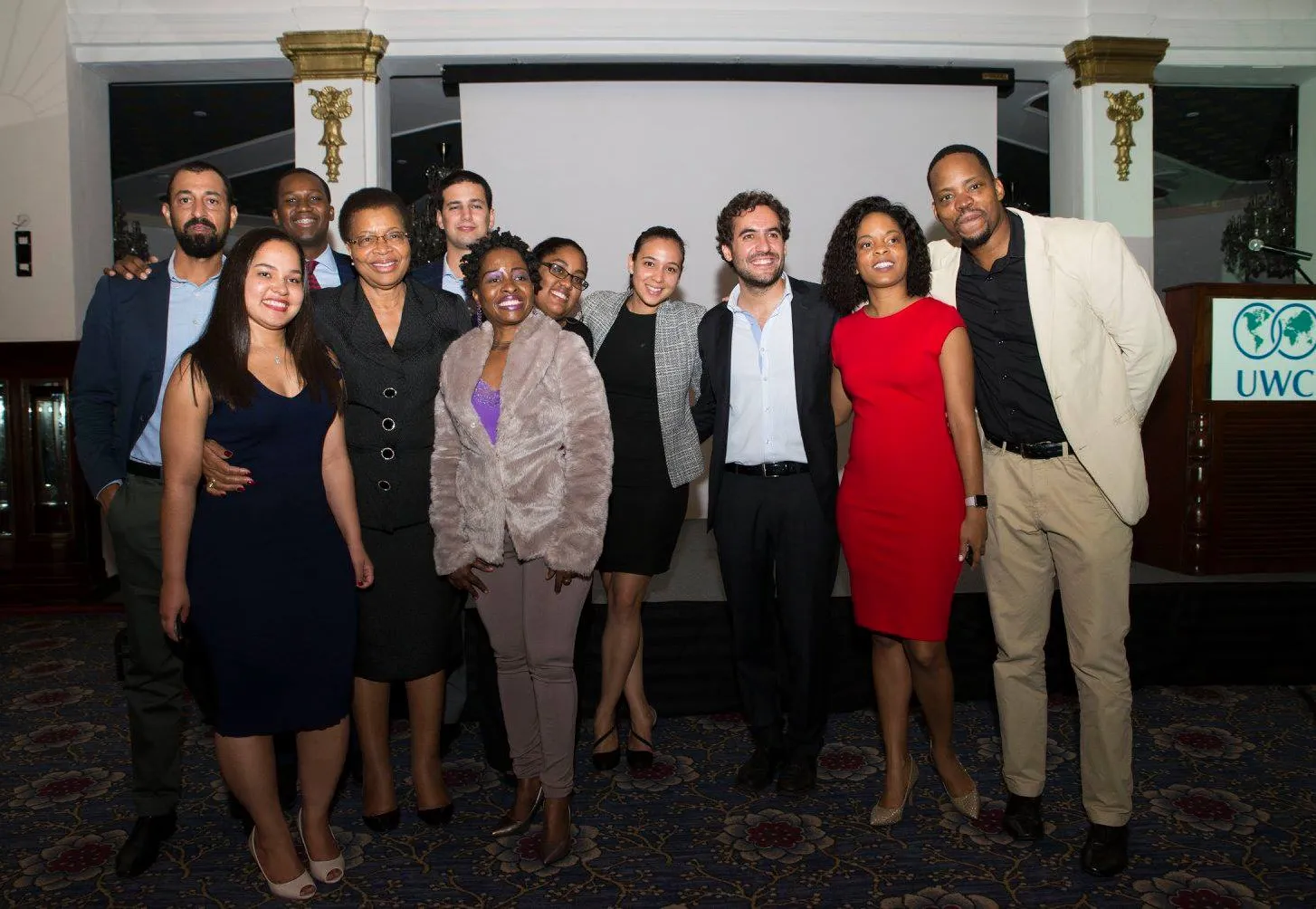
Michelle Obama once said: “With every door that was opened to me, I tried to open my own to others.” This phrase inspires and perfectly sums up the ethos that guides the work of UWC Mozambique.
Every door that opens for this organisation represents an opportunity to open even more doors for others. It was with this conviction that, in 2016, UWC Mozambique – the UWC Alumni Association – was founded, accepting without hesitation the invitation to be born in the country. Closely aligned with the mission of the UWC movement to unite people, promote peace and transform lives through education, it is this same mission that guides every step of the work carried out on Mozambican soil.
What is the United World Colleges (UWC) movement?
Founded in 1962 with Atlantic College in Wales, the UWC movement was born with the aim of uniting young people from different nations, cultures and beliefs, promoting peace and collaboration through an education centred on sharing, mutual understanding and responsible action. In Africa, the first college in the UWC network was Waterford Kamhlaba UWC of Southern Africa, located in the Kingdom of eSwatini. Founded in 1963 as an act of resistance to apartheid, Waterford was created with the purpose of offering a multiracial, inclusive and egalitarian education, in opposition to the segregated schools of South Africa. Today, the UWC network has 17 colleges around the world, two of which are located on the African continent: Waterford Kamhlaba, in eSwatini, and UWC East Africa, in neighbouring Tanzania.
Mozambique's connection to the history of the UWC movement
Mozambique plays a significant part in the history of the aforementioned Waterford Kamhlaba. The campus was designed by Amâncio (Pancho) Guedes, a renowned Portuguese architect who lived in Mozambique and was the guardian of one of the first students to attend. Guedes was also a friend and mentor of the Mozambican artist Malangatana Valente Nguenya, known simply as Malangatana, who visited the campus on several occasions and donated a mural — the first he produced outside Mozambique — as a symbol of support and solidarity with Waterford's educational project. The first Mozambican student to attend Waterford was Fernando Honwana, who later served as Presidential Adviser and Special Assistant to President Samora Machel. The writer Luís Bernardo Honwana, besides being the father of three Waterford students, worked actively on the fundraising that enabled the official recognition of Waterford Kamhlaba as a member of the UWC network in 1981. Although small, Waterford Kamhlaba played a significant role in the struggle for racial equality in Southern Africa. The school welcomed and educated the children of leaders such as Nelson Mandela and Desmond Tutu, as well as training future political leaders, such as Ian Khama and Fernando Honwana himself.
What are the objectives of UWC Mozambique?
UWC Mozambique's main objective is to open doors so that young Mozambicans — aged between 16 and 17 — can study at UWC colleges abroad and become leaders committed to building a more peaceful and sustainable world. The organisation works on a voluntary basis to spread the word about the UWC movement across the country, widening access to these opportunities. Since its foundation in 2016, it has faced significant challenges, but nothing that has shaken it. During the COVID-19 lockdowns, for example, selecting and sending students to different UWCs seemed almost impossible: one student went to Italy, another to Tanzania and, as is tradition, a Fernando Honwana scholar to Waterford. More recently, sending a student overland to eSwatini in January this year, in the middle of the protests, also proved a great challenge. However, thanks to the unwavering support of the local community — including alumni, parents and generous sponsors — it has been possible, year after year, to ensure the participation of young Mozambicans in UWC colleges. Although based in Maputo, UWC Mozambique proudly serves a national mandate, seeking talent in every province of the country.
What has UWC Mozambique achieved to date?
UWC Mozambique has just completed its 10th selection cycle and, to date, has already managed to send more than 24 Mozambican students to International Baccalaureate scholarship programmes at UWC colleges around the world. To make this possible, more than 1.8 million dollars in funding has been raised — amounts that cover the students' travel, accommodation, boarding and healthcare costs, all of whom live at the schools for two years. Also worth highlighting is the 10-year memorandum of understanding signed with Waterford Kamhlaba, which guarantees the continuation of the Fernando Honwana scholarship. Today, the fruits of this effort are already visible. An inspiring example is that of Gina Manhiça, a former pupil of the Armando Emílio Guebuza Community School and later a scholar at Waterford Kamhlaba (2021-22). Gina is currently completing her degree at Earlham College in the United States, with a full four-year scholarship.
In 2025, she won the prestigious Projects for Peace prize, receiving 10 thousand dollars to implement a project that tackles energy poverty in Moamba. With the funds, Gina will purchase portable solar kits — equipped with LED lamps, small storage batteries and chargers — that will benefit 64 families and a local primary school. Gina's journey perfectly reflects the spirit that guides UWC Mozambique: as Oscar Monteiro reminds us in De Todos se Faz um País, collective progress is born of shared effort and of the opportunity given to each young person who, in turn, transforms lives in their communities.


