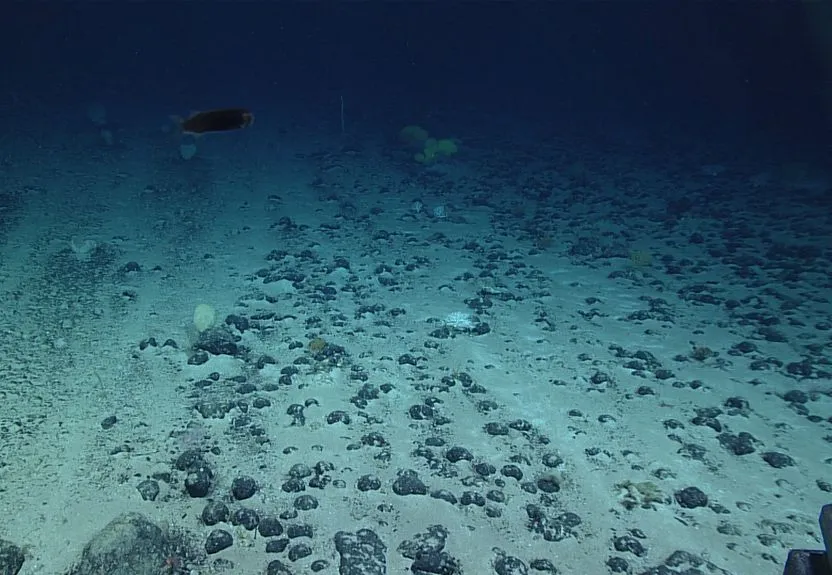
Scientists have discovered that, four thousand metres deep in the Pacific Ocean, in the Clarion-Clipperton Zone, there are small rocks capable of producing oxygen in an environment where sunlight does not penetrate. This area is known for its abundance of "polymetallic nodules", small metallic rocks the size of potatoes, which may be the first source of oxygen of non-biological origin discovered in nature.
According to a study published in the journal Nature Geoscience, it was revealed that these rocks produce oxygen not through biological processes but because of their high electrical voltage, comparable to that of an AA battery. This phenomenon, which scientists call "dark oxygen", occurs without the need for sunlight, unlike the traditional photosynthesis that takes place in plants and algae.
Andrew Sweetman, one of the authors of the study, explained that the electrical voltage observed on the surface of the nodules is enough to generate oxygen even in the dark depths of the ocean. This discovery challenges established notions about the origin of life on Earth, suggesting that processes not dependent on sunlight may also have contributed to the production of primordial oxygen.
The Clarion-Clipperton Zone region is rich in metals essential for manufacturing batteries, smartphones, wind turbines and solar panels, making it a focus of interest for technology companies. However, the exploitation of these resources is surrounded by controversy. The area is considered a World Heritage site, and environmental organisations warn that deep-sea mining could cause irreversible damage to the ecosystem, where the nodules take thousands to millions of years to form.
While some argue that extracting these metals can promote sustainable energy, others contend that the destruction of the marine habitat is too high a price to pay. This discovery raises important questions about the need to balance technological development with environmental conservation.
World
Scientific surprise: mysterious rocks on the ocean floor found to produce oxygen without sunlight!
Rocks produce oxygen in the dark
Xonguila24 July 20242 min readTime well invested.
Time well invested.


