
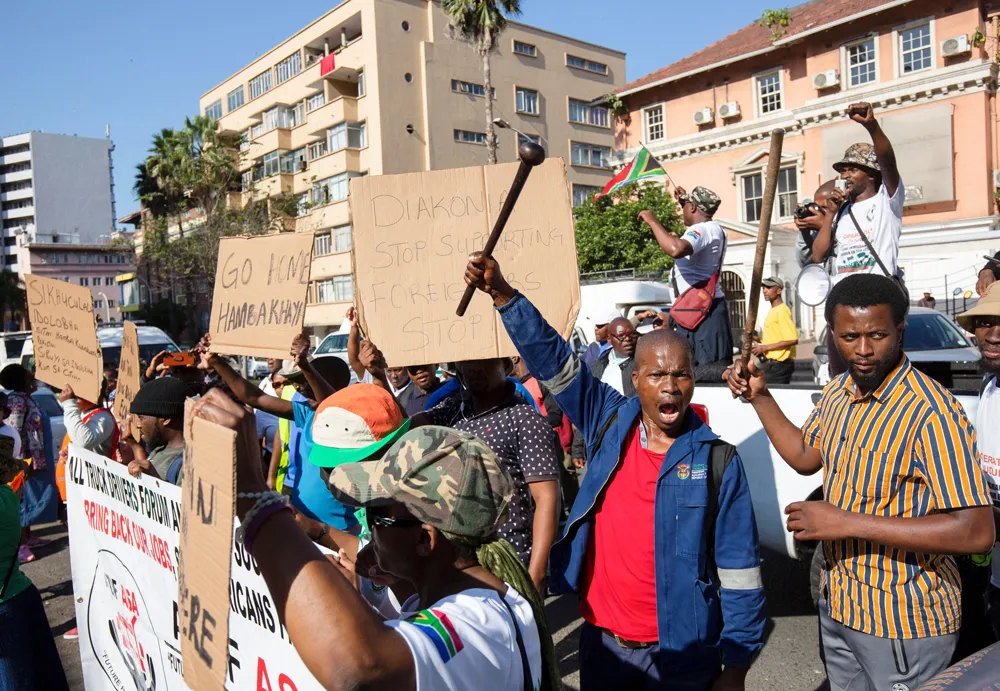
Operation Dudula, a South African anti-immigrant movement led by Zandile Dabula, has stepped up its campaign against foreigners, causing a wave of concern among Mozambicans seeking a livelihood in South Africa. This movement, which describes itself as a civic force, was established in Soweto, the cradle of the anti-apartheid struggle and the home of Nelson Mandela, now paradoxically turned into the epicentre of the country's most visible xenophobic actions.
Mozambican migrants in particular have faced turbulent times. Reports from Soweto detail incidents in which members of Operation Dudula scattered goods from market stalls and hurled insults, pressuring Mozambicans to "go back to their own countries". These attacks, which first took place over a weekend, are an indication of migrants' vulnerability, especially when police patrols are absent. Threats of violence are now a constant, with attackers promising to return and intimidating with possible shootings, heightening the state of fear and insecurity among the Mozambican community.
With unemployment reaching a third of the South African population, foreigners have become easy targets for the frustrations of a society marked by extreme inequality. Operation Dudula's actions include raids on immigrants' businesses, forcing shops to close and goods to be scattered. Mozambicans, who are already suffering significant losses, are appealing to the Mozambican authorities for support in facing this growing wave of xenophobia.
The message put out by Operation Dudula, blaming "foreigners" for South Africa's economic suffering, is a narrative that seems to be gaining traction, despite lacking support in hard data. Xenophobia has distorted perceptions of the number of migrants in the country. Although independent studies such as those by the Institute for Security Studies indicate that the number of immigrants in South Africa is in line with international norms, many South Africans believe the country is overwhelmed by foreigners, a falsehood that has real and violent consequences.
The response of the South African government, led by President Cyril Ramaphosa, has been to condemn these acts, and it compares these groups' behaviour with the oppressive tactics of the apartheid regime. In 2019, a National Action Plan to combat racism and xenophobia was launched, but many activists feel more needs to be done.
As Operation Dudula prepares to enter the political arena as a party, with the aim of contesting the next general elections, the Mozambican community and other immigrants are living through days of uncertainty, hoping that solidarity and mutual respect will prevail over fear and hatred. This scenario is a worrying reflection of a country still wrestling with the shadows of its past, while striving to build a future of inclusion and prosperity for all.


