
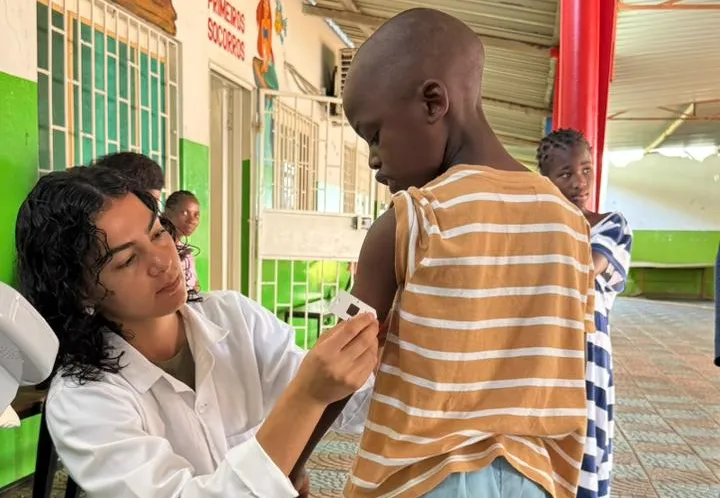
In Mozambique, to speak of orphanages is to speak of lives that often begin marked by absence: the absence of family, of affection, of consistent care. But there is another absence that we rarely discuss honestly: the absence of society. Our absence.
For years, the dominant narrative around orphanages has been one of donations. It is believed that helping means bringing clothes, food, toys or money. But the reality of institutions in our country shows that, all too often, part of these contributions does not reach the children’s hands. They are lost in bureaucracy, diversion, mismanagement, or simply disappear.
So this article is not about material donations. It is about presence. It is about humanity. It is about looking at the children who live in orphanages and recognising that they need, above all, time, attention, someone who calls them by name and asks how their day was.
The smile that cannot be bought
Anyone who has visited an orphanage knows: the smile of a child on receiving a hug, or on seeing someone willing to play with them, is no ordinary smile. It is a pure, sincere, urgent smile. A smile that says: “Today, someone remembered me.”
The truth is that these children already carry, from an early age, the weight of a silent social exclusion. Many were abandoned, others lost their parents, others simply had no one to look after them. They grow up on the margins of a society that, despite taking pride in its solidarity, still finds it hard to see these children as an integral part of the community.
And yet, what they want most is not just a sack of rice or a pile of used clothes. What they want is what all children want: to feel loved. To feel that they belong somewhere. To know that there is someone, even outside the walls of the orphanage, who cares about them.
The power of a day
Spending a day or a few hours in an orphanage can transform more than we imagine.
A conversation.
A game of football.
A drawing made together.
A story read before bedtime.
These simple gestures can become precious memories for those who often have no memory of tenderness at all.
Children in orphanages do not need perfect people. They need present people. People who arrive with patience, with joy, with an open heart. People who understand that five minutes of attention can mean more than fifty kilos of donations.
What really makes a difference
Deep change does not happen only through what we give, but through what we offer of ourselves.
Children grow more confident when they know they are seen, that they are valued, that they are not just a number inside an institution.
Human presence:
• Strengthens self-esteem;
• Reduces the feeling of abandonment;
• Breaks the cycle of emotional exclusion;
• Shows them that there are people who believe in their future.
This is what changes lives. This is what cannot be bought.
A society that includes is a society that grows
It is easy to blame institutions, systems, policies. It is harder to accept that we too, as a community, bear part of the responsibility. An inclusive society is not merely one that records numbers or creates laws. It is one that makes itself present where there is loneliness.
Children in orphanages are the most forgotten and, ironically, are the ones who have the most to offer: joy, purity, spontaneity, dreams that still fit whole within their chests.
So this is a simple appeal: let us not exclude them from our hearts as well. Let us not let them grow up thinking that the world has no place for them.
If each person devoted just one day a year to visiting an orphanage, Mozambique would be an infinitely more tender, more human, more united country.
Because, in the end, what a child needs is not what fits in a bag, but someone to tell them:
“You matter. And I am here.”


