
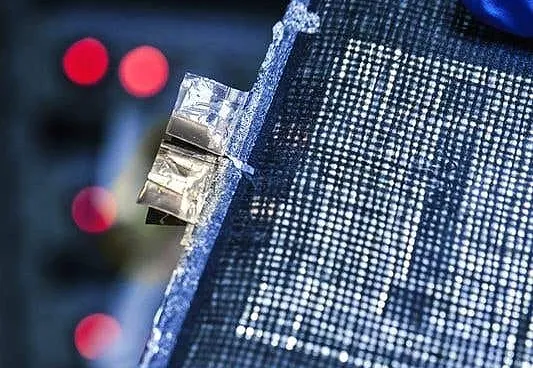
Batteries, long the nerve centre of electric mobility, are preparing for a structural and conceptual change that could redefine the future of autonomous vehicles. Researchers at Chalmers University of Technology in Sweden are developing a solution that combines lightness and performance, by reinventing the very role of the battery in car design.
Traditionally hidden beneath the seats or in the base of vehicles, batteries could now become part of the car’s own structure – from the roof to the chassis – moving from passive elements to active structural components. This new approach, according to The Brighter Side, uses carbon fibres as a protective and supporting material, providing strength, lightness and energy capacity.
Carbon fibre, when combined with materials such as lithium iron phosphate and reduced graphene oxide, results in a battery with higher energy density (up to 42 Wh per kg) and greater structural stiffness than aluminium. Replacing traditional materials with this new composition could mean a weight reduction of up to 20% in electric vehicles, or up to 70% in more specific applications.
Beyond the automotive sector, the impact of this technology could extend to other industries facing similar challenges of energy storage and structural weight – just as happened previously with fast charging, whose innovation spilled over the boundaries of mobility.
The research continues to encounter obstacles, notably the need to increase voltage output and move towards solid-state electrolytes, which offer greater safety. Even so, the technical advances are sufficiently consolidated to justify betting on future commercialisation.
The Chalmers team even went so far as to found the startup Sinonus AB, dedicated to accelerating the transition to market. However, the venture has since been suspended, with the technology rights reverting to the university. The innovation remains active in the academic environment, with the researchers determined to complete the journey to its industrial integration.


