
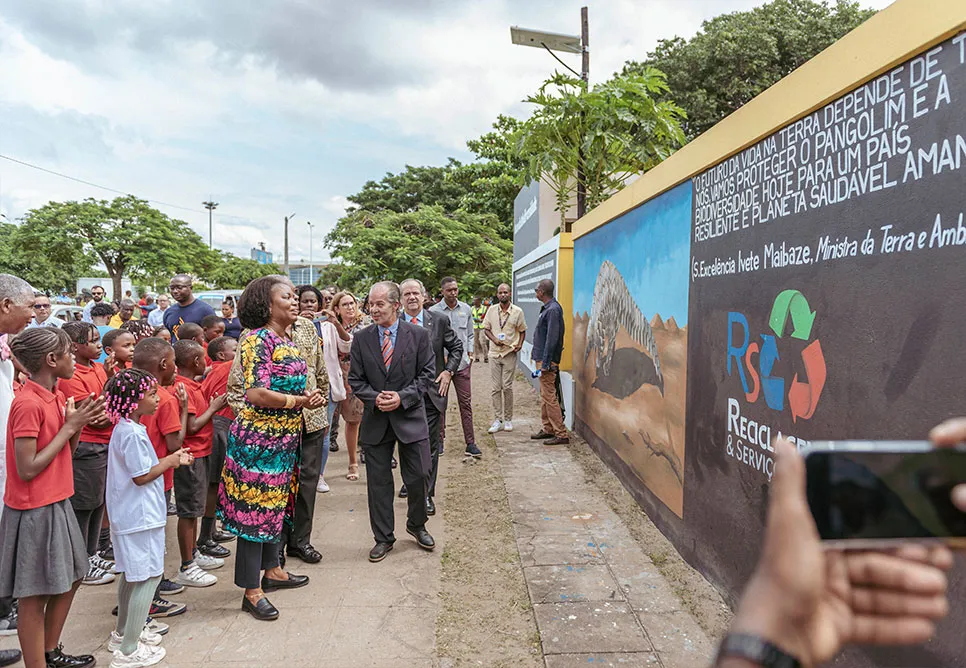
The initiative is part of the promotion of measures to combat poaching, reinforcing the commitment to support the protection of biodiversity and the conservation of the environment.
Last Friday, in Maputo, Millennium bim attended the inauguration of the “Biodiversity Wall”. The mural is part of a project whose aim is to foster the painting of approximately 40 murals on Mozambique’s terrestrial and marine fauna and flora.
Located at the exit of Maputo International Airport, this mural aims to turn the area into the first “postcard” of the beautiful city of Maputo and of the country, conveying important messages to visitors and residents about awareness of the fight against poaching in Mozambique, the promotion of biodiversity conservation, the protection of marine and forest ecosystems and the environment in general.
According to Albino Andrade, Director of Millennium bim, “our wildlife and forest resources are among the values that characterise our wonderful Mozambique. It is up to us, as a society, to contribute to the conservation of ecosystems and biodiversity. Preserving the environment means ensuring the continuity and perpetuity of these resources.
For Millennium bim, sustainability is one of the most important factors in affirming the brand and reflects the bank’s concern and commitment to reducing its ecological footprint. Above all, it demonstrates its active role in society with regard to protecting and conserving the environment, mitigating climate change and improving the quality of life of the people and communities where it operates.
The “Biodiversity Wall” project is implemented by the company Reciclagem & Serviços (R&S) – in partnership with Millennium bim, Aeroportos de Moçambique and the Maputo Municipal Council, through the National Administration of Conservation Areas, among other bodies.
Support for the protection of biodiversity and the conservation of the environment is one of the pillars of action of Millennium bim’s Social Responsibility programme “Mais Moçambique pra Mim”, which has been implemented over the years, with a significant impact on the lives of Mozambicans, from the Rovuma to the Maputo.


