
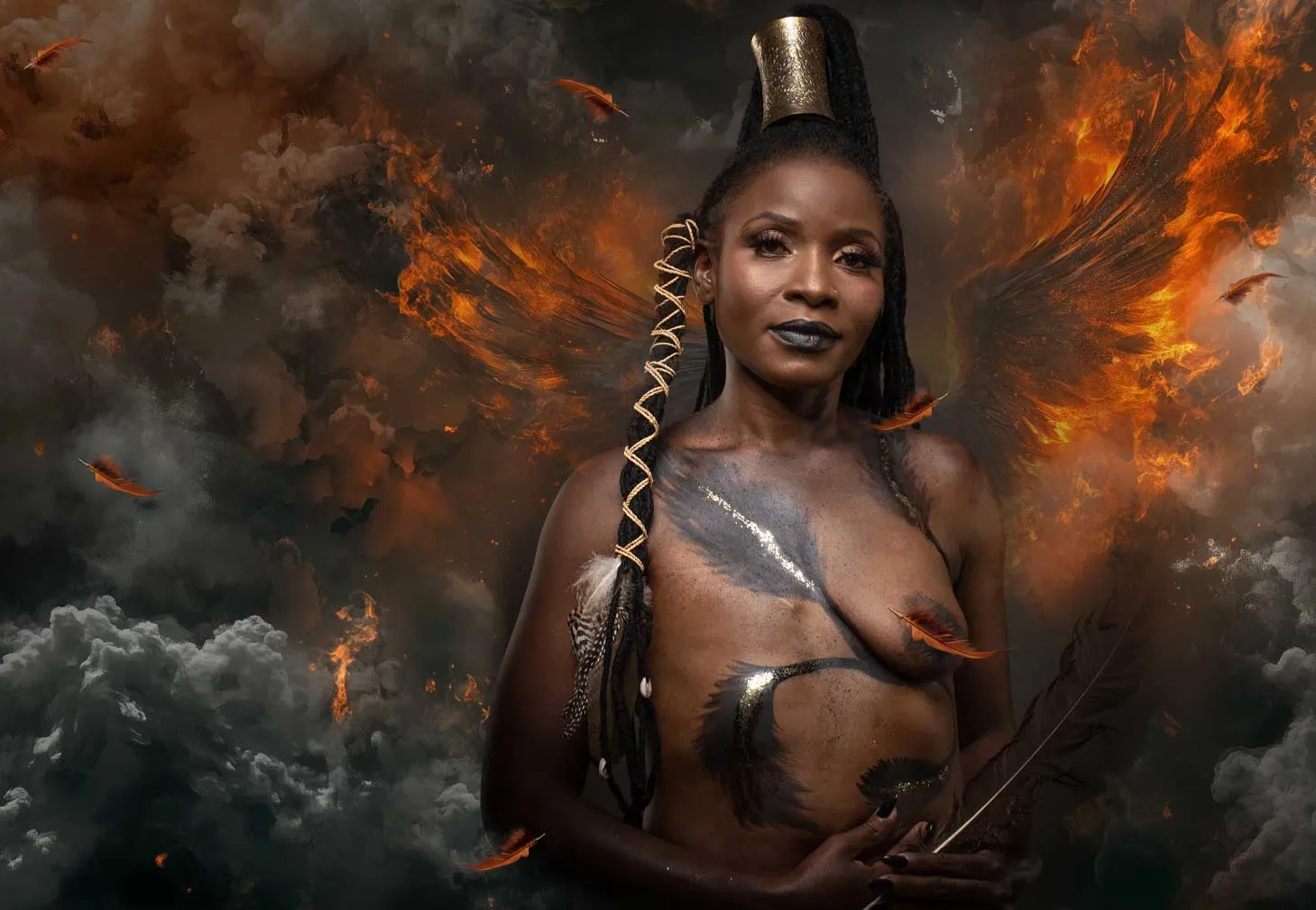
In October, the world unites around the breast cancer awareness campaign, with the pink ribbon as a symbol of struggle, hope and resilience. In Mozambique, where access to information and treatment remains a challenge in many areas, this major campaign takes on even greater relevance. It is in this context that the Associação Casa Rosa stands out, bringing initiatives such as the "Mulheres-Fénix" (Phoenix Women) project, which gives voice and visibility to breast cancer survivors. Like the legendary phoenix that is reborn from the ashes, these women are a reflection of resilience and transformation after facing the adversity of the disease. Artistically directed by Nwetana, the project goes beyond a simple tribute to life; it highlights the strength of overcoming challenges as profound as cancer.
In the "Mulheres-Fénix" photographic project, each image not only captures pain and resilience, but also reveals stories of courage and fear that mark this process. Nwetana, the artistic name of Ana Lúcia Silva, brought this photo series to life with special sensitivity, using art as a tool for healing. Body paint was the medium through which she redrew over scars, creating a new skin charged with meaning, where each stroke symbolises an achievement. For these women, art was not just an expression, but a way of reconciling themselves with bodies transformed by the disease. Cancer appears as an invisible enemy that invades suddenly, completely altering their lives, but it is at this moment that the process of rebirth begins. This battle, so intimate and personal, reveals an inner strength that they often did not know they had. It is a true rebirth from the ashes, in which each woman emerges stronger and more resilient. These are, without doubt, the phoenix women.
The project we are talking about is also inspired by the tireless work of Katya Saraiva, founder of the Associação Casa Rosa. Created in 2017, this Association's mission is to support women diagnosed with breast cancer, offering them emotional, financial and informational support. The aim is clear: that no woman should face the fight alone. Casa Rosa has been essential to efforts against the disease in Mozambique, ensuring that access to information on prevention and early diagnosis reaches more women. In addition, the Association organises talks, health fairs and training for professionals in the field, raising awareness of the importance of self-examination. Through local campaigns and leaflets translated into regional languages, Casa Rosa spreads its message across the country, reinforcing the importance of prevention.
The 2023 photo shoot, carried out during Pink October, transcends the artistic dimension: it is, above all, a self-help movement. For many of the women who took part, it was the first opportunity to confront their bodies marked by the disease. Acceptance is a painful but necessary process, and through this project these women were encouraged to accept their new shapes and rediscover the beauty that lies in scars. By applying the body paint, Nwetana transformed these marks into symbols of strength and resilience, allowing each woman to see in her scars a story of resistance and courage.
The collaboration between Nwetana and Casa Rosa is not new. In 2020, the artist had already directed the photo series “Capulana & Rosa”, which explored the fusion of Mozambican culture with the international symbol of the fight against breast cancer. In that project as in the current one, art was used as a tool for transformation and empowerment, giving women a platform to be seen and heard.
Women such as Edite Dimene, Elisa Maida Benate, Felismina Nhantuve and Júlia Simões, who took part in the 2023 project, are true inspirations. Each of them carries a story of overcoming adversity, proving that life goes on, even after the devastation caused by cancer. They are living examples of strength and resilience, and their stories show us that it is possible to overcome any obstacle.
Beyond the artistic and emotional side, Casa Rosa continues to play a crucial role in the prevention and treatment of breast cancer. Through initiatives in companies, schools and communities, as well as direct support for the most vulnerable patients, the Association has been a key player in the fight against the disease in Mozambique. The impact of its work in Maputo and Beira is remarkable, saving lives and ensuring that more women have access to treatment with dignity and support.
Nwetana's art, for its part, goes far beyond aesthetics. Throughout her career, the artist has addressed fundamental issues for Mozambican society, from the impact of deforestation to body acceptance and the physical changes caused by cancer. Through her creations, she builds bridges between pain and healing, trauma and acceptance, showing that even in the hardest moments there is always room for beauty and hope.
The “Mulheres-Fénix” are proof that rebirth is possible. Like the mythological phoenix, these women show us that there is always a new life beyond the ashes. In October, and in every month of the year, their stories continue to inspire us to fight, to live and to believe that, however challenging the journey, life is always worth living.


