
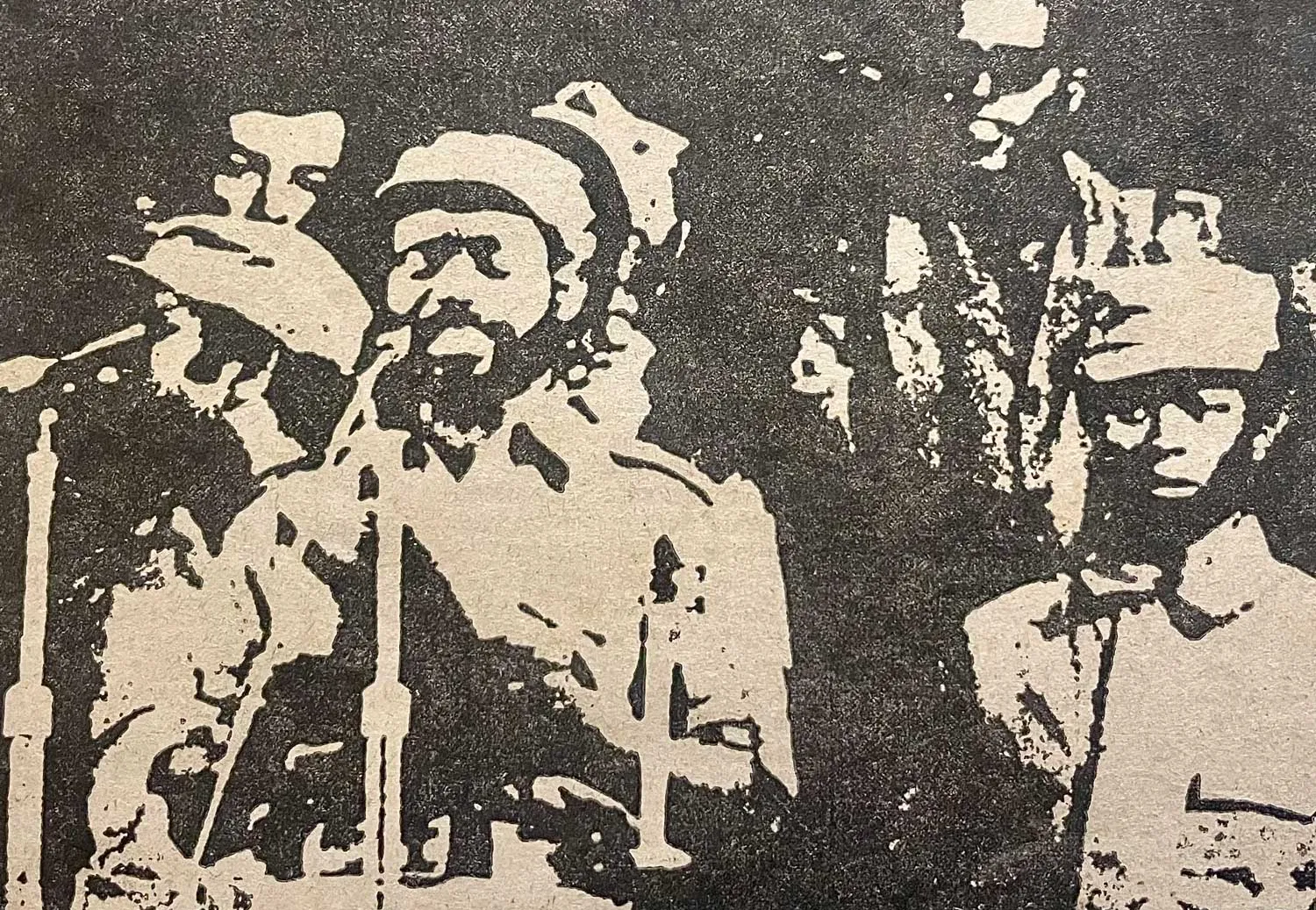
Over five decades, Mozambique has built its identity from historic moments full of courage, sacrifice and hope. Now that we are celebrating 50 years of Independence, we revisit some of the landmark events in the history of the Mozambican people in winning and building their sovereignty.
The Lusaka Accords
It was on 7 September 1974, in Lusaka, Zambia, that, after 10 years of armed struggle waged by the Mozambique Liberation Front (FRELIMO), Portugal’s new government, which emerged from the April Revolution, recognised the Mozambican people’s right to Independence and agreed to transfer the powers it held to FRELIMO as their legitimate representative. The agreements signed also set the date of independence as 25 June 1975.
The Transitional Government
Between the peace agreement with Portugal and the proclamation of independence, Mozambique had a transitional government with Mozambican and Portuguese ministers, headed by Joaquim Alberto Chissano, only 34 years old, as Prime Minister. The Lusaka accords also provided for a High Commissioner with functions equivalent to those of Head of State, a post held by the Portuguese Admiral Vitor Crespo.
Samora Machel’s Triumphal Journey
Samora Machel, who led the struggle from Tanzania — one of FRELIMO’s bases of support — returned to Mozambique on 23 May 1975, entering across the northern border. He travelled the length and breadth of the country, addressing enormous crowds in all the main population centres. He arrived in Lourenço Marques, the capital, now Maputo, 30 days later.
The Flame of Unity
While Samora Machel was crossing the country, teams of runners — including elderly people and children — also carried a symbolic torch from Cabo Delgado to the capital. This Flame of Unity, also known as the Flame of the Revolution, was lit in Nangade by Raimundo Pachinuapa, Governor of Cabo Delgado Province. Passing through the hands of 2,217 people, it travelled 4,300 km, until it was raised by Samora in Xai-Xai on 23 June.
The Proclamation of Independence
On 25 June 1975, at the Machava Stadium in Maputo, Samora Machel declared before an enormous, visibly moved crowd: “Mozambican women, Mozambican men, workers, peasants, fighters, Mozambican people. In your name, at zero hours today, the Central Committee of Frelimo solemnly proclaims the total and complete independence of Mozambique and its constitution as the People’s Republic of Mozambique.” An explosion of joyful applause was heard. The date coincided symbolically with the founding of FRELIMO (1962) and the start of the armed struggle (1964), linking the movement’s origins to the winning of freedom.
The Symbols of the Nation
The first national anthem, "Viva, Viva a FRELIMO" (Long Live FRELIMO), composed by Justino Sigaulane Chemane, paid tribute to the liberation movement. It remained in use until 30 April 2002.
Mozambique’s first flag featured four diagonal triangles in green, black, yellow and red, separated by white lines, representing, respectively, the wealth of the Mozambican land, the African continent and the identity of the people, the country’s mineral resources, the armed struggle for independence, and peace.
Deeply symbolic, the flag reflected the revolutionary ideals of the time. In the upper left corner, on a red background, was the national emblem — a cogwheel surrounding a hoe (agricultural work), a book (education as the basis of progress), a rifle (defence and vigilance) and the red star (international solidarity and the revolutionary spirit).
The first flag was officially changed in 1983. It came to feature three horizontal stripes — green at the top, black in the centre (with white borders), and yellow at the bottom. The cogwheel was removed, and the rifle, hoe and book came to be superimposed on a red triangle with a five-pointed yellow star in the background. The symbolic meanings were retained, but the presentation became more modern and institutional.
The First Constitution
Samora Machel’s Triumphal Journey was interrupted at Tofo beach, in Inhambane, for a historic meeting in which, as part of Mozambique’s transition to a sovereign state, the first Constitution of the Republic was established and it was decided that Samora Machel (aged 41) would be the first President of the Republic. The first Constitution remained in force until 1990, the year in which the introduction of multiparty democracy led to the adoption of a new Constitution.
The Rain of Blessings
It rained on independence day, right in the middle of the Machava stadium, which, for a large part of the Mozambican population present there and throughout the territory, signified the ancestors’ blessing on so important a celebration and on the country being born.
The National Broadcast
Rádio Moçambique followed the events live, broadcasting the speeches, the songs, the accounts and the calls for national unity. The radio was the thread connecting the square with the rest of the country, the echo of a new era that was then beginning.
The Nationality Law
At the dawn of Mozambique’s independence, the Mozambican Nationality Law came into force. It had been approved five days earlier by the Central Committee of the Mozambique Liberation Front. It fell to Samora Moisés Machel to make the symbolic gesture of ordering its publication, sealing the legal birth of Mozambican identity. The regulation of this law — the framework needed to give it substance — would take shape in a decree approved on 16 August of the same year by the newly established Council of Ministers, already well under way with national construction.
Fifty years on, Mozambique continues to write its history with the same courage that guided the steps of the conquest of freedom. May this celebration of independence also be a moment of renewed commitment to the future — a future of inclusion, peace and shared prosperity. The Mozambican nation rises on the memory of those who fought and the dreams of those who live.


