
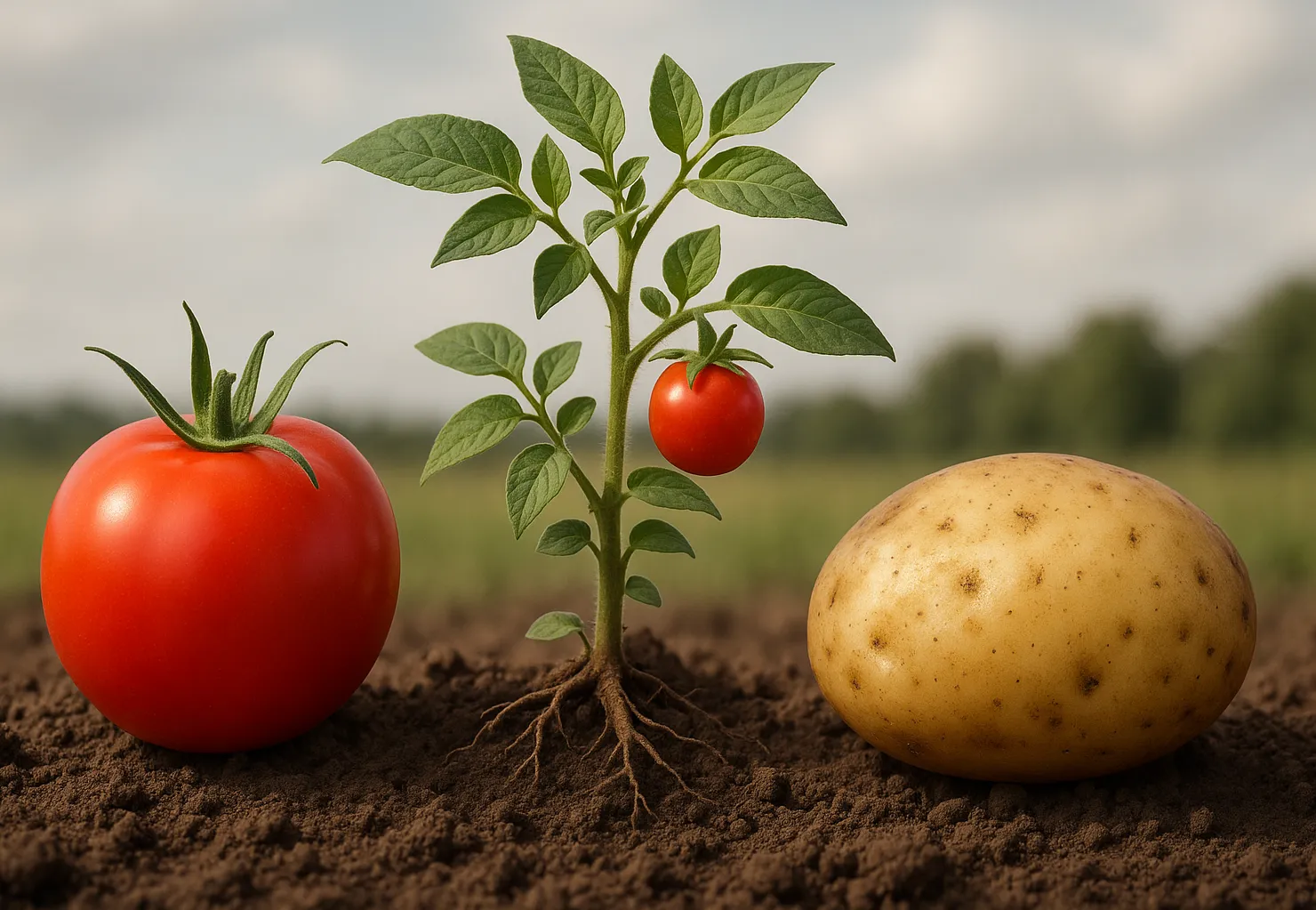
For decades, the origin of the potato – one of the most widely consumed foods in the world – has puzzled scientists. Now, a study published in the prestigious journal Cell definitively resolves the riddle: the modern potato is thought to have emerged some nine million years ago, from a natural cross between an ancestral tomato plant and a South American species similar to the potato but without tubers.
The research was led by an international team, with researchers from the Chinese Academy of Agricultural Sciences prominent among them. “We have finally solved the mystery of the origin of potatoes”, said Sanwen Huang, one of those chiefly responsible for the study. The cross between distinct species gave rise to a new plant endowed with a crucial characteristic: the underground tuber that stores nutrients and allows survival in adverse climates.
Despite the physical resemblance to three Chilean species – all called Solanum etuberosum and lacking tubers –, genetic analyses reveal that the potato is closer to the tomato. To understand this contradiction, the scientists analysed 450 genomes of cultivated potatoes and 56 of wild species. This is the broadest genomic database on wild potatoes assembled to date.
“It is very difficult to collect samples of wild potatoes, so this is the most comprehensive collection of wild potato genomic data ever analysed”, said Zhiyang Zhang, of the Shenzhen Institute of Agricultural Genomics, the first author of the paper.
The evidence shows that all modern potatoes have a stable combination of genetic material from the tomato and from Solanum etuberosum, confirming an ancestral cross. According to the genomic data, these two species diverged some 14 million years ago, but crossed again after five million years of separate evolution, giving rise to the potato nine million years ago.
From a genetic point of view, two genes proved fundamental. SP6A, from the tomato, works as a "master switch", activating tuber formation. IT1, inherited from etuberosum, regulates the growth of underground stems. Without the combined action of these two genes, the potato as we know it would simply not exist.
The appearance of the tuber also coincides with a period of great geological transformation: the rapid uplift of the Andes. The new plants, able to store nutrients, adapted better to the new extreme climatic conditions, spreading across the mountainous regions of Central and South America.
Furthermore, tubers allowed a form of asexual reproduction – by sprouts – that facilitated the potato’s dispersal across different habitats, contributing to its enormous diversity and present-day agricultural importance.
As Sanwen Huang sums it up, “the evolution of a tuber gave potatoes an enormous advantage in hostile environments, fuelling an explosion of new species and contributing to the rich diversity of potatoes that we see and depend on today”.


