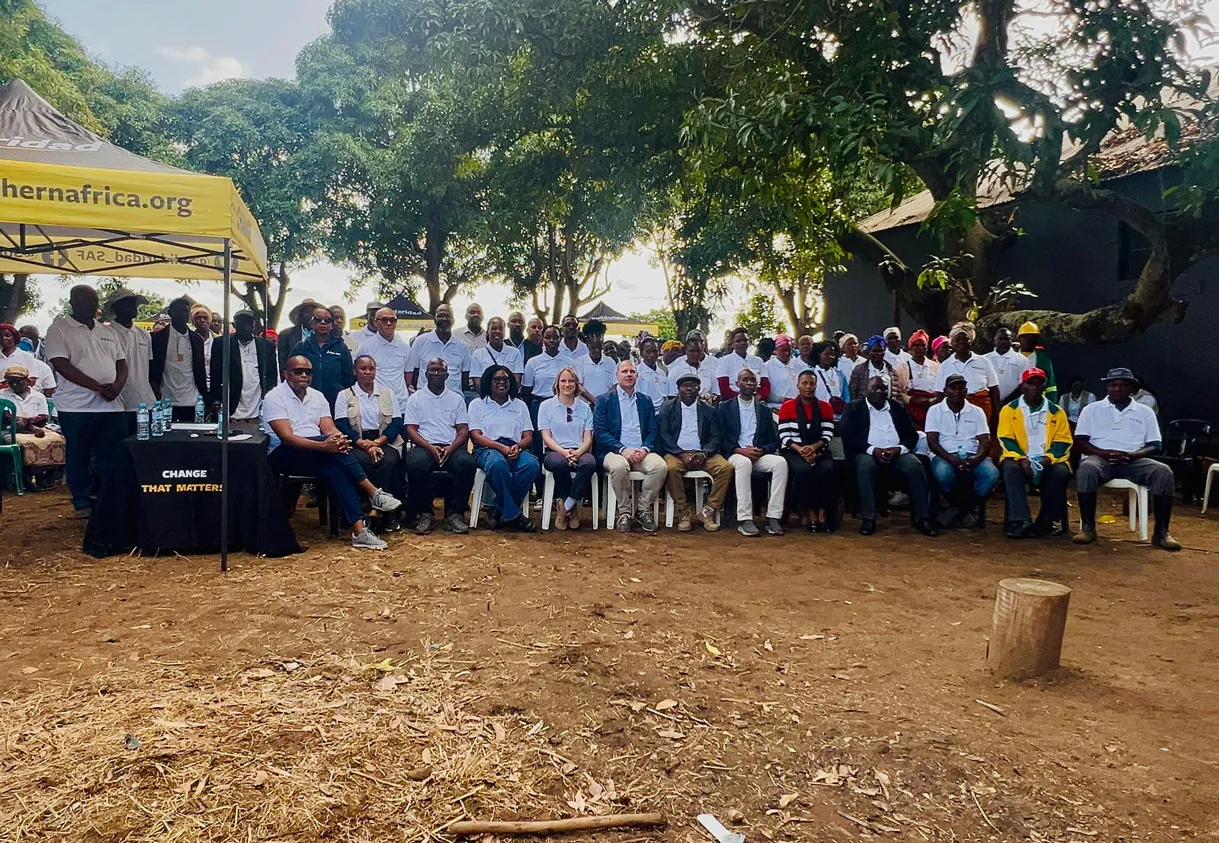
The HEINEKEN Africa Foundation, in partnership with HEINEKEN Mozambique, Solidaridad Southern Africa, Kvuno, and Hiveonline, has recently unveiled the “Promoting Regenerative Agriculture for Sustainable Livelihoods” (PRASL) project. This bold three-year initiative aims to drive a transformative shift in subsistence farming practices across Mozambique, making them more sustainable, inclusive, and resilient to climate change. With an investment of €1.5 million, the project is set to directly benefit 4,000 smallholder farmers throughout the country.
To be implemented in the district of Boane, in Maputo province, PRASL sets out to empower, above all, women and young adults, by introducing regenerative farming practices that aim to restore degraded soils, revitalise ecosystems and strengthen the autonomy of rural communities. By placing environmental regeneration at the centre of its action, the project takes an approach that combines sustainability, innovation and social justice.
The initiative was born as a direct response to the many challenges affecting Mozambican smallholder farmers, such as rainfall variability, soil exhaustion and precarious access to formal markets. To tackle these difficulties, PRASL also includes the introduction of digital tools and financial inclusion solutions, giving producers greater control over their production processes, as well as easier access to credit and marketing channels.
One of the pillars of the project is the promotion of equity: at least 60% of beneficiaries will be women and 30% young adults. The approach involves creating mentoring programmes, technical training and leadership skills development, with the aim of strengthening the role of women in farming communities and attracting young people to a traditionally ageing sector.
Running until 2027, PRASL aims to leave a lasting impact that goes beyond the limits of the project itself. By encouraging sustainable practices and creating structures for continued support to rural development, this joint effort between HEINEKEN and its partners wants to ensure that the benefits endure over time and serve as a replicable model in other regions of the country.
More than an agricultural investment, it is a commitment to the future — a future in which more resilient, informed and empowered communities will be able to cultivate not only food, but also hope.
Feature
Heineken
Invests in regenerative agriculture to strengthen rural communities
Xonguila27 May 20252 min readTime well invested.
Time well invested.


