
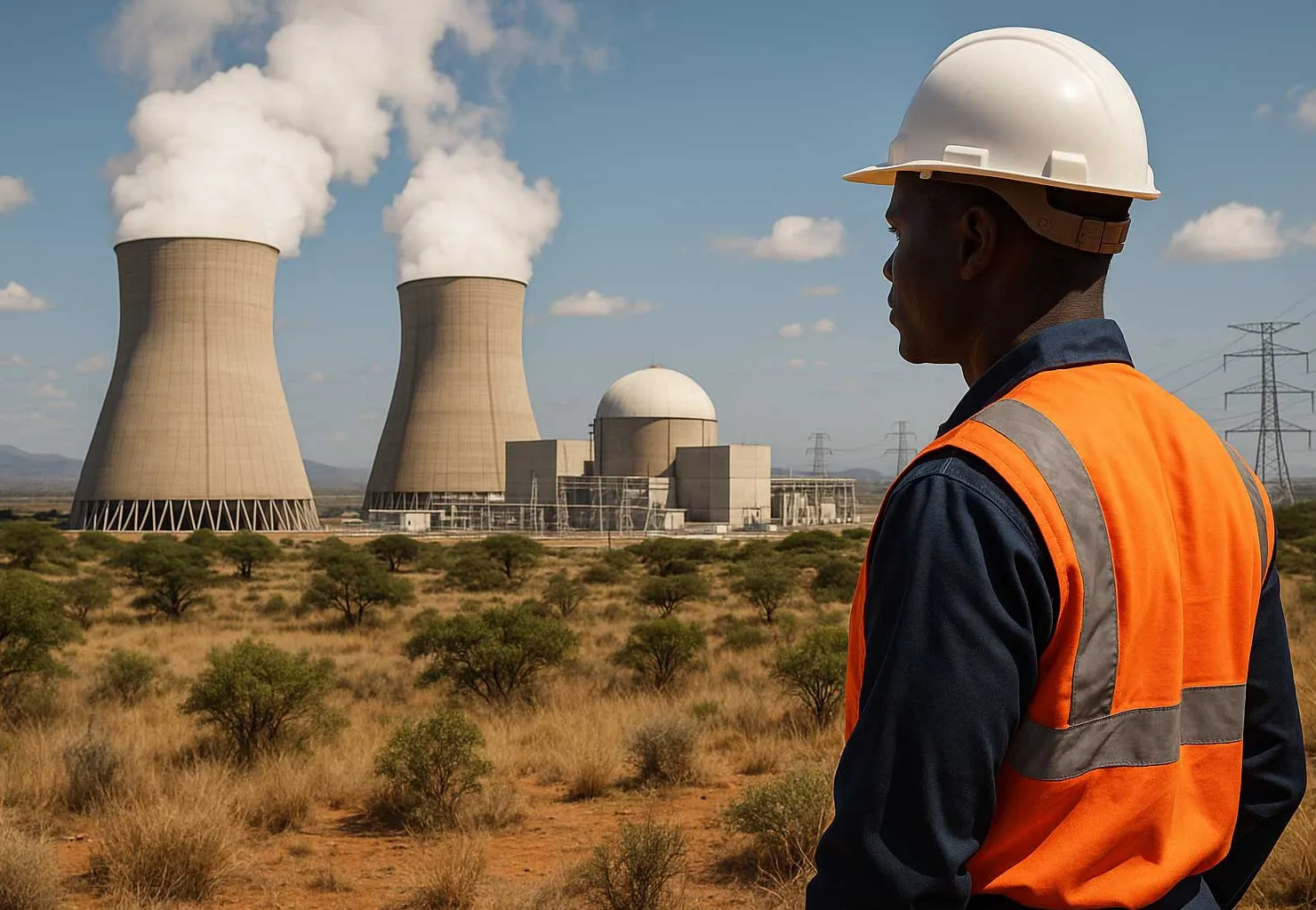
Amid growing demand for energy and global pressure for low-carbon solutions, African ambitions in nuclear energy – until now marked by long stalemates – are beginning to gain new momentum.
International investors and development partners have been showing renewed interest in financing nuclear infrastructure in several regions of the continent. Nuclear energy is emerging as a viable path to strengthen energy security, boost industrial growth and ensure greater climate resilience.
The urgency of the energy transition, on a continent facing severe supply deficits, places Small Modular Reactors (SMRs) and Micro Reactors (MRs) at the centre of the conversation. Although promising, the adoption of these technologies still faces significant barriers, above all in access to finance.
A call for funding and capacity building
At the Africa Nuclear Energy Innovation Summit, held on 30 June in Kigali, Rwanda, policymakers, investors and experts discussed the role of nuclear energy in the continent’s energy future, with a focus on mobilising resources and strengthening local skills.
The Director General of the International Atomic Energy Agency (IAEA), Rafael Grossi, reaffirmed the organisation’s commitment to supporting African countries in developing peaceful nuclear programmes. He also stressed that “nothing prevents Africa from claiming its place” in the global energy landscape.
Grossi highlighted Africa’s potential as a key factor in the global energy future, stating that clean energy “is no longer a luxury, but a pressing necessity”. While acknowledging that nuclear energy is not suited to every context, he stressed that achieving a low-emission global economy “would be impossible without it”.
He also referred to the growing interest in SMRs, micro-reactors and traditional technologies, adding that the IAEA is ready to work “hand in hand with Africa” on the road to a sustainable future.
Financing: the weakest link
Despite the enthusiasm, Africa faces an annual infrastructure financing gap of about 100 billion dollars, according to the African Development Bank. This gap is aggravated by a global climate unfavourable to development finance, with successive cuts in official assistance.
Stéphane Ouedraogo, managing partner at Stallion Capital Africa, acknowledges that institutions such as the World Bank have shown greater openness to financing nuclear projects, bringing not only capital but also credibility and risk-mitigation strategies.
As countries such as Kenya and Rwanda deepen their exploration of SMRs, Africa’s nuclear momentum is consolidating. But its success will depend on coordinated financing strategies, firm political support, the development of local skills and a commitment to sustainable energy solutions.


