
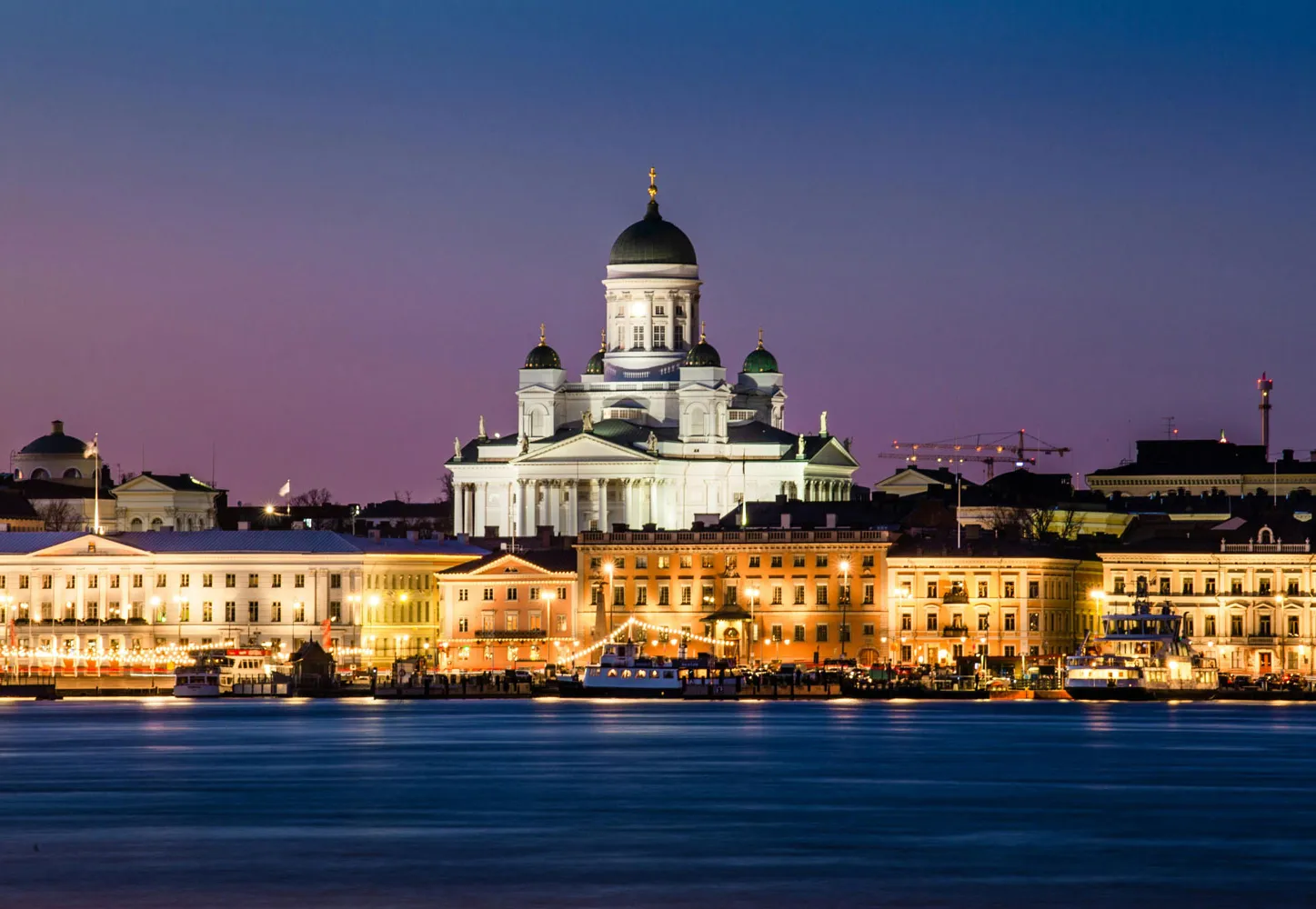
Finland, often highlighted as the happiest country in the world, is a living example of how a nation can transform itself and reach high levels of development, even starting from adverse conditions. With a history of challenges and of overcoming them, the path of this Nordic country towards prosperity and social well-being offers valuable inspiration for other nations.
I recently had the privilege of representing Mozambique, at the invitation of the Finnish Ministry for Foreign Affairs, on a visit entitled “The Story of Finland”, together with other communication and media professionals from Tanzania, Zambia, Kenya, Namibia, Tunisia, Lebanon and Turkey. It was a visit in which we had the opportunity to get to know various institutions and take part in training sessions and workshops on highly relevant topics, gathering – and also passing on – rich experiences for our countries.
The evolution of a country
Little more than a century ago, Finland was a rural and poor nation, where most of the population lived from subsistence farming. Only 5% of Finns had access to education beyond the basic level, and the climate, with long and severe winters, made life in rural areas difficult. Today, the Finnish reality is radically different. The country is a world leader in education, innovation and technology, and is also one of the most stable and with the greatest integrity in the world. This progress was driven, to a large extent, by the transition from an agricultural economy to an economy based on knowledge and innovation. Continuous investment in education, health and technology, combined with transparent governance, has allowed the country to become one of the most competitive globally. Finland currently has one of the best social welfare systems, in which everyone has access to free education and healthcare. According to the World Happiness Report 2023, it is the happiest country in the world for the sixth year running, standing out for its strong social cohesion, high trust in institutions and quality of life. Much of this success is owed to taxpayers, whose taxes directly fund key areas such as education and health. This relationship between paying taxes and access to high-quality services makes citizens feel that their contribution is reflected in their daily well-being, which reinforces trust in institutions.
Education, the pillar of the future
The Finnish education system is recognised worldwide for its excellence, with an approach that places the pupil at the centre of the learning process. During my visit to Siltamäki primary school, it was clear that the focus is on children's well-being and on the relevance of the curriculum content to real life. The integration of projects that encourage creativity, critical thinking and problem-solving prepares students for a constantly changing world. The data speak for themselves: Finnish students consistently achieve high levels of performance in international tests such as PISA (Programme for International Student Assessment), where the country stands out in areas such as reading, mathematics and science. Finland has also invested in digital education, ensuring that children are prepared for the challenges of the twenty-first century. From an early age, pupils are exposed to the use of technology in the classroom, and there is strong encouragement of critical thinking about the information they consume, especially in an era when misinformation spreads rapidly.
Teacher training, which is one of the most rigorous in the world, with the profession highly valued, contributes greatly to the enormous success achieved in education. As in Finland, strengthening teacher-training institutions with an emphasis on active methodologies adapted to our local reality, and dignifying the role of the teacher, could contribute to a significant improvement in the quality of teaching in Mozambique.
Sustainability, an urgent commitment
Another impressive aspect of Finland is its commitment to sustainability. The country has developed environmental preservation policies and technological innovation to tackle climate change, always maintaining a balance with nature. Finland is a leader in renewable energy, with around 40% of its electricity coming from renewable sources, such as wind power and biomass. The country also has ambitious targets to achieve carbon neutrality by 2035, one of the boldest in Europe. The visit to Nuuksio National Park was an opportunity to see how Finns integrate sustainability into their daily lives. The conservation of biodiversity and respect for nature are priorities that are reflected in public policies and in citizens' everyday lives. This commitment is not merely a matter of legislation; it is rooted in the country's culture. Valuing natural resources and respecting the environment are practices that Mozambique, with its vast natural resources, can replicate. With major gas and other resource extraction projects we face significant environmental challenges, and adopting policies that promote responsible exploitation, the use of renewable energy and the preservation of our natural areas can ensure more sustainable development.
Innovation and technology as the key to success
In an increasingly digital world, Finland continues to innovate. The country has made great advances in the field of artificial intelligence (AI), and is recognised by the European Commission as one of the leaders in applied AI. In addition, the government has promoted training initiatives for the general population on the use of AI, with the aim of ensuring that citizens are prepared for digital transformation. One example is the free online course “Elements of AI”, which offers an accessible introduction to artificial intelligence and aims to democratise access to technological knowledge. During the visit to the Finnish Innovation Fund Sitra, we learned how Finland is preparing its institutions and citizens to adapt and thrive in this new technological era. The digitalisation of public services, such as those of the Tax Administration, was essential for the modernisation of the tax system. The migration from paper to a robust computer system not only organised internal management but also simplified taxpayers' interaction with the system, making processes more efficient and accessible. We in Mozambique can draw lessons from this strategy, especially with regard to digital inclusion and the development of technological infrastructure. Increased internet access and technological training for young people are fundamental to promoting economic growth, and in a country where the ICT sector is growing, investing in innovation and technological capacity-building could be a key to the future.
Inspiration from the Finnish experience
Despite the different realities of Mozambique and Finland, the development trajectory of this Nordic country offers rich experiences that can be adapted to our context. A commitment to inclusive, quality education, the building of trust in institutions, the adoption of sustainable practices and investment in technological innovation are paths that Mozambique can follow to secure a more promising future. With the challenges posed by climate change and the need for economic growth, cooperation with Finland, which in 2025 will celebrate 50 years of partnership with Mozambique, remains an opportunity of great value. This relationship, which also coincides with the 50th anniversary of our country's independence, shows how much we can learn from friendly nations, and how, through dialogue and international cooperation, be it bilateral or multilateral, between states, institutions or individuals, we can build together a more sustainable and inclusive future. Finland's evolution shows that development is a gradual process and requires time and dedication. It requires persistence, strategic planning and, above all, a clear vision that social well-being must be at the centre of every decision.
In the end, what I take from this experience transcends borders and challenges. It is the certainty that the path to a fairer and more inclusive future is made of firm steps, inspired by those who knew how to transform their reality.


