
Traces of a shared past: Mozambique in the spotlight in Berlin
On 1 March, Berlin witnessed the opening of a striking exhibition at the Haus der Kulturen der Welt (HKW). Entitled "Echoes of the Brother Countries" (Echos der Bruderländer), the show ran until 20 May 2024, delving deeply into the complex webs of transnational solidarities and contradictions that marked relations between the former GDR and ideologically aligned countries during the period from 1949 to 1990.
Sponsored by the Calouste Gulbenkian Foundation – France Delegation, the exhibition was more than a simple historical retrospective; it was an ambitious research project that asked "What is the price of memory and what is the cost of amnesia?" through a diverse programme that included visual works, performances and installations.
The legacy of anti-imperialist solidarities
For decades, thousands of people migrated to the GDR from nations such as Mozambique, Angola and Guinea-Bissau, among others, where political, economic and cultural ties flourished. Through art and dialogue, the exhibition explored moments of genuine solidarity and support for anti-colonial and anti-imperialist struggles, but also the adversities that arose in the process, providing a platform to re-evaluate and celebrate these complex interactions.
Mozambique in the spotlight
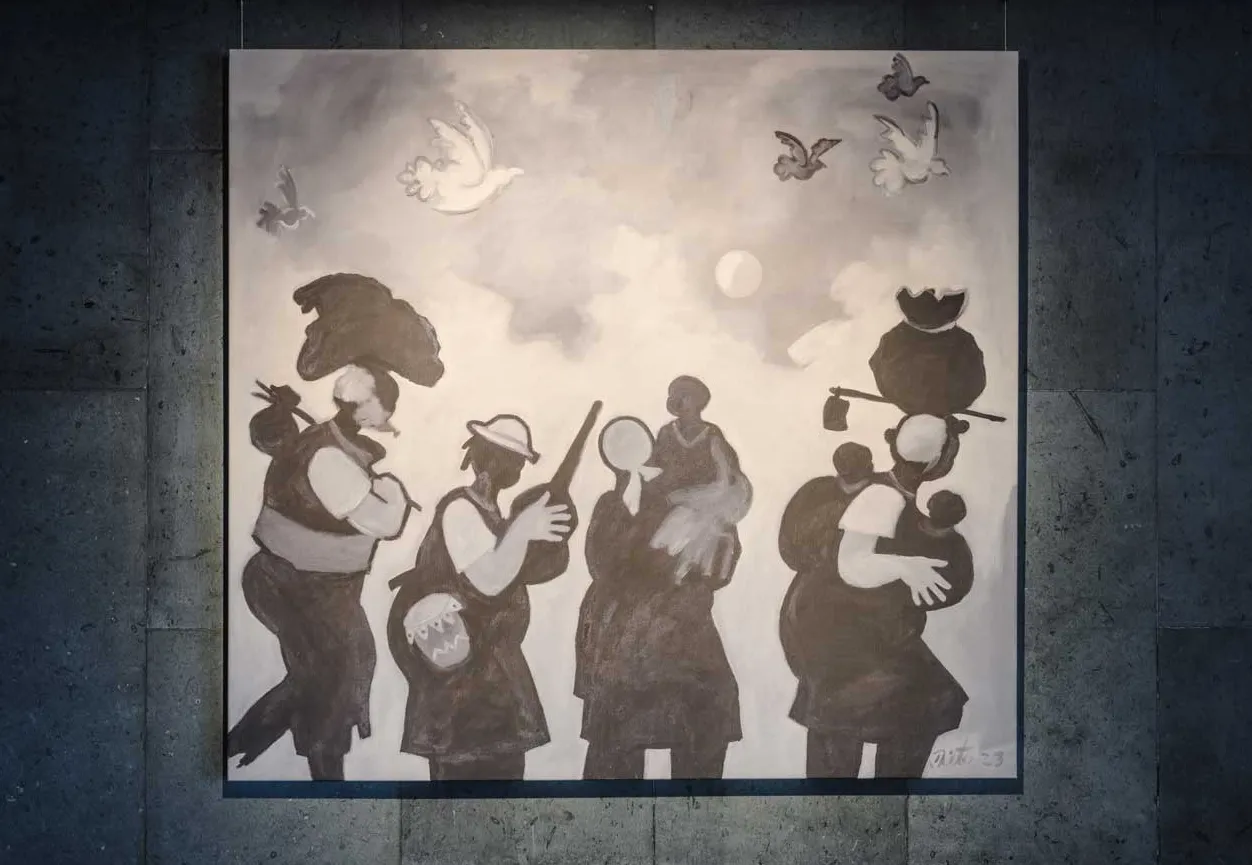
The Mozambican presence at the exhibition was notably significant, with artists such as Dito Tembe and Eurídice Zaituna Kala standing out. Tembe, through his series "Madgermanes", made up of eight reproductions of oil paintings, brought to the fore the experiences of Mozambican workers in the GDR, while Kala, with her video installation "Rendition — A moment in between 33 years of protest" and the performance "Ritual as a March as Protest", in collaboration with Pak Ndjamena, questioned the official narratives and the spaces between memory and forgetting.
Maimuna Adam, for her part, presented "Writing (a future with the remnants of the past)", an installation that challenged visitors to reconsider what is remembered and what is left behind in the writing of history.
Reflections and repercussions
Over almost three months, "Echoes of the Brother Countries" not only recalled the often forgotten stories of migrants in the GDR, but also prompted a broader reflection on how these experiences shaped – and continue to shape – the former brother countries. This multidisciplinary project was a meditation on the costs of amnesia and the value of memory, offering a critical view of how intertwined histories have influenced international relations and cultural identities to this day.
Through a mosaic of voices and visions, the Haus der Kulturen der Welt and the Calouste Gulbenkian Foundation provided a space for memory, dialogue and mutual understanding, underlining the importance of looking to the past in order to build a more inclusive and understanding future.


