
January 2025. Once again, I return to Ilha de Moçambique. Over the past two years, my visits to this magical place have been frequent. Here, the people enchant us with their smiles, and the moments I have lived are jewels without beginning or end, unforgettable experiences that are always with me.
This journey, however, is different. It is a unique experience. What happened a few days ago on Ilha de Moçambique affected me deeply – I feel it was a moment of change.
Cyclone Dikeledi passed over the island and was devastating. In a challenging reality where the local economy revolves around scarce tourism, artisanal crafts and construction, and where the minimum wage is a perpetually postponed promise, Ilha de Moçambique was once again struck by a cyclone. On 13 January 2025, Dikeledi unleashed its fury, after Cyclone Gombe left its trail of destruction on 11 March 2022.
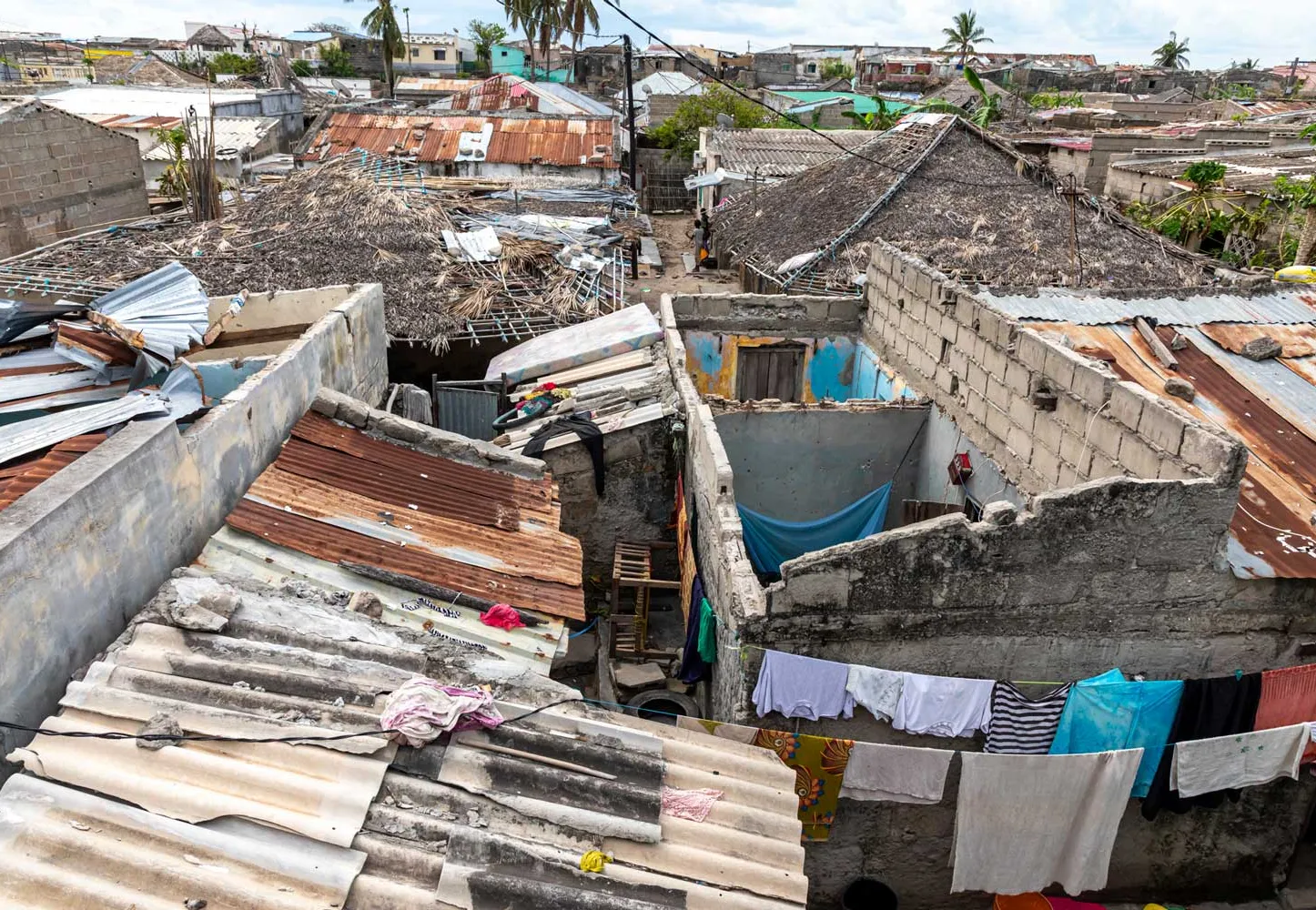
There were still families who had not managed to recover from Gombe when they were battered by Dikeledi. The scene I found was terrible, with an estimated 80 thousand people homeless, not only on Ilha de Moçambique but also in the surrounding areas, covering a vast stretch of mainland.
The houses, very fragile, looked like heaps of sand or soft earth; the sturdier ones, some more than 100 years old, lost part of their foundations and were partially destroyed. It is estimated that 80% of the island's homes were affected.
With more than 90 electricity poles down, the island was without power for about 10 days, which interrupted the supply of fish, seafood and chicken, as there was no way to keep them fresh. The nights became much darker than before, except in 2 or 3 places where the owners had generators, which provided a little light in the pitch-black night and drew some people together. The telecommunications networks were down for 3 or 4 days. In a globalised world in which we communicate with the other side of the planet with just a few taps on a keyboard, news of what was really happening on the island was held back, waiting for the signal to return so that it could reach those who were worried about their loved ones.
Everyone suffered, but those with the least were the worst affected. This is where I feel immense pride in these humble yet immensely strong people. It is not easy to smile in the face of adversity, let alone to believe that tomorrow will be a better day.
Here are three short stories that I followed during the days I spent on the island after Dikeledi passed. There, friends came together and helped a few families partially cover their roofs, allowing them to sleep again with some protection. And expressions of gratitude soon followed.
Mamacha Issufo
She is a resilient great-grandmother who, since Gombe, has not had a single room fully covered where she can sleep safely beside her husband. The deep lines of her face tell the story of a hard life, marked by the absence of smiles. When her son-in-law learnt that there were people trying to help some families, he did not hesitate to ask for support for his mother-in-law.
The images I captured clearly show how this lady has lived for the past almost two years. Now, Manacha will finally have the chance to sleep peacefully, knowing she is protected. Although she is not a woman of many words, the quick, sincere hug she gave each of us was testimony enough of her gratitude – it is worth an endless number of smiles.
Nelson Amito
Nelson Amito is a teenager with a special talent and a generous heart. To help his family, he makes drawings that he sells to the few tourists who visit the island. His drawings overflow with feeling, reflecting his view of the world. His contagious smile is a ray of light; he is a good lad who, like any young person his age, goes a bit too far at times, but seems to have his heart always in the right place. Nelson and his family live in an unfinished house with just two rooms. Dikeledi was not kind to them, taking the roof sheets and damaging part of the structure. Although the help was useful for covering the bedrooms, the living room and other areas were left unprotected. I believe, however, that we will soon see new drawings from Nelson, and I hope the tourists return to buy them.
Agira Luciano
Of all the cases I followed, the one that touched me most was that of Agira and Carlos. They live by the sea, surrounded by the waters they love so much, while their six children play every day, indifferent to the precarious conditions of their “home”. Victims of Gombe, they had about 25 m² of the house covered, but Dikeledi took almost all of it, leaving them more vulnerable than they already were.
The gratitude Carlos showed on receiving help was heartbreaking. A special man, the genuine love he feels for Agira is plain to see. He works in a nearby restaurant and treats all the children in the house as if they were his own. Two come from Agira's previous relationships, but that does not diminish the affection he shows them. The closeness between them is inspiring and adds to the strength they find in one another, even in the most challenging circumstances.
Three stories that illustrate the capacity for human resilience, undoubtedly made easier by solidarity, understanding and harmony at home.


