
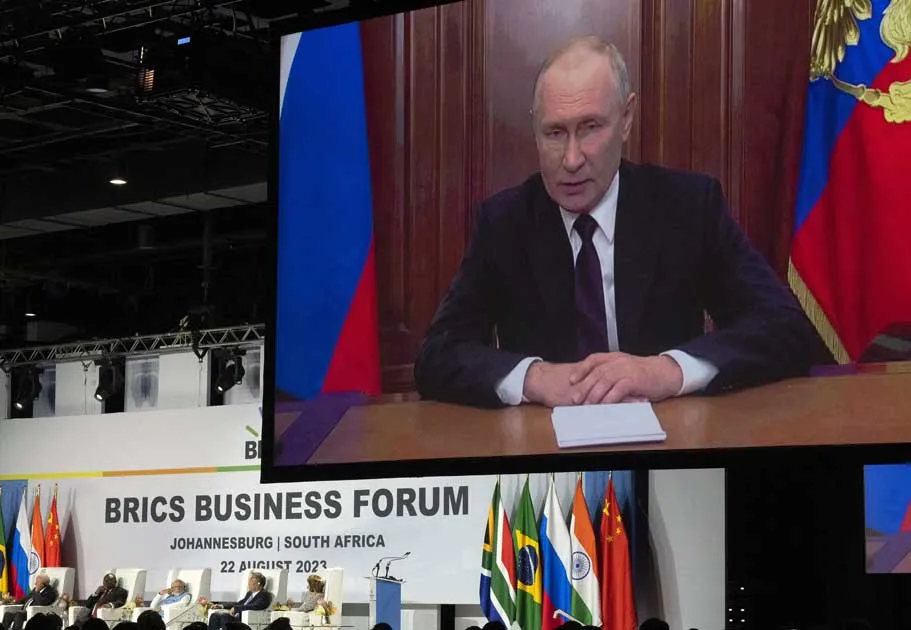
From 22 to 24 August, Johannesburg becomes the stage for a meeting whose repercussions could resonate around the globe. The leaders of the BRICS, the group of emerging nations comprising Brazil, Russia, India, China and South Africa, are converging on the South African city to discuss, among other matters, the enlargement of this influential economic bloc.
The moment is opportune, and the reasons are several. In a world polarised by tensions between China and the United States and marked by the echoes of the war in Ukraine, the need to strengthen this bloc is becoming pressing. China, a rising power, sees in the enlargement of the BRICS an opportunity to cement its role as a global leader.
On the eve of the talks, a state visit provided the setting for a meeting between two leaders whose nations shape modern economic geography: Chinese President Xi Jinping and South African President Cyril Ramaphosa. In a meeting marked by seriousness and understanding, both men's words resonated in unison, expressing a shared vision on the enlargement of the BRICS and gravely underlining the urgency of a new architecture in global governance.
However, the summit in Johannesburg is not limited to these figures. The stage will be filled with prominent personalities from the world political scene, such as Brazilian President Luiz Inácio Lula da Silva and Indian Prime Minister Narendra Modi. Physically absent, but present through technology, will be Vladimir Putin, President of Russia. In the talks, the debate on the expansion of the bloc and a new monetary order, with the increased use of local currencies, promises to be the beating heart of the discussions, symbolising an era of change in the orchestration of global finance.
However, the summit is not free of challenges. The BRICS, with its distinct and partly disagreeing members, faces internal obstacles. India maintains a sceptical eye on Chinese dominance, and Brazil expresses concern over the possible dilution of its influence.
More than 40 nations have expressed interest in joining the bloc, a clear indication of its importance on the international stage. But enlargement is not a peaceful matter. Discussions will continue through Tuesday night, in a mini-retreat and dinner, where the criteria for admitting new members are expected to be outlined.
This BRICS summit is a reflection of the complex contemporary geopolitical chessboard, a constantly shifting arena where emerging nations seek a place in the sun. It is a crucial moment, in which these countries' vision for the future could be forged, in a concerted effort to challenge a world order dominated by the rich Western nations.
In Johannesburg, the world will have its eyes fixed, awaiting the next moves of a group that is home to about 40% of the world's population and a quarter of global GDP. The future of the BRICS is at stake, and the outcome of this summit could define new paradigms in international politics.


