
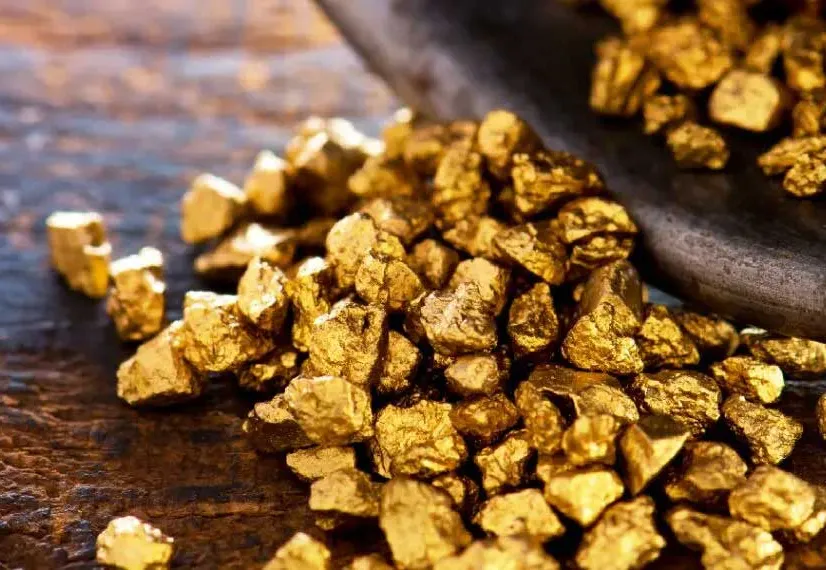
Mozambique witnessed substantial growth in gold production in the first quarter of this year, with an increase of 53% compared with the same period of the previous year, totalling 346.3 kilograms. This figure was announced today by the Mozambican Government.
The economic and social report on the execution of the State Budget in the first three months of 2023 indicates that this production constitutes 26% of the total expected for the year, set at around 1,342 kilograms. By comparison, in the first quarter of 2022, 226 kilograms of gold were produced in Mozambique.
This progress is due in part to stricter control of artisanal mining, the good performance of the producing companies and the continued exploitation of hard-rock deposits. In addition, a new processing plant was also put into operation and exploration activities resumed in Manica province.
It was not only gold production that saw growth. Among the metallic minerals, tantalite production also grew by 53%, totalling 64.5 tonnes, while ilmenite increased by 48%, reaching 747,734 tonnes. Zircon also recorded an increase of 11%, reaching 33,346 tonnes. However, rutile production fell by 14%, standing at 1,682 tonnes.
As regards non-metallic minerals, graphite reached 11% of its annual targets, with a total of 28,608 tonnes, which represents a decrease of 39% compared with the same period of the previous year.
As for precious and semi-precious stones, ruby was the most represented mineral, with production of more than 567,463 carats. This figure corresponds to 8% of the annual plan and a decrease of 54.5% compared with the corresponding period.
Overall, for 2023, the Mozambican Government anticipates growth of 23.1% in the extractive industry sector. This increase is expected to be based on higher production of various minerals, including rubies, coal, heavy sands (such as ilmenite, zircon and rutile), natural gas, and construction materials.


