
There are stories that begin with large investments, complex plans or powerful institutions. And there are stories that begin with something much simpler: the inability to remain indifferent in the face of a problem.
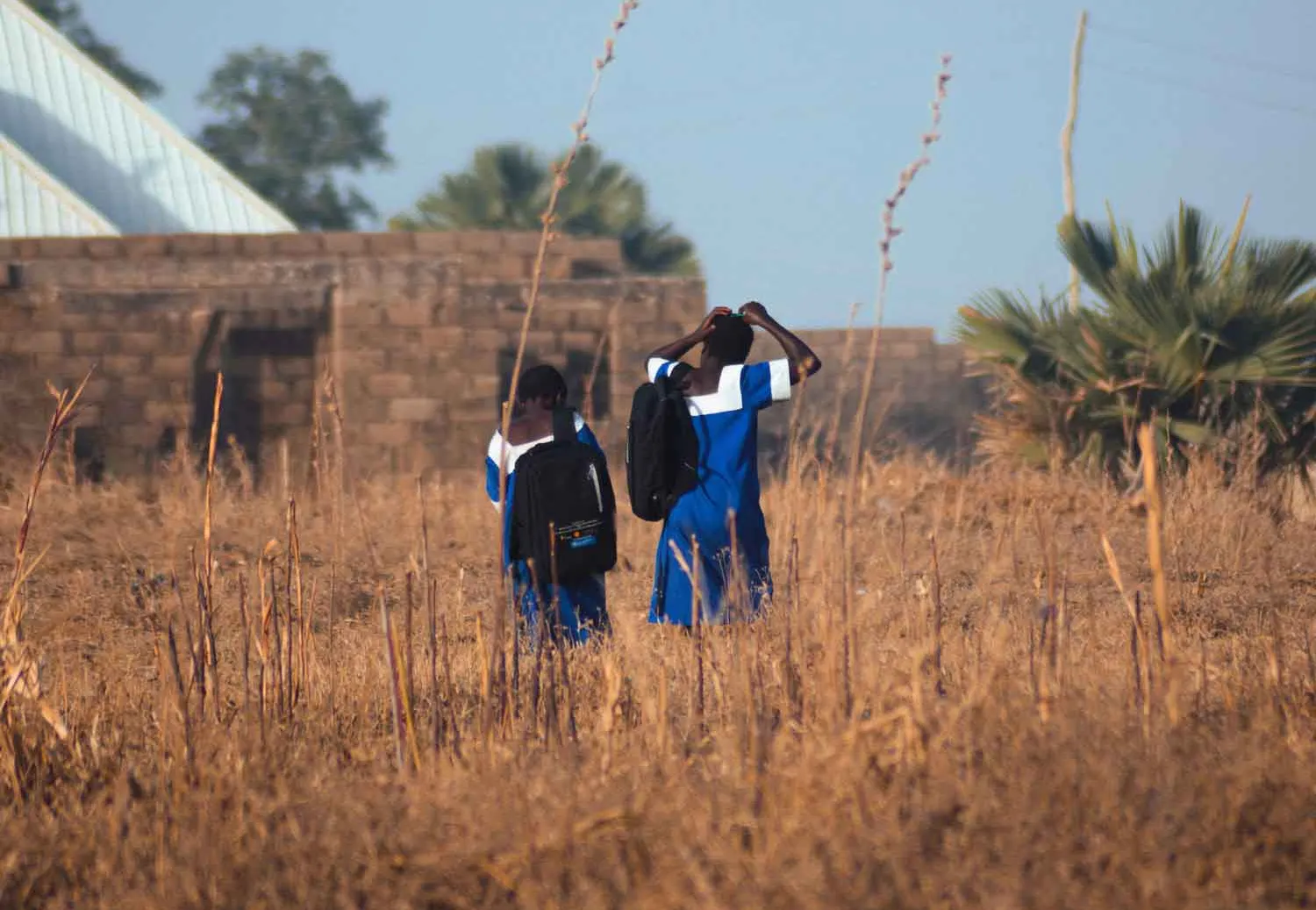
In many Mozambican communities, education continues to face challenges that go far beyond a lack of books or school supplies. There are schools where children arrive every day motivated to learn, but find conditions that make difficult what should be a basic right. Some study in improvised classrooms, others face a lack of furniture, and there are still those who live with dilapidated infrastructure that compromises the very process of teaching.
It was precisely in one of these realities that an initiative was born which would go on to mobilise dozens of people around a common goal: to restore dignity to a school that operated without a proper roof.
When it rained, lessons stopped, and the children were forced to interrupt their studies and go home. The school calendar came to depend on the weather. What to many may seem just an infrastructure problem was, in practice, a constant obstacle to access to education.
The discovery of this reality happened during school support activities carried out with vulnerable communities. Over the years, initiatives distributing exercise books and school supplies sought to help children who struggle to stay in school. However, at a certain point, it became clear that providing school supplies would not be enough.
What use are new exercise books when there is no suitable space in which to learn? That question became the starting point for a project that seemed bigger than the resources available.
The first strategy was to seek support from the private sector. The idea was simple: to find companies willing to fund the rehabilitation of the school, allowing the work to be carried out without the need to collect money from the public. For those leading the initiative, this would be the ideal solution. After all, managing funds from donations demands enormous responsibility and a permanent commitment to transparency.
However, the support did not materialise. Despite the contacts made and the attempts to mobilise, the expected response did not come.
As often happens in social projects, the desire to help does not always find enough financial backing to turn intentions into concrete action.
It was at that moment that a difficult decision arose: to accept that nothing would change, or to take on the challenge of making it happen. The choice was to go ahead.
The fear was great. Not only because of the financial challenge, but also because of the weight of responsibility. Raising resources from other people means taking on a commitment of trust. It means knowing that each contribution represents the effort of someone who believed in a cause.
Even so, conviction spoke louder. A fundraising campaign was created, tied to a special date: a birthday. Instead of presents, there was a request for support to help build the school's roof. The gesture, simple in essence, ended up awakening an unexpected wave of solidarity.
People from different social circles decided to contribute. Some helped with modest sums, others with larger amounts. What mattered was not the size of the contribution, but the fact that they believed education deserved that investment.
By the end of the campaign, about 250,000 meticais had been raised. The sum, though significant, seemed small compared with some of the budgets initially presented by construction companies. Some quotes far exceeded the amount available, reaching figures that made the project seem impossible.
But it was precisely there that one of the greatest lessons of this experience emerged. Often, the difference between a problem and a solution lies in the ability to find alternative paths.
The team involved looked for more affordable materials, identified professionals willing to collaborate and found creative ways of cutting costs without compromising the quality of the work. Every decision was made with the aim of making the most of the resources available.
The challenges, however, were not limited to financial matters. The school is located in an area where access to water is extremely limited. Carrying out building work in such conditions is a significant obstacle. In addition, the roads make it hard to transport materials and raise logistics costs. It was a situation that could easily have discouraged any initiative. But something extraordinary happened. The community decided to be part of the solution.
Residents helped carry water to the site. Others contributed labour. There were those who carried materials, those who lent equipment and those who simply were there to support the process. Teachers and members of the school's management followed the work closely, showing that this project did not belong to one person, but to everyone.
The rehabilitation was no longer just a physical building project. It became an exercise in citizenship and community participation. In roughly ten days, from the purchase of materials to the completion of the work, the school gained a new look and new hope. Today, when the rain falls, lessons no longer have to stop.
But perhaps the true legacy of this project lies not only in the roof that was built. It lies in the demonstration that change is possible when ordinary people decide to act. It lies in the proof that communities have extraordinary strength when they work together. And it lies, above all, in the message left to the children who study at that school: that they matter.
In a country where difficulties are so often talked about, stories like this remind us that development also springs from individual initiative, collective solidarity and the ability to turn concern into action.
Because, at bottom, that roof does not only protect a school. It protects dreams, opportunities and the future of dozens of children who can now learn without looking up at the sky in fear of the next rain.


