
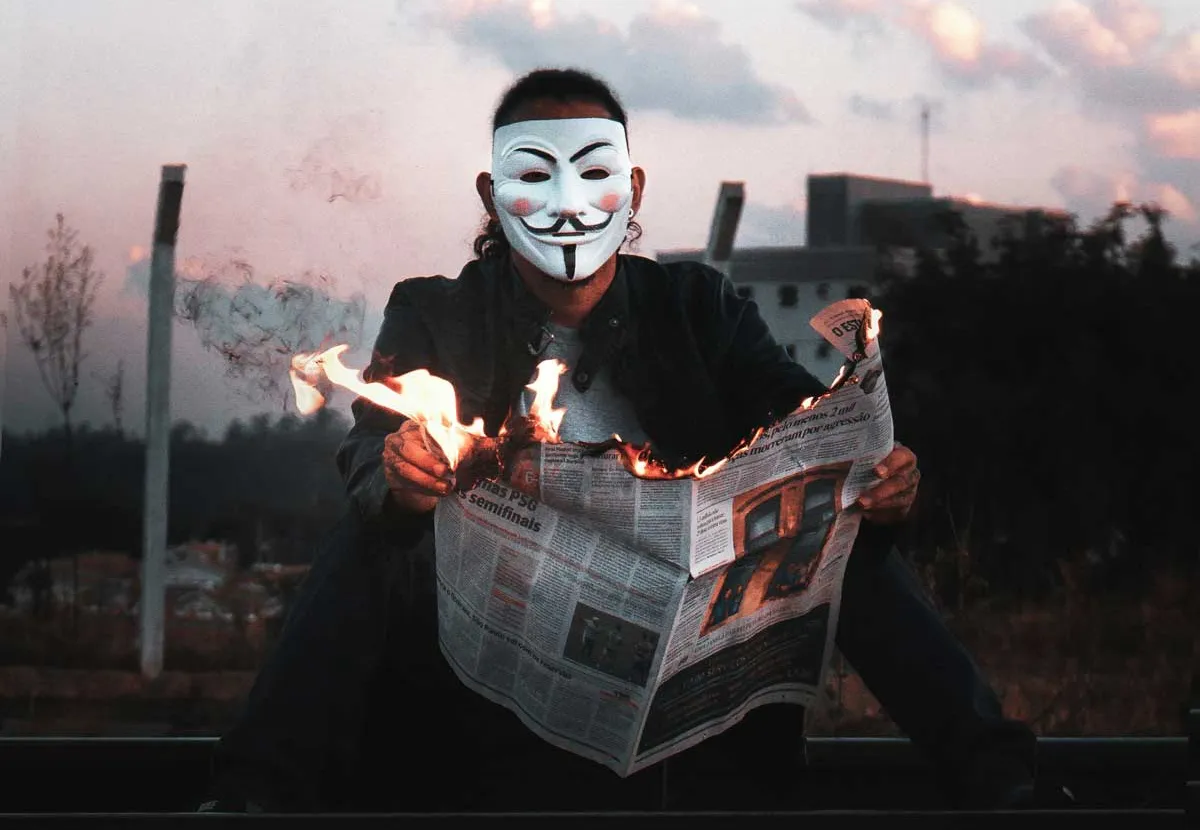
The digital world has become a space where ideas are debated, decisions are contested and public opinion is shaped. This constant presence of technology in everyday life has created new forms of collective action, from campaigns amplified on social media to digital operations with a global impact. It is in this context that hacktivism and cyberactivism fit, phenomena that have gained prominence in several countries, including Mozambique, but whose analysis requires a balanced and informed approach.
Cyberactivism is based on mobilisation through the internet. Petitions, solidarity movements, exposés and information campaigns show how digital platforms have become spaces for civic participation. Many causes have gained greater visibility thanks to the coordinated efforts of citizens who find in the network a practical tool for raising awareness and generating debate. This dynamic does not replace traditional activism, but extends the ability to influence public policy, scrutinise institutions and promote dialogue between different groups.
Hacktivism, for its part, although often associated with more disruptive episodes, is varied in nature. Its motivation may stem from ideals linked to transparency, defence of rights, protection of vulnerable communities or contestation of government and corporate decisions. Although there are actions that raise legal and ethical questions, the phenomenon is also an expression of an increasingly computerised society, in which technological mastery has become a form of public intervention.
The growing sophistication of technologies has, however, brought new challenges. Deepfakes, for example, have become one of the most discussed digital tools of the moment. Using artificial intelligence, they make it possible to create videos and voice recordings that are practically indistinguishable from real content. This capacity for manipulation introduces serious risks for public trust. A fabricated video can damage reputations, feed false narratives and influence collective decisions before it is debunked. The impact is all the greater the faster information circulates in a hyperconnected society.
The power to influence in the digital environment no longer depends solely on the strength of an idea. It also depends on the ability to produce, edit and disseminate content with apparent authenticity. Social platforms have become spaces of great reach, where a single post can reach thousands of people within minutes. This speed creates opportunities to inform and educate, but also to confuse and manipulate, especially when the origin of the content is not easily identifiable.
In Mozambique, as in other countries, these phenomena pose important challenges. Digital literacy becomes essential so that citizens can tell credible information from manipulated content. Public and private institutions are called on to strengthen their security systems and adapt communication strategies to an environment in which rumours spread almost instantly. Civil society, in turn, takes on a central role in creating spaces for clarification that strengthen collective trust.
Navigating this new ecosystem demands prudence, a critical mind and an understanding of how the technologies that shape public opinion work. Hacktivism, cyberactivism and deepfakes represent distinct facets of the same phenomenon: a world in which civic participation migrates to the digital realm and where information, true or false, has the power to influence behaviour.
We are facing an era in which public debate takes place on the screen as much as on the streets. It is up to societies to balance innovation and responsibility, freedom of expression and rigour, creativity and caution. The challenge lies not only in what technology makes it possible to do, but in how each community decides to use it to build a more informed and resilient future.


