
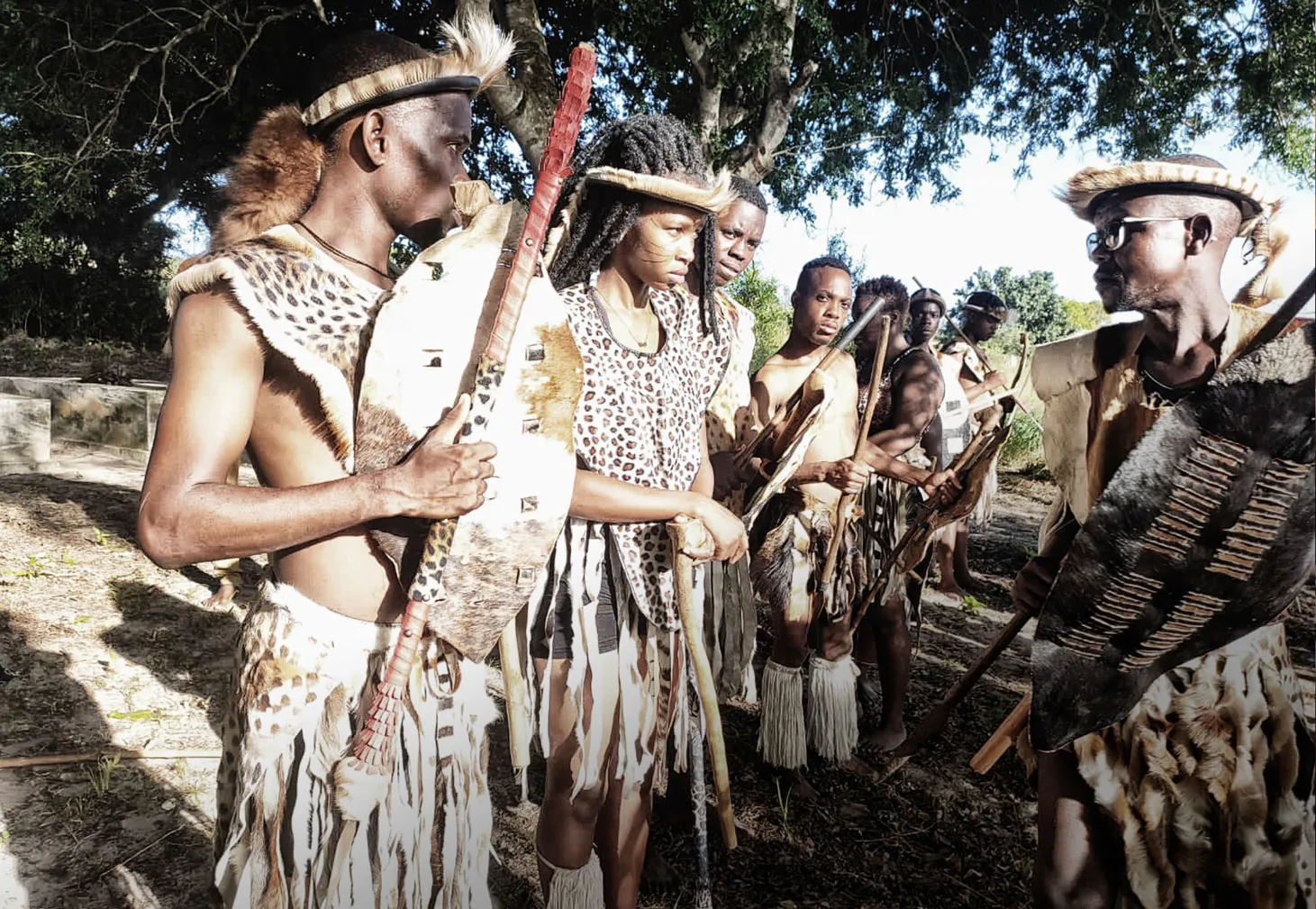
Gwaza Muthine was a battle fought on 2 February 1895, near Marracuene, in Maputo province, between the Ronga forces commanded by the young prince Zixaxa and the Portuguese forces led by Major Alfredo Augusto Caldas Xavier. The battle took place in the context of Portuguese colonial occupation, referred to at the time as campaigns of conquest and pacification. Our warriors fought with all their strength, but could not prevail. This battle is nonetheless one of the greatest symbols of Mozambican resistance to colonial rule. Every year, on the date on which it took place, a series of emblematic festive commemorations is held, aimed at celebrating our culture, resilience and identity. The occasion coincides with the season of the canho (or canhu), the fruit of the marula tree, from which “ukanyi” is made, a centuries-old traditional wine of low alcohol content, much appreciated and drunk by the communities at the Gwaza Muthini festival.
The 2023 festivities took place, as always, in Marracuene, this time under the theme 128 Years of Gwaza Muthini, Celebrating Culture as the Legacy of Our Identity. They began with the now customary Tribute to the Canhu, continued with the Farewell Ceremony at the tombs of the Mabjaia chiefdom, and ended with the Gwaza Muthini Festival, held at the monument that marks the battle. More than 28 artists took part, among them António Marcos, Melancia de Moz, Adelino Eduardo Mabatida, Casal do Ouro, Denny Love and many others. An interesting detail was the participation of a group of marrabenta dancers from Rome (Italy). More than 5,000 people attended the festival, which had two stages, one sponsored by 2M and the other by Heineken. Public opinion was very positive, as everything went smoothly, in a contagiously joyful atmosphere. The Marracuene District Government, which organised the event, also expressed great satisfaction, since everything met the expectations and objectives set by the CODGE (District Organising Committee for Major Events). The event is therefore considered to have considerable impact on local development, since all the institutions and communities are involved and end up benefiting, whether economically, culturally or historically, as future generations come to know the past of their communities, in an effort to preserve the legacy left by their ancestors. The festivities can even be seen as a cult phenomenon of national importance, since they showcase a variety of customs and cultural expressions, including dance, song, gastronomy, traditional dress and more, attracting a large audience and various state bodies.
The organisers hope that next year the festivities will be even better, with more participants as well as a greater presence of artists from other parts of the world.


