
The CCCMM (Malamba-Mazuene Coastal Collaboration Centre), created in 2021, is an innovative partnership between the Natura Association, strategic partners and local communities. The initiative covers a vast area of 12,000 hectares of marine and coastal habitat, establishing itself as an emerging centre for environmental protection and education focused on the coastal corridor linking the Bazaruto National Park, the Vilankulo Sanctuary and the Pomene National Reserve.
Located in a 100-hectare sanctuary of dunes and coastal forests, the CCCMM stands out for its location in a key biodiversity area and a “Mission Blue Hope Spot”, an area recognised globally for its ecological importance. The Lower Zambia and Lower Africa reefs, situated off this coast, are essential for environmental conservation, providing refuge and habitat for several threatened marine species.
In this context, the main objectives of the CCCMM include the restoration and protection of coastal miombo forests and marine habitats, always with the active participation of local communities. Strengthening community governance is crucial to ensuring that communities lead all conservation programmes. In addition, the protection of the Lower Zambia and Lower Africa reefs and partnerships with national and international organisations aim to create innovative and sustainable solutions for environmental conservation.
The CCCMM's work is diverse, covering programmes such as Ocean Protectors, the Community Fisheries Council, Coastal Forest Guardians, Future Generations: Environment and Well-being, Biodiversity and Traditional Knowledge Mapping, and the CCCM Forest Sanctuary and Community Field Station. These programmes promote community-led conservation, ensuring sustainable and effective environmental protection measures. The CCCMM's main partners include the communities of Malamba and Mazuene, local leaders, the government, community councils, schools, and several organisations: Ocean Revolution Moçambique, Mission Blue, Fauna e Flora Moçambique, Women Together, and the Marine Megafauna Association. These partnerships are fundamental to obtaining the funding and technical support needed for the conservation programmes.
The preservation of coastal and marine ecosystems in the Inhambane region is vital not only for biodiversity, but also for the well-being of local communities, which depend on these resources for their livelihoods. In this way, the CCCMM focuses on protecting miombo forests and marine reefs, critical habitats for several endemic and threatened species. However, the threats to the Inhambane seascape are numerous, including unsustainable industrial activities that threaten to destroy coastal and marine ecosystems. The only way to protect this coast is by supporting communities, ensuring access to education, healthcare and alternative livelihoods that do not harm the environment.
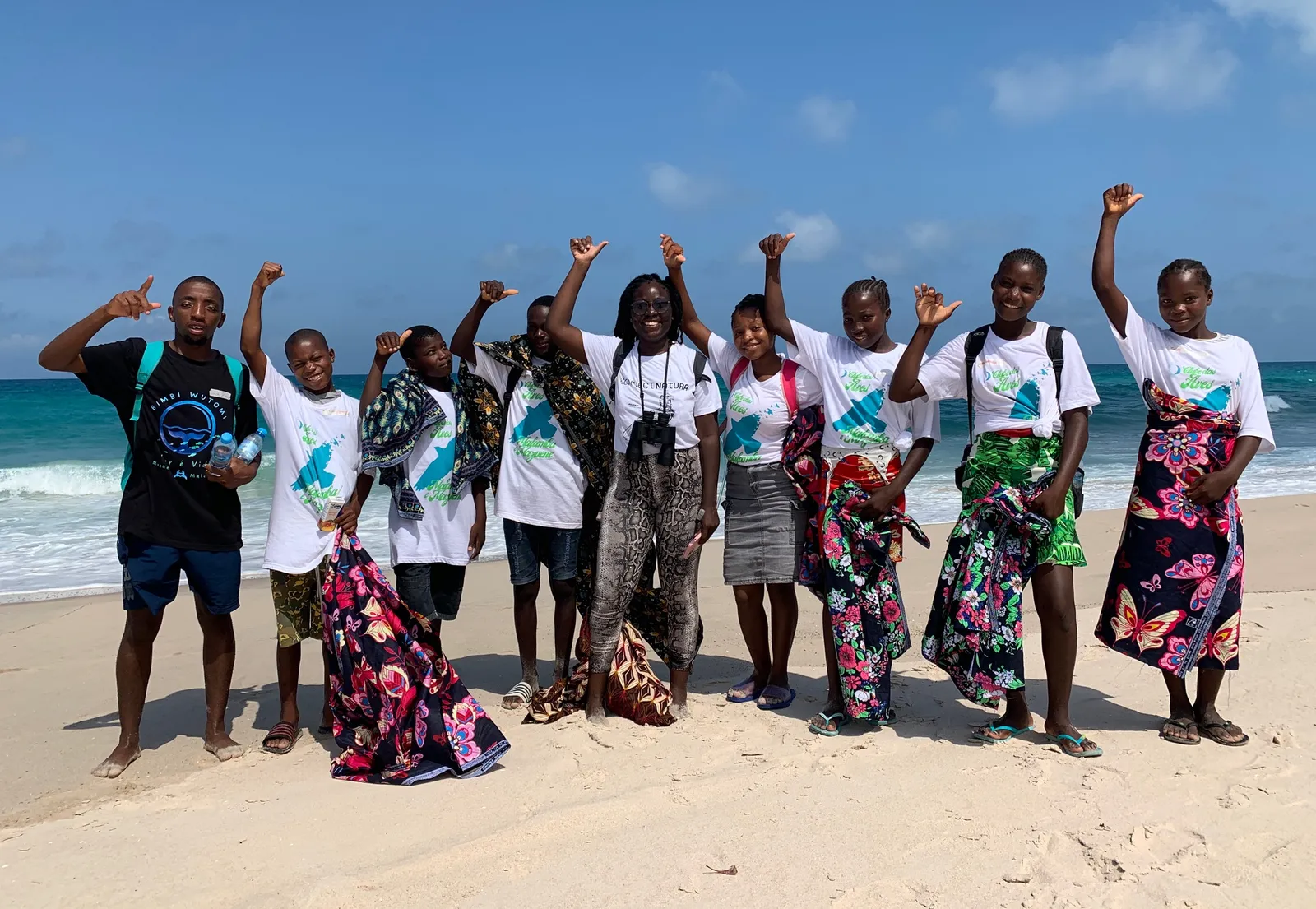
The CCCMM's activities have a significant impact on local communities, providing economic and social benefits. For example, in 2023, new drinking water boreholes were drilled, water committees were established, and programmes were launched such as the Bimbi Wutomi/Mar é Vida Eco Camps for students, training for the Community Fisheries Council, and the Beekeeping Programme, which resulted in the production of high-quality miombo honey. In addition, the CCCMM promotes educational initiatives for younger generations, such as the Bird Club and the Nature Club, well-being and sports programmes, and the Bimbi Wutomi Cup. These programmes are essential for the development of young people and for ensuring a sustainable future for the region.
The mapping of biodiversity and traditional knowledge is another crucial component of the CCCMM's conservation objectives. The Malamba and Mazuene landscape is rich in endemic flora and fauna, and mapping allows these species to be identified and protected. The CCCMM's funding comes from national and international donations and is applied directly to conservation programmes. The local community is deeply involved in all activities and in the management of the programmes, ensuring that conservation is effective and sustainable. Looking ahead, the CCCMM's plans include expanding the programmes through new partnerships, building school infrastructure, and developing youth support programmes and alternative livelihoods for communities.
The CCCMM's message to readers is clear: coastal conservation is essential for life. Climate change and species extinction are on the rise, and our generation has a responsibility to protect and restore the oceans and coastal forests. By saving the oceans, we save ourselves, and every action counts towards ensuring a sustainable future for generations to come.


