
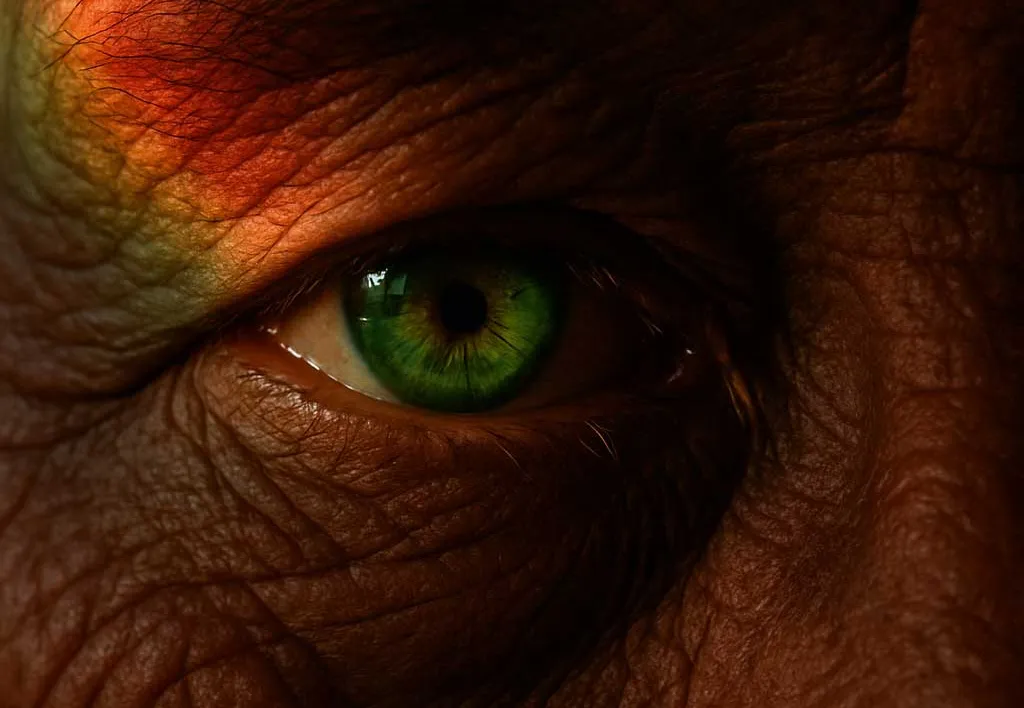
The world we see becomes less vibrant over the years – and that is not merely a nostalgic metaphor. Science confirms it: ageing significantly alters the perception of colours, even in the absence of eye disease. British researchers have shown that older adults consistently rate colours as less intense than younger people do, a subtle but measurable change that affects everyday visual experience.
Although problems such as cataracts, glaucoma and macular degeneration are among the common causes of altered colour vision, scientists also point to a frequently overlooked factor: changes in the brain’s processing of colour.
In the United Kingdom, an analysis by the Science Museum Group points to a parallel – and curiously coinciding – trend: since the mid-20th century, there has been a marked increase in the presence of grey objects in domestic and urban settings, such as cars and decorative items. But this “draining of colour” from the outside world may be as much an aesthetic choice as a consequence of human biology.
Among the physical factors, structural changes in the eyes are among the main culprits. Cataracts, for example, cloud the lens and introduce a yellowish tint to vision, reducing the intensity of blues and greens. Other eye diseases also interfere with colour discrimination. In addition, studies indicate that difficulties in colour perception are present in up to 15% of cases of dementia, which underlines the importance of regular eye examinations.
Certain medicines, such as Viagra and some heart or tuberculosis treatments, can also distort the way colours are seen.
However, the most intriguing aspect emerges from neuroscience. The researcher Janneke van Leeuwen, of University College London, conducted a detailed study of the pupillary response of 37 adults – 17 young and 20 elderly – exposed to 26 colours with different levels of brightness and saturation. Using a high-precision camera capable of recording a thousand measurements per second, she concluded that older eyes show visibly weaker reactions to saturated colours.
Van Leeuwen stresses that these responses are not linked only to the pupil – whose size tends to decrease with age – but also to the Edinger-Westphal nucleus, a brain structure involved in controlling the pupil, which integrates visual information from the retina and the cortex. In other words, it is not only the eyes but also the brains that age in the way they interpret colour.
The consequence is inevitable: the same red balloon that seemed incandescent in childhood may, at 90, look paler and more distant. The world is still colourful – but we no longer see it the same way.


